Don’t be fooled, the title isn’t an early indication of a glorifying 1000 words about the greatness of the Monaco Grand Prix around the streets of Monte Carlo. It is a genuine question. I just don’t know how I feel about it and that is the purpose of this post – to try to figure it out – and also to give myself a bit of a time based test of my own. This is probably going to end up being an argument with myself but lets see how it goes.
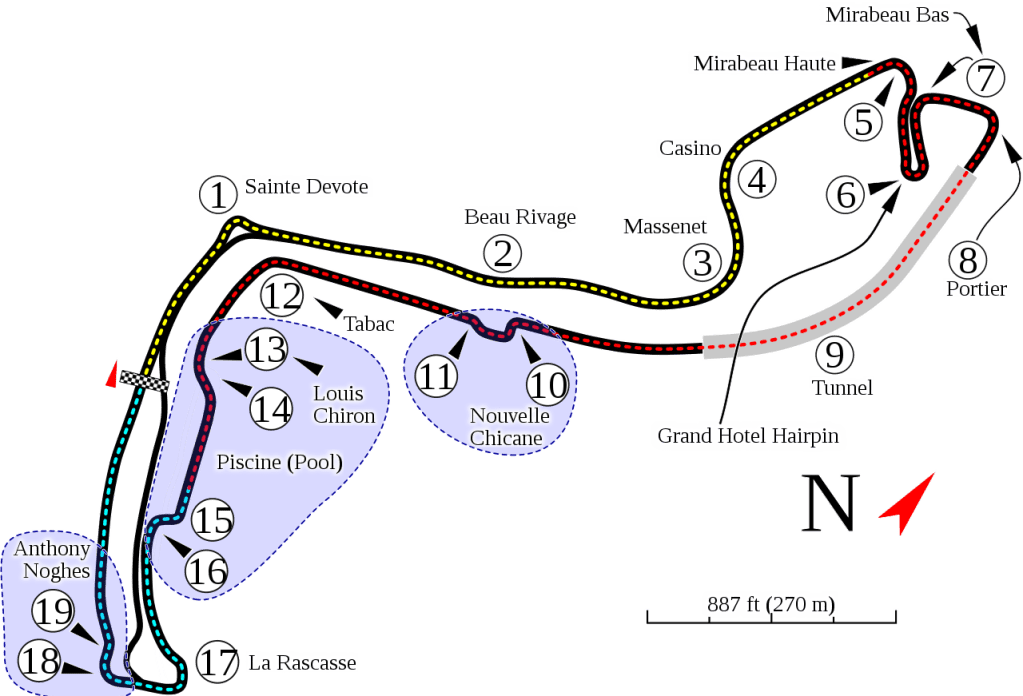
If I’m being perfectly honest I have never cared for the Monaco Grand Prix. The phrase brings up feelings of boredom and frustration from deep within as the race would never live up to expectations as the ‘Jewel in the Crown’ of the F1 calendar and one third of the famous Triple Crown. It would be built up to a crescendo on Sunday with a packed grid full of celebrities and glamorous people bringing the worlds attention to the principality. However, the crescendo would fizzle out as no-one would be able to overtake around the tight and twisty streets. It would also be the race which, if any, people around me would attempt to watch. This would lead to the inevitable remarks that it’s just “cars driving around in circles” and “nothing happens” which is maybe where all my annoyance with this event comes from. I think that is where I am going with this though, I don’t think it is a good ambassador for the sport to the wider world, which I imagine is only looking for an almighty shunt at the start before quickly switching over. I wish tracks like Spa, Suzuka, Montreal or Hockenheim had the global reach or appeal of Monaco. Then they would see the real Formula 1.
Before writing this I also thought Ferrari dominance would factor into my dislike of Monaco but in my viewing years they have only won three times, two of those with Schumacher at the turn of the 21st century. Peculiarly, McLaren have been quite successful at Monaco in my F1 life, winning five times since 2000, which is joint best with Mercedes (and Red Bull now after Max’s win). So you would assume I would feel more warmly towards it. The problem I have is that the result feels predictable once the grid has been set on Saturday. Since 2000, 12 of the 19 races have been won from pole and no one has won it from outside the top 3. Unfortunately for me in these arguments with my friends, this does back up their view that it’s “just cars driving around in circles”. Monaco ranks last in average overtakes for tracks that have hosted at least 10 races over the last 20 years – with 12 (I took a look at the data). To put it into context, Shanghai is the leader with a massive 52 and the next track on the list above Monaco, which is still on the calendar, is Barcelona at 20. While I do love a strategic battle of the minds, overtaking and close racing is what I want to watch and Monaco just does not provide that, especially now the cars are wider than ever and the streets of Monaco are as narrow as they were in the 1920s.
In short, I don’t like that it is the most hyped race weekend on the calendar but rarely lives up to its billing. A bit like Champions League finals between Italian teams at Old Trafford – a lot of old nothing.
Now to the other side of the argument; the reasons I am so torn in my feelings. What it has on its side is a combination of history and prestige. It is the original street circuit and one that all the drivers want to win above all else. This is because, without doubt, Monaco is the ultimate test, both of driver and machine. The claustrophobic barriers lining the track mean a mistake will most likely end your race, and at the very least derail it massively without much chance to recover due to the difficulty to overtake. For the drivers it is as much a mental challenge as it is a physical one, their brains having to process so much information for 90 minutes just to finish the race. There is no room for a slip in concentration, even the straights at Monaco aren’t straight. The corners relentlessly keep coming.
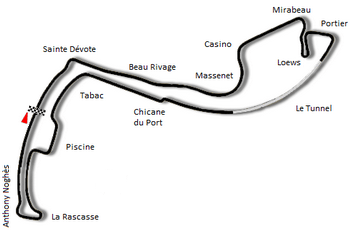
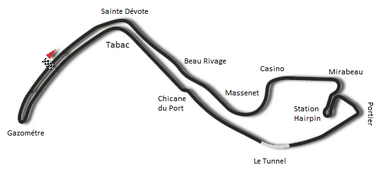
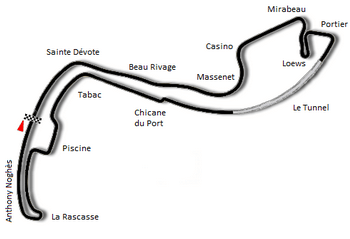
The legacy of the Monaco Grand Prix is it’s biggest attraction. The race pre-dates Formula 1 itself, with its first iteration being in 1929 and was organised by driver Anthony Noghes, who the last corner is named after, under the guidance of Prince Louis II. It has been a permanent fixture in motorsport and the F1 calendar ever since, with only World War II & COVID-19 halting festivities. As you will see by the pictures of the track dispersed throughout this article, the layout has hardly changed in its history, with only a few chicanes put in, like at the Swimming Pool, and some corners have been extended, like at Rascasse. This means that while the cars have changed, the challenge hasn’t. It links the eras of Formula 1 unlike any other track. The experiences of F1 and Monaco greats like Graham Hill and Ayrton Senna can be replicated by today’s drivers. That is where the prestige of Monaco comes from, once a driver wins the race they go into a very small fraternity of greats who have conquered this unique challenge. It seems like it is a right of passage for any future World Champion to win at Monaco as every multiple World Champion in history has done it at least once. This is why I would never want it to leave the F1 calendar, despite my objections. It separates legends from pretenders.
The events of Qualifying for the 2021 Grand Prix have, amusingly, challenged my feelings about one of my own arguments above. It started off as a negative thought – “the most important day at Monaco is Saturday” meaning that because overtaking is almost impossible, the place you start is going to be the place you finish. (See paragraph 3) However, this thought evolved to a positive “it creates a different dynamic to the weekend and gives more importance to a session that rarely disappoints – Qualifying”. As like 16 years ago, a Ferrari crashed on the final run in qualifying while on provisional pole to thwart cars on better laps behind. When Michael Schumacher did it, it was obviously deliberate and he was punished accordingly. This Leclerc crash seemed different, but the rumour mill starts milling anyway. A paddock abuzz with excitement like the melodrama that Formula 1 is and it happening at Monaco is a big reason why some people think he did it deliberately. It’s what Monaco does to drivers. The pursuit of the ultimate prize. However, in typical Monaco style, the race was a procession and I had forgotten about the excitement of Saturday by Lap 2.
I could keep going on and on about the pros and cons of Monaco, trapping myself in a large web of emotions but I think it best to end my indecisive ramblings here. I haven’t succeeded. I laid both sides out there but I am no closer to deciding how I Trulli feel about the Monaco Grand Prix (see what I did there!?). It has me loving it one day, loathing it the next. Maybe that is it’s charm – damn I’m confused. Anyway, it doesn’t matter, this exercise was just something ‘to do’. Also, for those of you who were wondering, I did not stick to my time limit.
JL
P.S. I can’t end this article without giving the racing around Monaco some love, because there have been some great moments and races. Here are a few of my favourites:
Senna vs Mansell 1992
An example of exciting racing where no overtakes were made. Nigel Mansell had been dominating the 1992 Monaco Grand Prix in the revolutionary active suspension Williams but was forced to make a late stop but came out behind Ayrton Senna on much older tyres. Mansell would close very quickly and swarm around the McLaren but was unable to pass. They finished 0.2 seconds apart and the body language of the cars represented their drivers characters; Mansell’s Williams like a British Bulldog badgering and hounding Senna’s cool, calm and collected style. It seemed like Senna never looked back to see where the Englishman was but placed his car perfectly to win the race.
1996 Chaos
A race which started in the wet and ended in the dry was one that no one seemed destined to win. Damon Hill was running away with it after Schumacher crashed on Lap 1 but an engine failure through the tunnel ended his run to victory. Jean Alesi retired from the lead when his Bennetton broke down as well leaving Frenchman Olivier Panis in the Ligier to come home victorious. It wasn’t plain sailing behind either as only 4 drivers were classified at the end. This is a prime example of the unpredictably that Monaco can cause, especially in tricky conditions. Classic case of to finish first, first you have to finish.
Hamilton emulates Senna – 2008
This race has a special place in my heart as it was the first of two fantastic wet weather drives that lead Hamilton to his first world title in 2008. He started third but beat Raikkonen off the line to follow leader Felipe Massa into Sainte Devote. He would make an error on Lap 7 and touch the barriers, causing a puncture. McLaren made a brilliant tactical decision to fill his car with fuel and hope to get to the dry conditions without pitting again. Hamilton would hold up his side of the bargain with a faultlessly fast and consistent drive from there on in to take victory while more chaos ensued behind.
 The Perfect Formula