Australian Grand Prix Driver Ratings

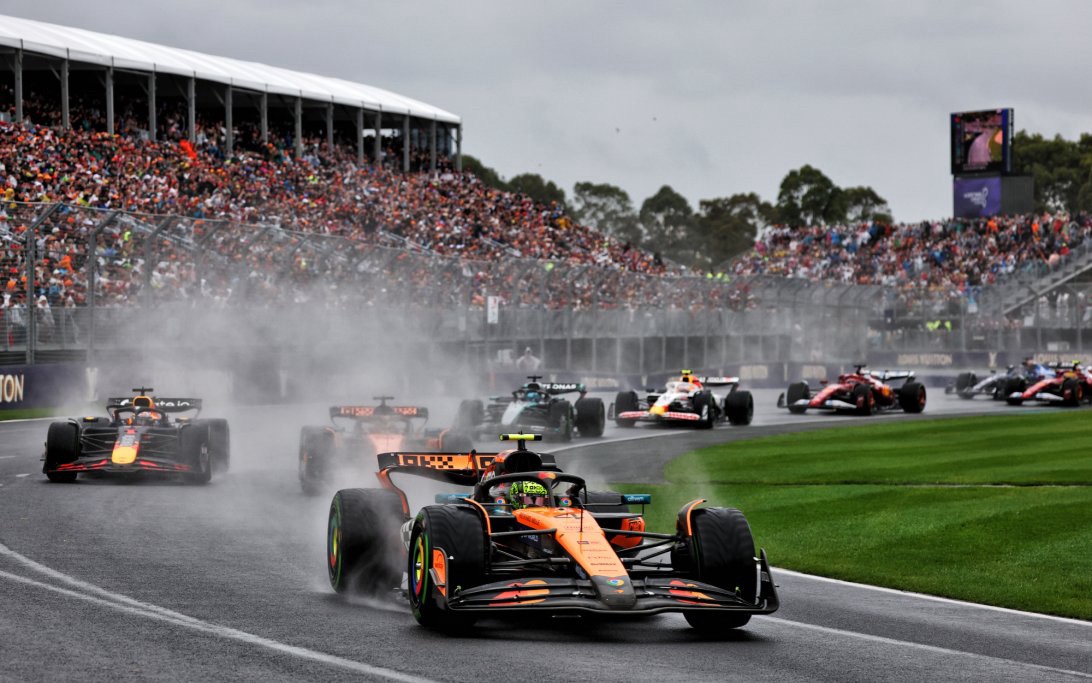
The 2025 season is underway and what an entertaining start that was. Rain always makes things more interesting in F1 and Australia 2025 was no different. I can’t remember the last time the opening race of the season was wet, but I’m sure a mixture of slippery conditions, new cars and lots of rookies led to the mistakes we saw on track this weekend, to only have 14 finishers, the lowest since the 2023 Brazilian Grand Prix.

At the end of the race, Lando Norris came through to take the chequered flag, with an assured, mature drive. At one point, I thought my first bold prediction from my last post – link here – was coming through but this time, McLaren got their strategy calls spot on and helped Lando keep his advantage.

There were lots of good…and some not-so-good drives this weekend so let’s get into rating them all. I will be using ice-staking rules so expect lots of decimal places and no 10s.

Lando Norris – 9.2

This weekend couldn’t have got much better for Lando. Pole position, led most of the race and took the win under extremely difficult conditions. He got a good start, held off Verstappen at the first corner and didn’t really look back. His safety car restarts were assured, held off attacks from his teammate and Verstappen again towards the end. Apart from the excursion through the grass on Lap 44 and having to trust his team to make the right tyre decision when the rain came down post excursion, the win never really looked threatened. This was an extremely mature and confident start to a big season from the man from Glastonbury.

Max Verstappen – 8.2

Max Verstappen just doesn’t have bad races. Despite an unusual unforced error in the early stages of the race to give up 2nd place to Piastri, Max kept it on the grey stuff to maximise what his car could give him in Australia. The McLaren pace will worry him as they were able to pretty easily gain a 16 second lead in conditions that Max thrives in, but when push comes to shrove, its another 18 points, another podium for the reigning world champion, and a result Red Bull will definitely take after a shaky pre-season.

George Russell – 8.1

An under-the-radar performance to 3rd place by George Russell. He kept out of trouble, ran his own race as the Mercedes was locked in as the 3rd fastest car, and took advantage when others made mistakes around him. Not much else to say, apart from this was his best opening race result of his career, lovely stuff.

Kimi Antonelli – 8.8

I don’t think Mercedes could have asked for a better Sunday from their drivers. After only qualifying 16th on Saturday, Kimi Antonelli showed why Toto Woolf put him in the 2nd Mercedes for 2025, coming home 4th. While the other rookies fell by the wayside, Kimi carved his way up the field, kept it out of the walls and got his reward. He did have a clumsy spin when he dipped a tyre on the grass on entry of turn 4 but made up for it with an outrageous move around the outside of Alex Albon into Turn 9 on the final lap! He also becomes the 2nd youngest points scorer in F1 history, only behind Verstappen, and took a big early lead in the Rookie of the Year competition. Wherever Toto Woolf is , he is surely beaming an I-told-you-so smile.

Alex Albon – 8.1

Another under-the-radar but impressive performance from the British-Thai driver. Williams led the midfield teams on Saturday, with both drivers reaching Q3, ad Albon led the line in 6th place. He then improved that to 5th by the chequered flag on Sunday. Similar to Russell, he kept out of trouble, drove consistently and kept it out of the wall (unlike his teammate), to give him his best result since leaving Red Bull all those years ago.

Lance Stroll – 7.9

Keeping it on track was the name of the game around Albert Park, and Stroll did just that to take 7th and valuable points for an Aston Martin that doesn’t look particularly quick. The much-criticized Canadian is an easy punching bag, and he doesn’t help himself (see Formation lap, Brazil 2024) when trying to get rid of the ultimate pay driver tag. One thing he has always been good at, is driving in slippery, changeable conditions and he proved that again.

Nico Hulkenberg – 7.9

Nico showed why Audi chose him to lead their line when they take over Sauber in 2026. Despite not hitting the ultimate heights of F1, he is reliable, fast and provides these types of performances that are so valuable for teams in the bottom half of the grid. Nico has already surpassed Sauber’s points total from the entirety of 2024, can’t ask for more than that from race one.

Charles Leclerc – 7.4

An underwhelming performance all round at Ferrari in Melbourne. Charles did well to gain positions at the start and was running 5th for most of the race until the rain came on Lap 44. A spin dropped him down the order while battling Tsunoda and a bad call from Ferrari to leave both drivers out on slicks in increasingly wet conditions limited Charles’ points reward, eventually coming home 8th. The silver lining was a nice move around the outside of Hamilton at the final safety car restart to win that intra-team battle.

Oscar Piastri – 7.2

What could have been for Oscar at his home race and the Aussie curse continues. He lost 2nd place to Verstappen off the line but pressured him into a mistake to get it back on Lap 17. He then shadowed Norris as the McLarens gapped the Red Bull to put themselves in a convincing 1-2 but the threat of leading is that you hit the weather first. This caught both McLarens out, Oscar more than Lando and as he re-entered the race track, he lost the back end and spun off at the final corner, ruining his chances of victory. Having fell to the back of the grid, he did well to finish 9th and grab some points. His move around the outside of Hamilton at Turn 9 on the final lap was a beauty and gave the home crowd something to cheer about.

Lewis Hamilton – 6.0

Just a bit average from Lewis on his first race in Red. The Ferrari isn’t as quick as the team hoped after a decent pre-season but Hamilton’s performance was a little flat all weekend long. Beaten by Leclerc in every session and didn’t look particularly dangerous in the race will be disappointing for Lewis but it was always going to be a learning process for him. He will have to settle for a point on debut.

Pierre Gasly – 7.5

Pierre will be disappointed not to take home some points from the Australian Grand Prix. He was running nicely in the top ten for most of the race until the changing conditions caught him out. He made a mistake at turn 1 after the final safety car restart, lost positions to the Ferraris and Piastri and his points disappeared. Overall though, a good drive against quicker opposition.

Yuki Tsunoda – 8.2

Yuki was having a great weekend until Lap 44 on Sunday. He qualified a fantastic 5th and was battling Leclerc for P5 in the race until the rain came again and his team took a chance to stay out on slicks. This put him back in 12th with 5 laps to go and couldn’t do anything to climb back up. Big shame but the performance was there.

Esteban Ocon – 5.5

Not the weekend Ocon would have dreamt up for his Haas debut. While Ocon beat his teammate in both Quali and the race, he beat only his teammate as Haas propped up the classifications.

Oliver Bearman – 2.5

Oliver is lucky to get 2.5 to be honest. He crashed early in FP1, missed FP2 because of it and then beached his car in FP3. He didn’t start qualification and finished last in the race with a couple spins on his way. Best he forget about the Aussie Grand Prix and pretend China is the first race of his Haas career.

Liam Lawson – 3.5

The curse of the 2nd Red Bull seat continues. Another rocky debut in Australia, this time for the man from across the Tasman Sea. Reliability issues hindered his practise but that doesn’t fully explain qualifying 2nd last. He had decent pace in the dry but was left out to dry (excuse the pun) by his time and crashed at Turn 2 while trying to survive the rain on old tyres. Hardly a confidence boosting weekend.

Gabriel Bortoleto 6.9

I think Bortoleto is my pick for 2nd best rookie performance after Antonelli. Out-qualifying Nico Hulkenberg at first attempt is an impressive feat and shows he is right on the pace. The Sauber isn’t very quick so not much to say about his race apart from the spin that ended his race was more car failure than driver error.

Fernando Alonso – 6.7

Fernando was having a usual dogged performance in the Aston before an unusual spin at Turn 6/7 which still baffles me and I’ve watched it about 8 times. He was running in the points until then but luckily for him, his teammate picked up them up in his absence.

Carlos Sainz – 6.5

Carlos was having a solid Williams debut until another unusual spin. This Williams doesn’t look half bad and is solidly in the midfield fight, if not at the front. Carlos’s race ended with a torque spike under the safety car which threw him into the wall, which can probably be put down to learning a new power unit. He is going to be just fine at Williams.

Jack Doohan – 4.5

Somehow Jack Doohan came into the season under a fair amount of pressure for a seat he hadn’t raced in yet. I’m not counting Abu Dhabi last year, that was a test drive. It wasn’t looking too bad after qualifying but he made a rookie error, which is fair, on Lap 1, getting caught out by a slippery white line and going straight to the scene of his accident, ending his race abruptly. Not awful, but not great. The pressure is still very much on.

Isack Hadjar – 6.5

Poor, poor Isack. It was all going so well! He performed really well during practise and qualifying. He was on the pace from the get go and was only .06 of a second from Q3 but it all unravelled on the formation lap of all places. He got too trigger happy exiting Turn 2 and around she went, over before it began. It was hard to watch him in tears as he got out the car and drove home the magnitude of the sport that we love. I hope he puts this behind him quickly because he showed great potential this weekend.
Published
Categorized as F1 2025

Way too early bold predictions

So here we are again, on the eve of another F1 season. 3 days of testing and 3 practice sessions stand between us and lights out on the F1 2025. While we are so close to the Australian Grand Prix on 16th March, there are still many miles to be driven before meaningful action that we can actually trust takes place. 

So why not fill those meaningful miles with meaningless predictions that we will never mention again…unless I nail them!

Here we go: 

Verstappen Wins the Australian Grand Prix

I know what you are thinking, blimey, brave choice Jimmy. The man who has won the first race of the season for the last 2 years at a canter and won the last 4 titles in a row is likely to win the first race of this season as well. However, Max Verstappen is no longer the bookies favourite for the title, something we haven’t been able to say for a long time. Arguably, Red Bull finished 2024 with the fourth fastest car, and had McLaren decided to put all their chips in front of Norris much earlier, the Drivers Championship could have gotten away from him. But Verstappen is the best driver in the world right now and he’s suddenly got a fight on his hands. I wouldn’t be surprised while the world is looking at McLaren and Ferrari, Verstappen shows everyone just what makes him a 4-time World Champion, so after a race with multiple safety cars and a wee bit of chaos, the champ comes out on top to lead the championship once again, but not for long…

There are 7 different winners in the first 7 races

I have a feeling that 2025 will live up to the greatest start to an F1 season ever, 2012. They had 7 different winners in 7 races that season, so why can’t 2025? Now, in any other season, that would feel really bold, but actually it’s not too far-fetched for current form. There were 5 different winners in the final 6 races of 2024. So really I am talking myself out of my own bold prediction but to be fair to myself, having 7 different winners means there will be some shocks, and here is the big one – Lewis Hamilton won’t be one of them.

I’ll leave that there and will say no more…except predict all the winners in order. Here we go: 

Australia – Max Verstappen

China – Charles Leclerc

Japan – Lando Norris

Bahrain – Oscar Piastri

Saudi Arabia – Fernando Alonso

Miami – Liam Lawson

Emilia Romagna – George Russell

Lewis Hamilton will win more races than Charles Leclerc

Now Lewis Hamilton fans, don’t fret, I fully expect Lewis to hit the ground running at Ferrari, just not quite get over the line in the first half of the season, but never count out Lewis Hamilton, especially when he feels he needs to prove people wrong. If Ferrari produces a car fast enough to win races, Hamilton has proved time and time again that there is no one better. He won 2 races last season in a car that was inconsistent at best, but when it was on, so was he. That’s only one less than Leclerc in a much better car, imagine what Lewis can do in that car. 

Piastri Leads the Championship at the Summer Break

While Norris led the McLaren resurgence last year, I have been really impressed with Oscar Piastri in his short 2-year career. He immediately put the memories of Daniel Ricciardo to bed in his rookie season, proving McLaren’s decision right 10 fold. He is quick, fast and has got pace, as someone resembling Alan Hansen once said (3:57 on the video below), and he very rarely makes mistakes. His tyre management let him down in 2023 as well as some iffy qualifying performances but in year 2, he was never far away from Lando, sometimes in front of him, both on Saturday and Sunday and once he won the Hungarian Grand Prix, he became a problem in Lando’s title fight. His overtake around the outside of Norris in Italy was a statement of intent from Oscar, and one that was beautifully executed. He is only going to get better, and no one had a better winning pedigree in the lower formulas than Oscar Piastri, so he knows how to fight at the front. Will he win the championship? I don’t think so, but he is going to be a real player in it.

3:57

And the Winner is…

This is a really tricky season to predict, if we get the whole season like last year, we are in for a treat. I genuinely think we have 5 title contenders, maybe 6. Close your eyes and throw a dart type choice. But I’m taking this seriously, this is genuine, from the heart and that. It has to be…Lando Norris. Cmon the boy, he WILL be the first British champion since Lewis Hamilton and break the Dutch stronghold.

My bold prediction is the points total: 394 to win it.

You heard it here first.

Published
Categorized as F1 2025

1968 Part 2 – Wings, Sponsors and Helmets

1968 was a big year for turning points in F1 history – so big it needs two articles. Three innovations from 1968 would change the face (quite literally) of F1. Two were on-track and one off-track. Let’s start off-track.

Sponsors

Heading into the 1968 season, the oil companies BP and Shell decided to pull out of F1 at the same time as tyre supplier Firestone withdrew their free supply to F1 teams. This left F1 in serious financial trouble, so it decided to allow sponsorship for the first time. Previously the cars would run with no badging and would be in the national colours of the manufacturer, but sponsorship instantly changed the way F1 looked and was financed. The first team to run sponsors was the privately run Gunston team, who adorned the livery of their title sponsor – Gunston cigarettes – at the opening Grand Prix in South Africa. This was the only F1 race they would enter that year to promote their product to their largest market – showing instantly that F1 had already become more than a sport. The cigarette sponsorship would not stop there. 11 other cigarette companies would sponsor 22 F1 teams until they were banned in the mid-2000s. It wasn’t just tobacco that jumped in to sponsor F1 teams; fuel, oil, alcohol, tyre and even condom companies moved in as they saw the commercial value of these cars as moving billboards. The range of high-end brands that adorn the cars, race suits and team merch today help fund one of the most expensive sports in the world. Whatever you think of the corporate world that sponsors has created, without them, it’s very likely F1 wouldn’t be around today.

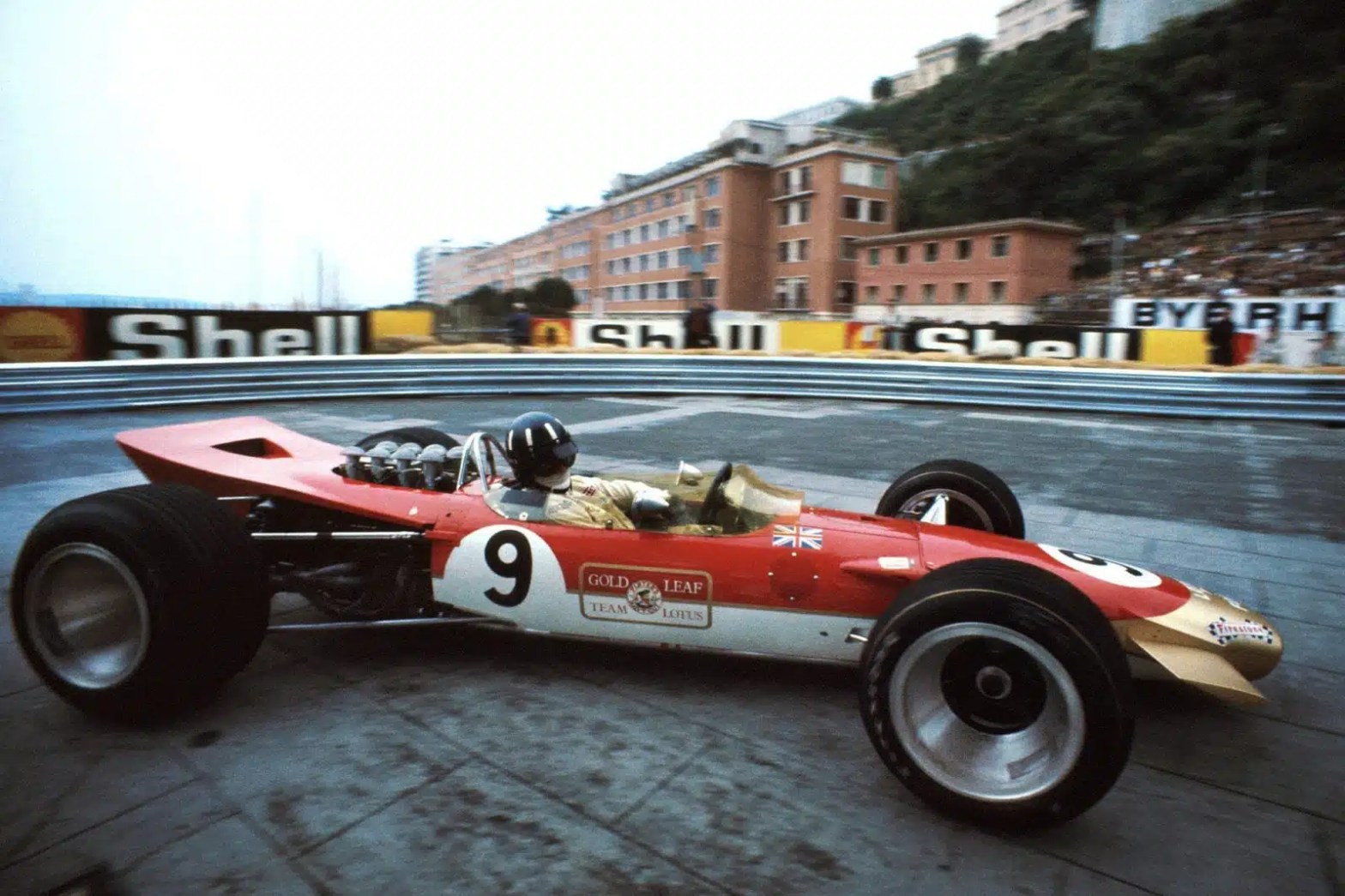
This introduction of sponsors immediately created one of the most iconic F1 liveries – the Gold Leaf Team Lotus car. In the wake of Jim Clarke’s death in April, Lotus and Colin Chapman turned up to the second race of the season in Spain with their car glistening in the famous red and gold. It was reported that this sponsorship raised £1.2 million for the team. This money was clearly well spent as at Monaco, they introduced the single most important development in the sport’s history: wings.

Wings

Before Monaco 1968, F1 cars relied solely on mechanical grip from the tyres to get around corners but this was about to change. Colin Chapman had been plotting this innovation for some time after being convinced that the effect an aeroplane wing has on a plane – to lift it into the air – could work in the opposite direction for an F1 car – to push it into the ground. He described its effect with my favourite F1 term – negative lift. The unique characteristics of the Monaco street circuit, being extremely tight and twisty meant it was the perfect place to try his new toy.

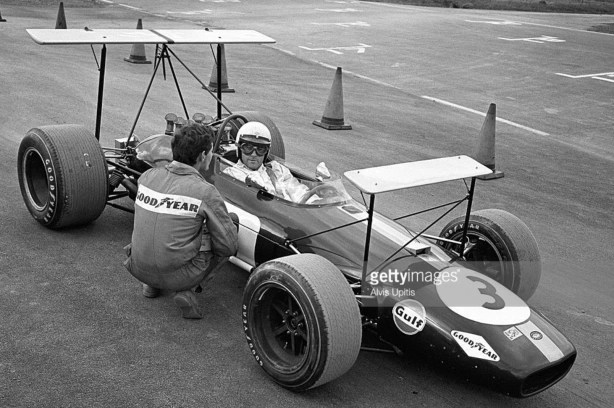
The Lotus 49B would have two small wings poking out each side of the front chassis with an aerofoil rear wing which was basically a large dinner tray attached to the rear engine structure. While they didn’t look like much, their unseen effect was massive. They worked by manipulating the air as they passed through it, creating a speed differentiation between the air passing over and under them, which in turn created a low-pressure area underneath the car. This low-pressure area produced a suction effect that pushed the car into the ground. This meant the tyres experienced a much higher load and a larger contact patch with the ground, producing much more grip. While these wings were very rudimentary by today’s standards, in 1968 they were revolutionary and very effective. Graham Hill took pole position and the win in the Lotus 49B’s first outing, and once again, F1 would never be the same.

By the time of the next race in Belgium, Ferrari and Brabham had gone one better, installing rear wings on struts high above the car, while Matra had installed a full-length front wing. They even added a high front wing on struts but that was only used in practice as it was quite hard to control. The teams would go back and forth throughout the year producing more and more sophisticated set ups and by the end of the year, most teams had installed wings on their cars. Wings have been used as the primary producer of downforce in F1 for decades, except for the ground effect years of the 1980s and now, from 2022 onwards. Negative lift, or downforce as we now know it (but I prefer negative lift), lay the foundations for F1 to separate itself from other engine-powered series in terms of performance.

The final innovation of 1968 was the introduction of full-face helmets for drivers. While it was essentially a safety measure it did drastically change the driver’s look. Going from looking like they were about to jump into a World War 2 bomber, to slick, futuristic astronauts. It symbolised F1’s continued technological evolution.

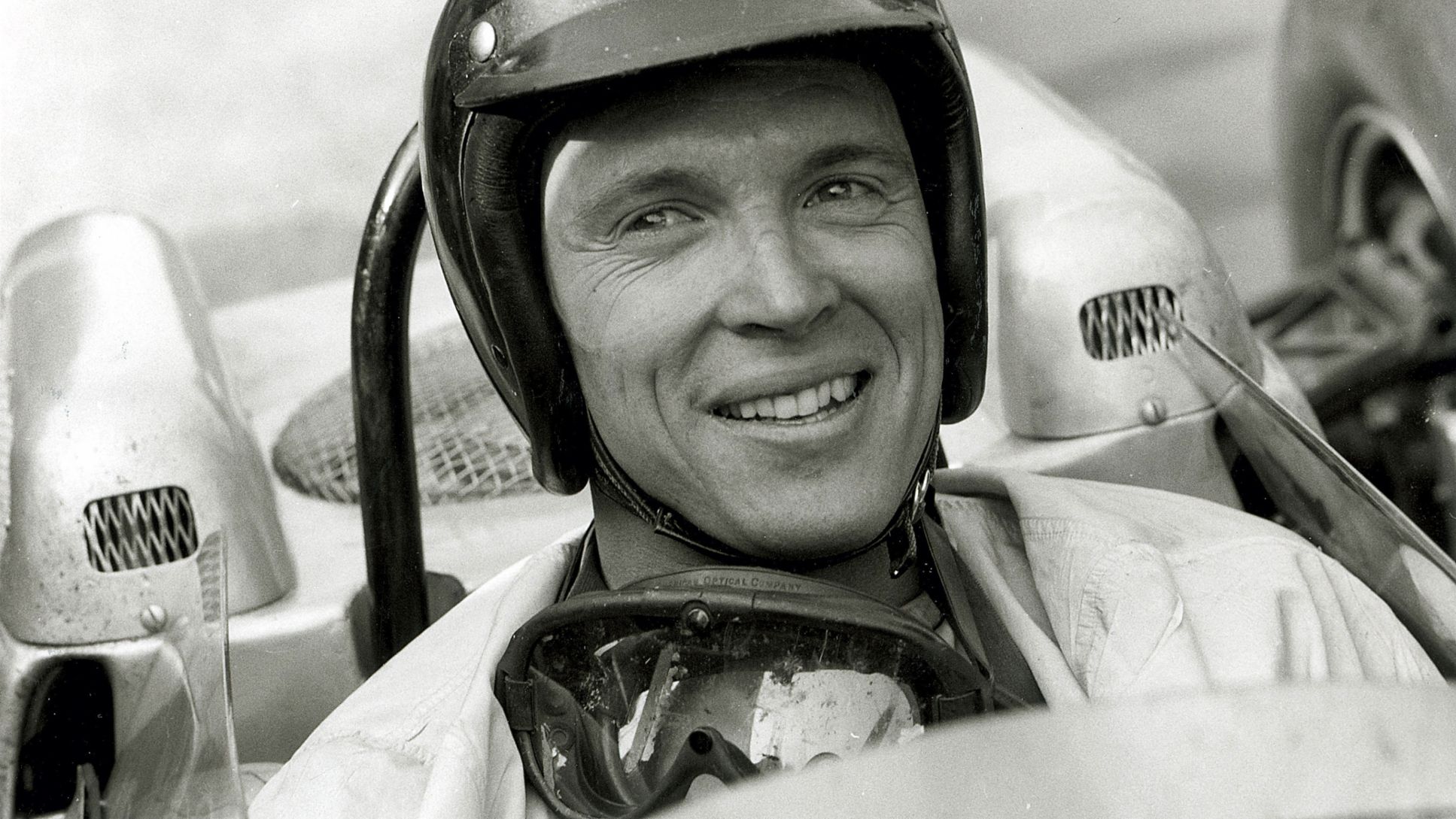
Dan Gurney was the instigator of this particular evolution, being the first driver to wear a full-faced helmet at the German Grand Prix. He had helped to invent it with the Bell Helmet Company, who still supply half of the F1 grid. Once Gurney wore one at the Nürburgring, other drivers followed suit and they became mandatory from 1970 onwards.

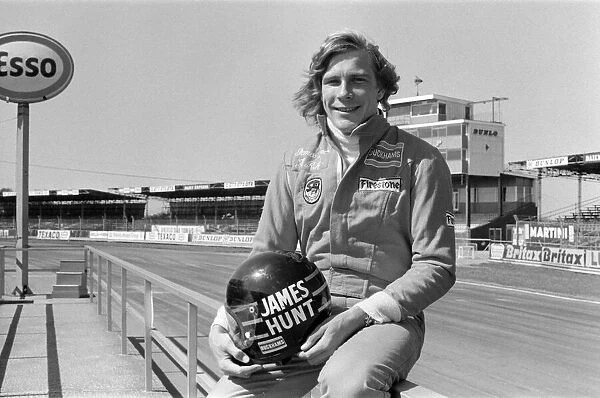
While some drivers had used their helmets to distinguish themselves while in the car before full face became the norm – Graham Hill and Jackie Stewart come to mind – this full face change gave drivers more freedom to show their individuality and they became a symbol of the driver. My favourite of this era was James Hunt’s, which had his name written in big letters on the side – just to leave no room for doubt.

Looking back at this, 1968 has an argument to be one of the most influential years in F1 history – if you think you know a year that tops this, let me know in the comments.

Until next time.

1968 – Ford, Clarke and The Flying Scotsmen

1968 was a transition year for Formula 1 in many senses, and not always for good reason.

The Ford DFV

The year started with the wider implementation of arguably the greatest racing engine of all time – the Ford Double-Four Valve V8 – this iconic engine was conceived by Colin Chapman and Lotus F1, who had convinced Ford to develop it when 3-litre engines were introduced for 1966. It won on the first attempt at Zandvoort 1967 as Graham Hill stuck his Lotus 49 on pole, but when he retired with clutch issues, his teammate Jim Clarke came through the field to take the chequered flag in his stead.

Chapman had worked hard to get exclusivity of this engine for his Lotus team but Ford was worried their brand could be tarnished as the competition around them wasn’t strong enough; Ferrari’s engine was underpowered, the BRM was too complex, the Maserati unreliable and the Honda overweight. They wanted to instead supply to anyone who wanted one and dominate the whole of F1 rather than just one team.

They wanted to create a cheap engine – £7,500 in 1967 – competitive, light, compact and easy to run so that any team, big or small could screw it in and go racing.

So, they did. And Chapman wasn’t happy.

But Ford had made their decision and the Double-Four Valve V8 would go on to win 155 of the next 262 races from 1967 – 1985. The Ferrari was the only other engine that even made a dent. The Ford DFV would win every single race in 1969 and 1973. It became THE engine of F1 and gave Formula 1 teams the financial freedom to innovate and push the sport into the global player it is today. Without the DFV, F1 would look very different, despite Colin Chapman’s anger.

Jim Clark

While one F1 icon was just getting started, tragically the sport would lose another in 1968. Jim Clark was arguably the driver of the 1960s. Starting in 1960, he spent his whole F1 career with Lotus and won championships in ’63 & ’65 but it could have been so much more if his cars had been more reliable. Oil leaks in crucial races in 1962 & 1964 robbed Clark of two more titles but they weren’t isolated instances. There was a feeling in F1 at the time that if Clarke finished a race, he was winning it.

Clarke produced performances that even for F1, were extraordinary. In 1963, he won a rainy and foggy Belgian Grand Prix at Spa by over 5 minutes and lapped the whole field apart from Bruce McLaren in 2nd. Clarke holds the record for most grand slams in F1 history – taking pole, fastest lap, victory and leading every lap – doing it 8 times.

He would led 71.47% of the laps raced in 1963, which is another record. At the Italian Grand Prix of 1967, he started from pole and led the way until a puncture derailed his progress. He lost a lap while the wheel was changed and re-joined the race in 16th place. However, he would go on to drive back through the field, breaking the lap record on multiple occasions and even equalled his qualifying lap of 1.28.5. He regained the lap AND THE LEAD. Heading into the lap last he was narrowly leading John Surtees and Jack Brabham when his car started fluttering. It hadn’t been filled up with enough fuel. He would coast over the line in 3rd but that performance speaks for itself. He was the class of the field, even against F1 legends.

Clarke didn’t just race in F1 during his career either. He was the first non-American Indianapolis winner in 50 years when he conquered the brickyard in 1965 as the first mid-engined victor, becoming the only driver to win the F1 title and the 500 in the same year. He also raced in British saloon cars, Le Mans, American open-wheel, the Australasian Tasman series (winning it in 1965, 1967 and 1968) and F2, which would be his tragic downfall.

On 7th April 1968, Jim Clarke took part in an F2 event at Hockenheim, Germany during the 4-month gap between the first and second F1 races of the season. On the fifth lap of the race, Clarke’s Lotus veered off the track and smashed into the trees that lined the track. He suffered horrific injuries and died before he reached hospital. The exact reason for the crash has never been determined but it’s thought that it was caused by a punctured rear tyre.

His fellow drivers refused to believe that the crash was caused by driver error because they didn’t believe Clarke was capable of making a mistake like that. Clarke’s driving style was so smooth that he took care of the cars he drove – Jackie Stewart remembers “He was so smooth, he was so clean, he drove with such finesse. He never bullied a racing car, he caressed it into doing things he wanted it to do” Clarke’s tyres would last 4 races and his brake pads would last 3 times longer than other drivers. This made it even harder for people to accept that his cars didn’t take care of him.

In the wake of Jim Clarke’s death, the F1 community was devastated – it had lost its talisman, its best driver and more importantly, a friend. Colin Chapman said he lost his best friend that day – many F1 drivers were in his close circle, including his compatriot Jackie Stewart. In a tragic turn of fate on that afternoon in Germany, F1 lost its talisman, but his successor was waiting in the wings.

The Flying Scotsman

Stewart had been following in Clarke’s footsteps throughout his junior career and reached F1 in 1964 as Clarke was taking over. He had some success during his early years, winning 2 races in his first 2 years in F1. However, things changed in 1968. Stewart had been driving for Ken Tyrell’s racing outfit in the lower formula but switched to Owen Racing to gain an F1 seat. He would reunite with Tyrell, joining the Ken Tyrell-run Matra team. This partnership would turn out to be one of the most successful in F1 history. He would win his first title in 1969 for Matra International and made the switch to the full Tyrell team in 1970 for its inaugural season. He would win two championships in the French Racing Blue of The Elf Tyrell team in 1971 and 1973. He retired immediately before taking part in his 100th F1 race after the death of his teammate and friend Francois Cevert in practise at Watkins Glen. This was the last straw in a career where he lost too many friends to sub-standard safety in the sport. These losses, including his great friend Jim, would motivate Stewart to campaign for improved safety during and after his career, changing the way the sport is run forever. He retired with the record for most wins at 27.

“I would have been a much more popular World Champion if I had always said what people wanted to hear. I might have been dead, but definitely more popular”

Sir Jackie Stewart

The Horse Starts Pushing the Cart

For as long as cars had been racing each other, be it up hills, around airfields or streets, their engines had been in front of the driver. That was just how it worked. Enzo Ferrari summed it up beautifully when he said “The horse shouldn’t push the cart with its nose, it pulls it” but this all changed in 1958. Formula 1 is all about innovation and before long someone had come up with a better solution. This solution would change not just F1, but all of motorsport.

This great innovation wasn’t thought up by one of the big boys in a factory but by father-son duo Charles and John Cooper. They had started making racing cars from their garage in Surbiton, Surrey in 1946, entered F1 in 1950 at the Monaco Grand Prix and by the mid 1950s, they had built up a considerable reputation for building fast cars.

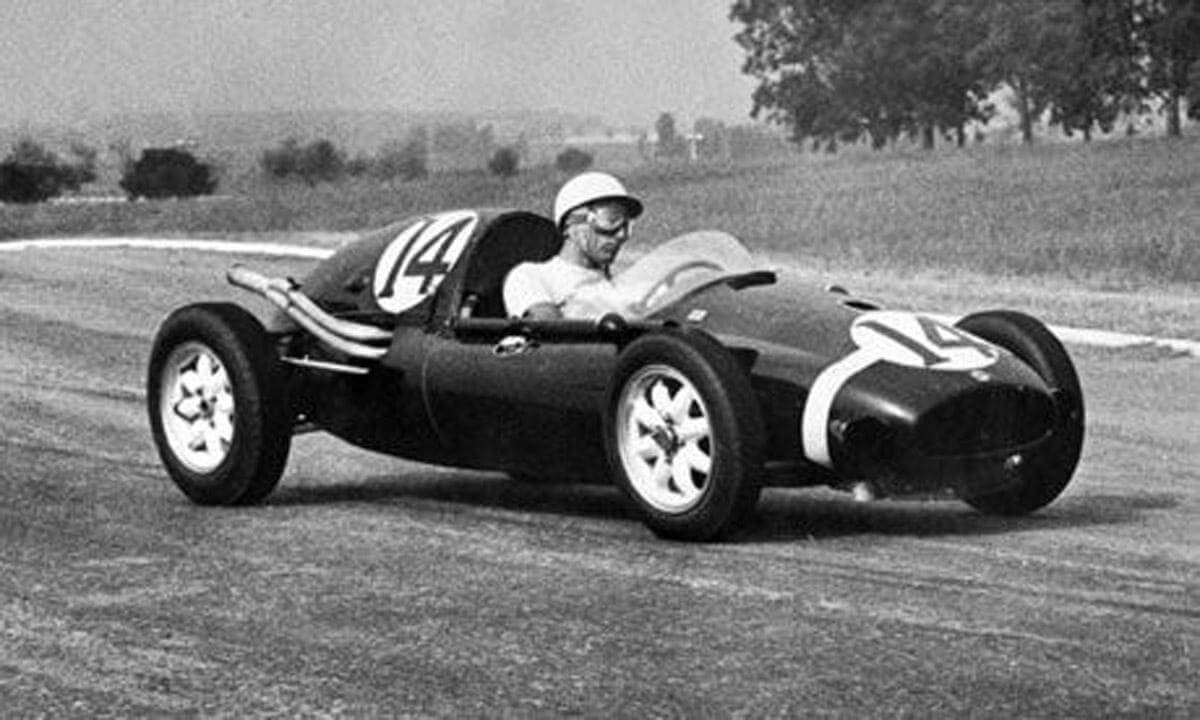
So when Jack Brabham turned up to the 1957 Monaco Grand Prix and finished 6th in a Cooper T43 Climax with the engine positioned behind him, the F1 community took note. However, it wasn’t until the first two races of 1958 when they would realise that they had a revolution on their hands. Sterling Moss would win the Argentinian Grand Prix in a privately run rear-engined Cooper T43 on a controversial no strategy but when Maurice Trintignant won the next race in Monaco at a canter in the exact same car, the cat was out of the bag and F1 would never be the same.

What the Coopers realised was rear-engined cars pushed the majority of weight to the middle so the cars were less susceptible to spinning, easier to control and more effective at transferring traction into the road. They found time by giving the driver more confidence to push, and rewarded them with more grip when they did.

Despite Enzo Ferrari’s stubbornness, over the next couple years the rest of the grid would transition to rear-engined cars and the final victory for a front-engined car would come at the Italian Grand Prix of 1959 at Monza. It was won by Ferrari, but not by coincidence, after the race organisers changed the track layout to include the famous banking, the bumpy surface suiting the rear-engined car much more favourably.

Jack Brabham would go on to win the Driver’s Championship in 1959 and 1960 for Cooper, becoming the first rear-engined Champion. Since then, every other driver and constructor to win the F1 championship has won with the horse pushing them by its nose.

P.S. – An extra fun fact to leave you with – John Cooper is the naming inspiration for one of the most famous cars in history – The Mini Cooper, which he helped to conceive.

F1 Turning Points – The Le Mans Disaster

The next turning point in F1 history didn’t take place on track – not an F1 track at least.

Once Alfa Romeo dominated the 1950 championship, they split the next 3 with their Italian counterparts Ferrari. However, halfway through 1954 the F1 pecking order would be ripped up with the introduction of a new Constructor – Mercedes Benz.

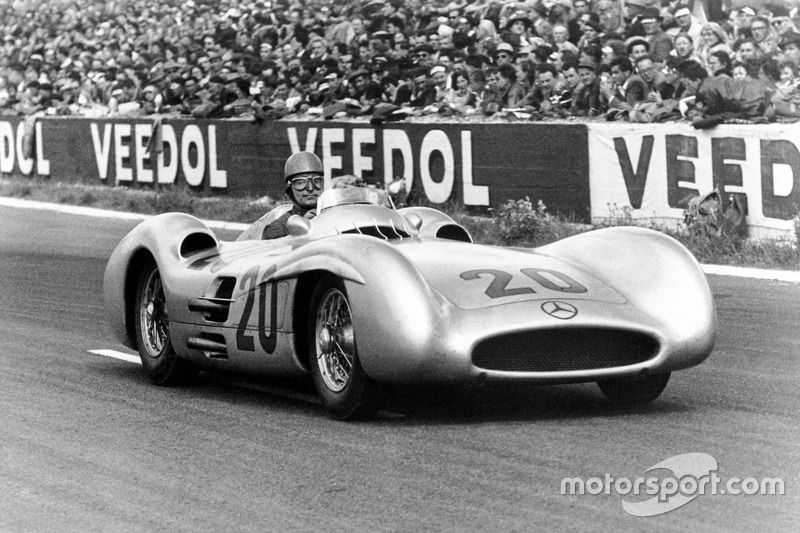
Mercedes entered F1 at the 1954 French Grand Prix with the iconic W196, and they would go to take a 1-2 on their debut. They even had the audacity to steal the greatest driver of the era, Juan Manuel Fangio, from Maserati mid season to lead their attack. He had already won 2 races with Maserati at the start of the season and would go on to win 4 more with Mercedes, becoming the only driver to win a World Championship with different teams in the same season. A record that will never be broken now.

But this turning point isn’t about the 1954 season, or F1 at all really, but it would change the course of the sport forever. Mercedes started the 1955 season the way they ended the ’54 season, winning 2 out of the first 4 races, with the second coming at the Belgian Grand Prix in June. However, a week later, the motorsport world would be devastated by it’s worst tragedy.

During the 1955 running of the 24 hours of Le Mans road race, Jaguar driver Mike Hawthorn pulled over to the side of the track to go into the pits, braking as he did. In doing so, he cut across Lance Macklin’s Austin-Healey who in turn swerved to avoid. Catastrophically he swerved right into the path of Pierre Levegh’s Mercedes Benz 300 SLP, who was going around 125mph. Levegh’s car launched over the back of the Austin-Healey and straight into the spectator area by the side of the track, which was only protected by a grass verge. The impact with the ground caused the car to disintegrate and explode into flames. The impact threw Levegh from the car back onto the track and killed him instantly. The debris from the exploding car would kill 83 spectators and injure 180 more.

This disaster caused Mercedes to pull out of motorsport entirely, as they were only really in it for technological testing purposes, not for the love of competition. They didn’t see the point in risking lives for the sake of progress.

Mercedes would complete the 1955 season, winning the remaining 3 races – 2 for Fangio and one for Sterling Moss (remember him?) but that would be their last season until 2010.

The Silver Arrows’ dominance of F1 ended as quickly as it started, but what a run it was. The won 10 out of the 13 races they entered to blow the competition away. Something they would continue to do when they returned to F1 – winning 8 straight Constructors Championships from 2014-2021, but more on that in a later post.

How different would the history of F1 look if they had stayed? Would they be the most successful team over Ferrari if the Le Mans Disaster never happened? All these questions we will never have answers to but I think this quote from an article in Motorsport Magazine from December 1955 gives a hint of the feeling at the time.

“The complete withdrawal by Daimler-Benz is an unhappy thing for many of us, especially those interested in technical development, but, on the other hand, they had monopolised racing to such an extent that their withdrawal will at last allow someone else to win”

F1 Turning Points – A Sunny Day in Northampton

I thought I would start a series on the turning point in the history of F1, so here it is.

The first turning point in F1 history, is of course, where it started.

The Formula 1 World Championship was born on a sunny day in May 1950. The regulations had been decided 2 years earlier and a series of Formula 1 races had taken place since, but this event was the first time the drivers were competing for the title of F1 World Champion.

The World Championship was unleashed at Silverstone for the British Grand Prix, in front of 200,000 people including King George IV and his family. This former airfield had hosted a couple of British Grand Prix’s previously and already had the reputation as being one of the best tracks in the world. Confusingly, this race actually had two names, simultaneously being the European Grand Prix as well. Incredibly, the Silverstone layout hasn’t changed much since 1950 with many of the famous corners still being tackled by F1 drivers today, albeit with a few additions.

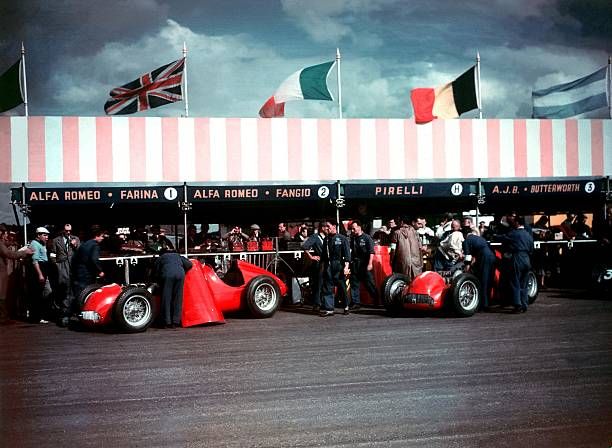
On the day, the first row was taken up by a famous Italian manufacturer, but not the one you are thinking of. Ferrari didn’t turn up to the first championship race so Alfa Romeo would take over and shine in the Northampton sun, with their supercharged 158. They would dominate qualifying and make up the first four places on the grid, with Giuseppe Farina and Luigi Fagioli making it an Italian 1-2 followed by Juan Manual Fangio and Reg Parnell.

The F1 cars of 1950 were quite different to todays, as you would imagine. For one thing, they had their engines at the front and very little aerodynamics. The heavy engine at the front and thin tyres meant they suffered from a lot of understeer – the front of the car not wanting to turn – so the fastest way around was by drifting the car around the corners. The cars were rear-wheel drive so the driver would have to floor the throttle to get the back end to step out and then would just guide the car around the corner, trying not to spin. A completely different skill set from today but no less impressive. If anything, it was more impressive because if the driver got this tricky technique wrong, they were heading towards a ditch in a highly flammable rocket.

The 24 gladiators called drivers would represent 9 nations, have an average age of 39 and even include Royalty. Prince Bira of Thailand would line up 5th in his Maserati but wouldn’t see the chequered flag, running out of fuel on Lap 49.

Once the race got going, Alfa Romeo wouldn’t let their dominance from qualifying slip. Despite Fangio retiring from the lead after 62 of the 70 laps, they would take all three steps of the podium and finish 2 laps ahead of their nearest challenger. Farina would take the chequered flag with a race time of 2 hours 13 minutes and an average speed of 143 km/h.

Reg Parnell would give the home crowd something to cheer for as he became the first Brit to win F1 World Championship points, finishing in third.

As for the rest of the field, only 11 would finish and 5 took home Championship points.

The 1950 British Grand Prix was also significant for who won the 500cc support race, a young Brit called Sterling Moss who would make his own indelible mark in the history of F1.

The Alfa Romeo’s dominance would last the whole championship, despite Ferrari getting involved at the next race at Monaco. Farina would go on to become the first-ever F1 world champion.

Red Bull Lay Down a Big Marker

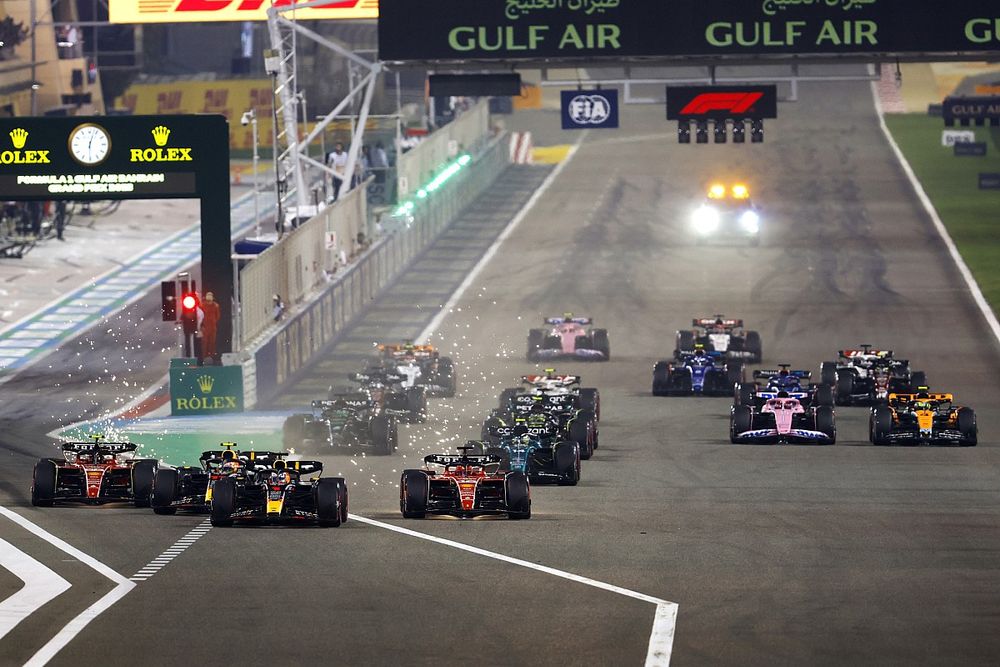
Max Verstappen won the Bahrain Grand Prix in emphatic fashion on Sunday with a performance that should really scare the rest of the F1 grid. Once he navigated the first couple of corners without incident he just disappeared into the distance. Even Charles Leclerc on fresh soft tyres couldn’t get anywhere near him. 

It was an opening race performance that reminded me of Sebastian Vettel in his prime Red Bull years but this time, Verstappen had the reliability to finish the job. His teammate would recover from losing positions at the start to take an easy 2nd place as well. Both Red Bull’s finished 26 seconds ahead of anyone else despite turning their engines down for the last 10 laps. Max must have wondered where everyone else was at points as he sauntered around the Sakhir International Circuit. 

Behind the two Red Bull’s this race was all about tyre management as Ferrari, Aston Martin and Mercedes traded superiority throughout their stints. All three ran pretty close to each other throughout the race which bodes well for future races to see who will get that final podium place behind Red Bull. Ferrari are the second fastest car on pure speed but have much more tyre wear than both Aston and Mercedes. Mercedes really just lack overall downforce to maintain the pace of Ferrari and Aston. On a highly abrasive track surface like in Bahrain they were always going to use more of their tyres to keep up. This showed as Alonso was able to stay out a couple of laps more in both stints to create a tyre delta to attack Hamilton and Sainz late on after losing places at the start. It would have been really interesting to see what Alonso could do against the Red Bulls if he gained positions at the start rather than losing them. He would have at least been able to mix it with Leclerc before he retired with engine issues. 

This really was the worst start for Leclerc’s season. Ferrari had to replace his energy story component before the race as a precaution but it was the replacement part that failed which caused him to retire. This means Charles has already used his whole allotment for that part for the season, without completing a race distance. The Ferrari is quick but seems to have a very tight window when it’s able to deploy that performance. They will hope the next race in Jeddah doesn’t highlight their tyre wear issues as much as Bahrain. 

Behind the ‘Top 4’ fight there were some performances that went under the radar. Pierre Gasly climbed from the back of the grid to take a comfortable 9th on his Alpine debut, just behind Bottas who used the undercut to great effect to jump from 12th to 8th by the flag. The midfield does look very close and I would imagine that the balance of power will shift race to race as it doesn’t seem like there are any ‘backmarkers’ this year. The whole grid can arguably fight for points. 

This is because Williams have made great strides, in Bahrain at least, to join the fight and Alex Albon even got points in 10th place. His teammate Logan Sargent had the best debut out of all the rookies in 12th and finished under 10 seconds behind his much more experienced teammate. That is a great performance and one that should give him and the team great confidence. 

But Bahrain wasn’t rainbows and smiles for all the competitors. McLaren had one of the worst opening races that I can remember. Norris qualified 11th which was much higher than the team expected with his teammate being knocked out in Q1. But that was where the ‘positives’ ended really. Piastri did make up some places from 18th but was forced to retire after 13 laps as an electrical issue in the steering column meant his steering wheel shut down and Norris had to pit 6 times after his car developed a pneumatic pressure leak so had to come in every 10 laps to get its air topped up. He finished 2 laps down in the end. The only sliver of good news is that the car did show more pace than the team was expecting before retiring. They must do better so let’s hope the major upgrade planned for Baku really works. 

But at least the race went better for McLaren than it did for Esteban Ocon. He was penalised three times that all stemmed from one issue. He was initially penalised 5 seconds for being incorrectly positioned on the starting grid: he rolled a little too far into his slot and was JUST in front of his grid box. He was able to take this time penalty at his first stop BUT Alpine started working on his car before the 5 second penalty had been served, so he got another time penalty – 10 seconds this time. When he came in to serve the 10 second penalty at his next stop, he approached a bit too quickly and sped in the pitlane by 0.1 mph, receiving another 5 second penalty. Alpine ended his nightmare on Lap 41 when they retired the car. So McLaren, it could be worse!

Overall, it was an interesting first race of the season, mainly because of Aston Martin’s jump into the fight at the front. But it is worrying to see that Red Bull have only extended their advantage over their traditional rivals but only time will tell how close Aston Martin really are in a straight fight. 

23 to go but at this rate, it will be Max Verstappen 3 time World Champion by the summer break. Happy New Year!

Why F1 Testing Doesn’t Matter

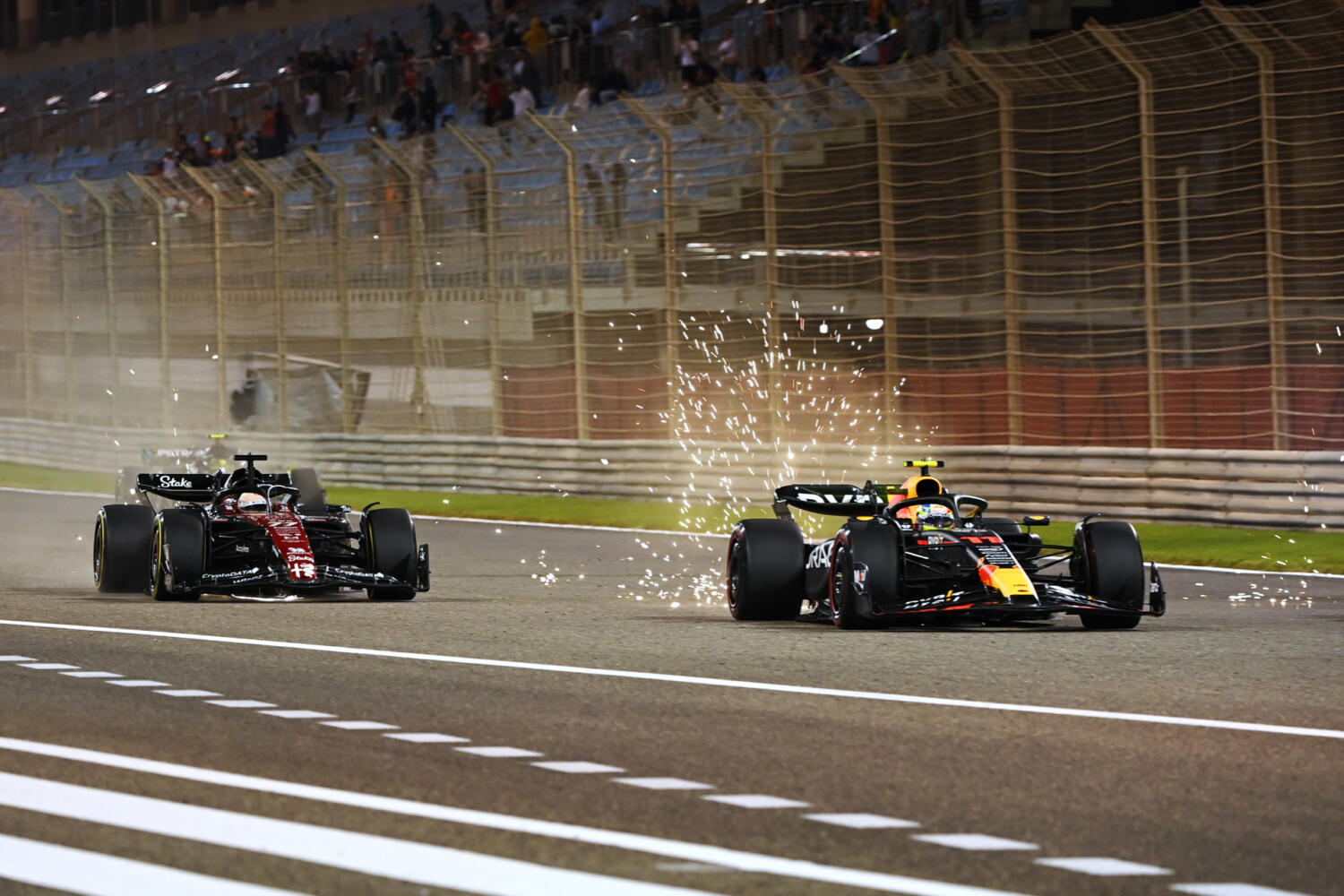
BAHRAIN INTERNATIONAL CIRCUIT, BAHRAIN - FEBRUARY 25: Sergio Perez, Red Bull Racing RB19, leads Valtteri Bottas, Alfa Romeo C43 during the Bahrain February Testing at Bahrain International Circuit on Saturday February 25, 2023 in Sakhir, Bahrain. (Photo by Mark Sutton / Sutton Images)

F1 is back and so am I.

F1 returned to Bahrain for a single 3 day pre-season test before the opening race at the same track next weekend. That’s not much time for the teams and drivers to get up to speed with their new machines. 

There were many storylines to follow. Would Red Bull maintain their dominance or can Ferrari and Mercedes sort out their own issues to properly join the title fight? Can any of the midfield close the gap to the Big Three and can Williams hang on at the back? 

But one thing is for sure, you can’t trust Pre-season testing times. 

We are always going to be suckers to the timing charts in any F1 session but testing is particularly useless. With each team running their own programmes, with different fuel levels, tyre wear and engine modes it is nearly impossible to compare them properly. But if you look further than just the best times you can get an indication of how well set up each team is for the season ahead.


Red Bull 

The reigning world champions seemed to have a seemless test. They ran well on all three days, completing over 400 laps and were able to extract speed from the car on all their runs. Sergio Perez set the fastest time of the whole test on day 3 but it was Verstappen who just exuded confidence. They will be hard to beat again this year, especially Max. As Toto Wolff has said, they can brake later, carry more speed through the corner and have great traction. That’s a great combination.

Ferrari

Ferrari aimed to fix their reliability issues that plagued them so much during last season. The speed was always present in the car but the drivers were rarely able to use it without issues. They had high tyre wear and had to turn their engine down mid season to protect the turbos. It will only come apparent if they have fixed their engine issues as the season gets going and its turned up to full capacity. It was obvious they were trying to understand their tyre wear issues during the pre-season as they used a low downforce rear wing, which is the opposite of suitable around the Bahrain track, and did lots of soft tyre runs. If they have fixed these two big issues, they should be able to challenge Red Bull. Leclerc has complained that this car is more suited to Sainz’s driving style so could Sainz be the favourite to challenge Red Bull? 

Mercedes

Mercedes have definitely fixed their porpoising issues but the car still has balance issues that made them inconsistent last year. The car doesn’t seem quite on the level of the two teams above and even might have some challenge from another team for 3rd place, but more on that later. Both drivers have had good sessions during testing but also not so good sessions. Merc were also one of the teams to have a session ending mechanical issue – hydraulics in their case. I would expect them to be in contention for podiums again but not wins at the moment. They are really giving this no-sidepod design a good go but if they don’t start to see results soon, they have indicated they will switch to Plan-B.

Alpine

Alpine had one of the quietest pre-seasons but rumblings in the paddock are that they are one to watch. They didn’t use any of the ‘soft’ C4 or C5 tyres so they won’t be high up the timing charts. But remember – Pre-season times don’t matter. It’s the long run times and reliability that are the main references. Alpine ran well and the car looked consistent but nothing special. They admitted they did a lot of experimenting to find the limits of the car and have an upgrade coming for the first race so it’s even harder to place them. The car will look different when things ramp up. I expect them to be in the fight for 4th but the gap is too big to close to the front three over one winter, especially while everyone figures out how to best work the budget cap. 

McLaren

Another preseason struggle for the McLaren team. Last year it was brake issues and this year it was wheel barrows. No, not the gardening tool but the aerodynamic devices that arch over the front wheels. The structure holding them in place wasn’t strong enough so it really limited their running which is a killer in this era of F1 where testing for the year has already been completed. The Woking team completed the fewest laps over the 3 days and didn’t show much pace when they were on track. Let’s hope this wheel issue is a simple fix and they have pace in the car they weren’t able to show. 

Alfa Romeo

Alfa had a mixed test, they topped Day 2 after a late glory run by Zhou but did stop on track twice. I noticed that they have switched to a Mercedes style steering wheel, obviously Bottas’ influence is being felt more on this car than its predecessor. I would expect to find Alfa Romeo right in the midfield battle but not at the front of it. Loved Bottas’ test helmet, he should keep it. 

Aston Martin

Aston Martin were THE talking point of the Bahrain test. There were grumblings coming out of Silverstone that the wind tunnel data looked good and the on-track action backed that up. No matter what, it is a big upgrade on last year’s car, which was probably the 2nd worst until they found pace in the 2nd half of the season. Alonso coming over to the team will give everyone a boost and make sure that the maximum will be extracted from it at all times. There will be no confusion about where they sit in the pecking order with him behind the wheel. They didn’t do any performance runs late in the day but were constantly around the top five in the long runs and didn’t have any reliability issues that we saw. Ted Kravitz pointed out that on Day 3, the long run pace was Red Bulls first and then Aston Martin. They could be the biggest jumpers in the pecking order this year and get involved with Mercedes for 3rd. BUT, we have seen teams do really well in testing before and not show that pace when it matters. Luckily, we only have less than a week before we find out. 

Haas

Nico Hulkenberg comes in to partner ex-rival Kevin Magnussen at Haas for 2023. In these two, they have solidly quick and experienced drivers to keep the team moving forward. Unfortunately for Mick Schumacher he crashed a bit too much so that will be Hulkenberg’s first requirement – keep it out of the barriers. Haas had a good pre-season as well. They ran consistently – racking up 414 laps which was fourth best and only had a minor throttle issue on Day 1 that caused a delay. This car looks like a great base for the team and now they have a title sponsor, they can actually spend their whole budget, which they have never been able to do. They shouldn’t be left behind in the development race this year. 

Alpha Tauri

Alpha Tauri logged the most laps during pre-season with 456 which gave rookie Nick de Vries plenty of running to get up to speed. While not headline grabbing, I think this was a good three days for them. The car looks reliable and getting de Vries up to speed ASAP will be key for them in the Constructor’s fight. They have an intriguing driver line-up, I have high hopes for de Vries and he should push Tsunoda to prove his speed now he is the more experienced driver. No hiding places for either of them. 

Williams

Williams logged the second most laps in preseason with 439 and the car is definitely an improvement on last years, but that’s not too hard. I thought Rookie Logan Sargent looked comfortable in the car and both drivers showed pace over the three days. I think that is all Williams were looking for in this test, that the car can give them a good base to join the midfield and develop from there. They are probably still at the back but will be much closer to the rest of the field this year. 


So moving into the first race of the year, here’s what I think the pecking order is, not that it matters: 

Red Bull

Ferrari 

Mercedes

Aston Martin

Alpine

Haas

Alpha Romeo

McLaren

Alpha Tauri

Williams 

Why We Can’t Lose Spa

I have heard more and more noise about Spa losing its spot on the calendar and this troubles me deeply. After we have lost historical tracks like Nürburgring and Hockenheim in Germany because of finances, it is looking like we could have another victim. The situation with Spa is slightly different as it is not just about the money but also the space on the calendar with Spa’s contract running out at the wrong time. Stephano Domenicali said to the F1 bosses over the Montreal Grand Prix weekend that the calendar could grow to 24 races next year. F1’s expansion priorities to new markets mean that 16 of the 24 races are allocated to races outside of Europe, which I have no problem with, but that does feel a little high. Of those 8 slots, Silverstone, Budapest, Spain, Imola, Zandvoort and Monza all have contracts in 2023. Meanwhile, Monaco is still negotiating, and Austria is very likely to survive as it is owned by Red Bull (nepotism much?) This means that there is no room for Spa, even if it had all the money in the world. Out of all of those races, only Silverstone and Monza are at Spa’s level of thrill, action, weather variability and overtake probability. Budapest is a fantastic circuit, but it does not suit Formula One cars, I have watched too many races there that are processions as the drivers can’t get anywhere near each other because Budapest’s layout is too tight and twisty, and the one straight isn’t long enough. Also, don’t get me started on Monaco, a once crucial circuit for the popularity of the sport but F1 has outgrown it, the cars are too big, but to be honest, F1 cars haven’t been able to pass there for decades and that was only because drivers sometimes missed gears in their manual gearboxes back in the day.

While I understand F1 is a business, it is not like it is short of money since Netflix’s Drive To Survive has made it the fastest growing sport in the world. It has endless high end sponsors and reaches places only Football can reach in scope. It has been reported that to host an F1 race for 10 years, it would cost 1 billion dollars. I just don’t think it needs to be prioritising areas and money over its competitive spectacle. In recent years the sport has added Saudi Arabia, Vietnam (even though they never made it), Miami and Las Vegas – all willing to pay big money for street circuits. I can safely say that none of these tracks even come close to Spa in terms of challenge, spectacle and most importantly, competitiveness. Yes, street circuits create a different challenge for the drivers but apart from when chaos ensues during the race, the racing is usually boring and processional because the tracks are created to fit around the existing structures, they are too tight for the cars and usually not suited to overtaking. While having the races in different cities gives the locals are closer look at the cars and creates an exciting atmosphere in said city, I just experienced that in Montreal, the racing is the core of the sport and if F1 continues down this road, I think they are sacrificing the level of racing for commercial gain which just feels wrong. Franz Tost’s recent comments really scared me when he said

“No money, no game. If they have the money, we go there. If we don’t have the money, we don’t go there”

What is this? Is this the pinnacle of motorsport, where the best drivers and the best teams go up against each other on the best tracks in the world? Or is this a pyramid scheme where only money and greed matter? Unfortunately, I think I know that answer now.  

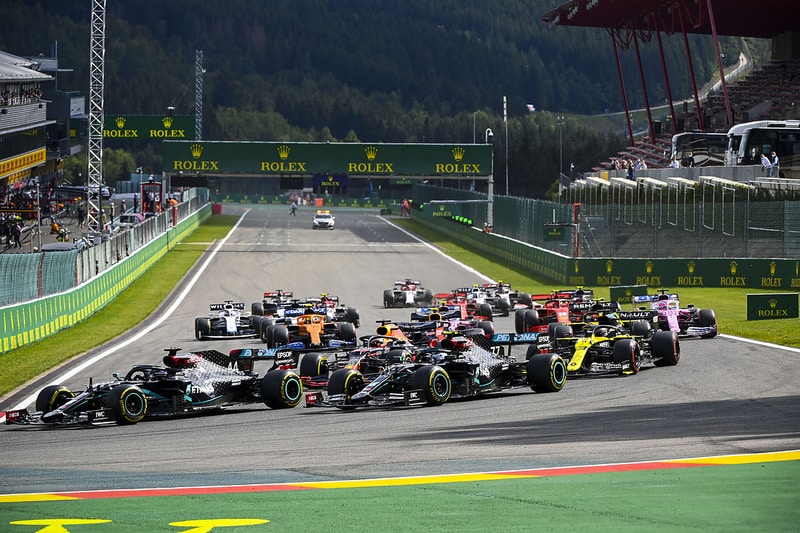
Ok, now let’s talk about Spa. The 7.004km track winds itself through the trees high in the Ardennes Forest which creates varied and highly localised weather. It is perfectly likely that the top end of the track can be covered in cloud and rain but down the hill it can be sunny and dry. This creates strategic nightmares for the teams and often chaos out on track as they scramble to sort themselves out as their drivers are driving around averaging 142mph. The track itself has 20 corners with a mix of slow, medium, and fast including some of the most iconic in the world – La Source, Eau Rouge, Raidillon, Pouhon, Blanchimont and the Bus Stop to name a few. The lack of runoff area which is populated by grass takes no prisoners. It also has 3 legitimate overtaking spots. The lap starts with the first spot, the tight hairpin of Le Source at the top of the hill that quickly dips down towards the Eau Rouge/Raidillon combo. The fast left-right-left which takes us back up the hill is one of the most feared on the calendar and ends with the blind crest at Raidillon. This leads on to the second overtaking spot on the track – the braking zone into the Les Combes chicane after the long Kemmel Straight. From here the track starts to wind back downhill through the middle sector which consists of only medium to high-speed corners, the most notable of all being Pouhon – a 150 mph multiple apex left hander that requires deadly accuracy and bravery to ace. Once the middle sector is over, the final sector is a full throttle blast through Blanchimont towards the final overtaking spot on the track – the bus stop chicane – where the cars arrive at 190mph. The widening braking zone creates opportunities for overtaking and as the short start/finish straight is the only thing between this last overtaking spot and the first of the next lap, it means that cars can try and take revenge straight away if overtaken into the Bus Stop. This contributes to keeping the cars close together and gives the racing a nice flow. It is like a rollercoaster for the drivers and a track they all want to tame (another reason to keep it).

Now, this really is my final point, and it is very much last but not least. In a 2021 fan survey, Spa was voted as one of the four ‘Critical Grand Prix’s’ alongside Silverstone, Monza and Monaco. On Page 24, the document classes it as part of the ‘Untouchables’ with the above-mentioned trio. While Monaco has its own issues and a fractious relationship with F1, they are all seen as THE F1 tracks. A core of races that are not just historically valuable to F1 but what the fans want to see and treasure. If this Liberty media regime is at all bothered by fan experience, and their PR machine indicates they do, they must keep their promises.

“We are focussed on the fans. We must give them what they want in order to keep them engaged.”

This is a quote from Stephano Domenicali’s foreword on the Global F1 Fan Survey of 2021. How is getting rid of a track you called ‘Untouchable’ at the first time of asking a focused and engaged approach aimed at THE FANS? Or is it more about money? Where is the fight?  I get you want to expand but dedicating 16 of the potentially 24 races to outside of Europe, to then suffocate tracks like Spa and Hockenheim which bring pedigree, prestige and personality. They are also tracks that are very good for racing, weirdly. Money should not be the defining factor in deciding where F1 races. Formula One is the World Championship event for the highest class of motorsport, it should be about being the best. You can’t call yourself the best if you don’t go up against the best. I know it feels like a futile battle these days to argue against money in sport, but it feels like if we lose Spa, F1 is in danger of losing its heart.