1968 Part 2 – Wings, Sponsors and Helmets

1968 was a big year for turning points in F1 history – so big it needs two articles. Three innovations from 1968 would change the face (quite literally) of F1. Two were on-track and one off-track. Let’s start off-track.

Sponsors

Heading into the 1968 season, the oil companies BP and Shell decided to pull out of F1 at the same time as tyre supplier Firestone withdrew their free supply to F1 teams. This left F1 in serious financial trouble, so it decided to allow sponsorship for the first time. Previously the cars would run with no badging and would be in the national colours of the manufacturer, but sponsorship instantly changed the way F1 looked and was financed. The first team to run sponsors was the privately run Gunston team, who adorned the livery of their title sponsor – Gunston cigarettes – at the opening Grand Prix in South Africa. This was the only F1 race they would enter that year to promote their product to their largest market – showing instantly that F1 had already become more than a sport. The cigarette sponsorship would not stop there. 11 other cigarette companies would sponsor 22 F1 teams until they were banned in the mid-2000s. It wasn’t just tobacco that jumped in to sponsor F1 teams; fuel, oil, alcohol, tyre and even condom companies moved in as they saw the commercial value of these cars as moving billboards. The range of high-end brands that adorn the cars, race suits and team merch today help fund one of the most expensive sports in the world. Whatever you think of the corporate world that sponsors has created, without them, it’s very likely F1 wouldn’t be around today.

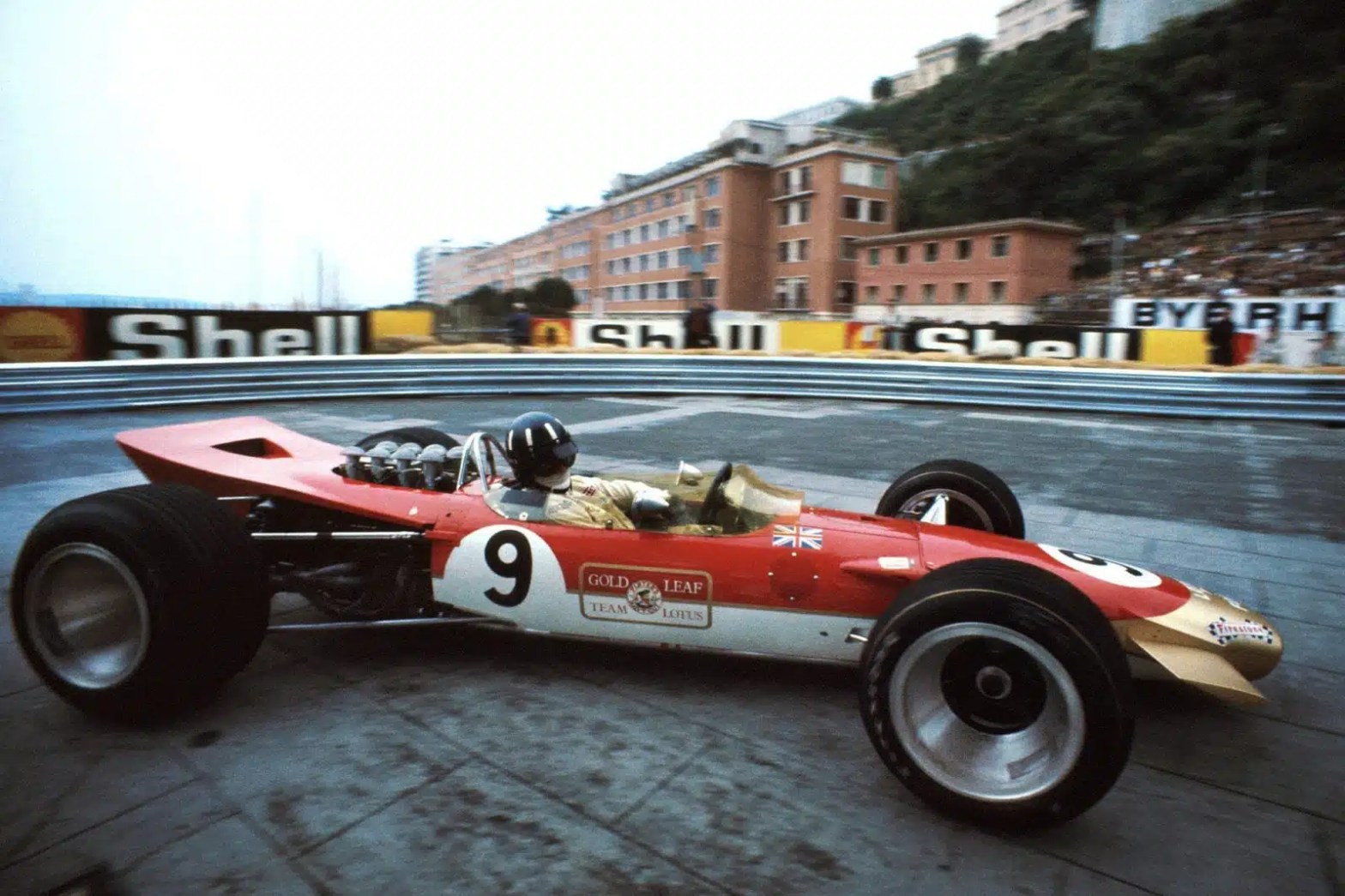
This introduction of sponsors immediately created one of the most iconic F1 liveries – the Gold Leaf Team Lotus car. In the wake of Jim Clarke’s death in April, Lotus and Colin Chapman turned up to the second race of the season in Spain with their car glistening in the famous red and gold. It was reported that this sponsorship raised £1.2 million for the team. This money was clearly well spent as at Monaco, they introduced the single most important development in the sport’s history: wings.

Wings

Before Monaco 1968, F1 cars relied solely on mechanical grip from the tyres to get around corners but this was about to change. Colin Chapman had been plotting this innovation for some time after being convinced that the effect an aeroplane wing has on a plane – to lift it into the air – could work in the opposite direction for an F1 car – to push it into the ground. He described its effect with my favourite F1 term – negative lift. The unique characteristics of the Monaco street circuit, being extremely tight and twisty meant it was the perfect place to try his new toy.

The Lotus 49B would have two small wings poking out each side of the front chassis with an aerofoil rear wing which was basically a large dinner tray attached to the rear engine structure. While they didn’t look like much, their unseen effect was massive. They worked by manipulating the air as they passed through it, creating a speed differentiation between the air passing over and under them, which in turn created a low-pressure area underneath the car. This low-pressure area produced a suction effect that pushed the car into the ground. This meant the tyres experienced a much higher load and a larger contact patch with the ground, producing much more grip. While these wings were very rudimentary by today’s standards, in 1968 they were revolutionary and very effective. Graham Hill took pole position and the win in the Lotus 49B’s first outing, and once again, F1 would never be the same.

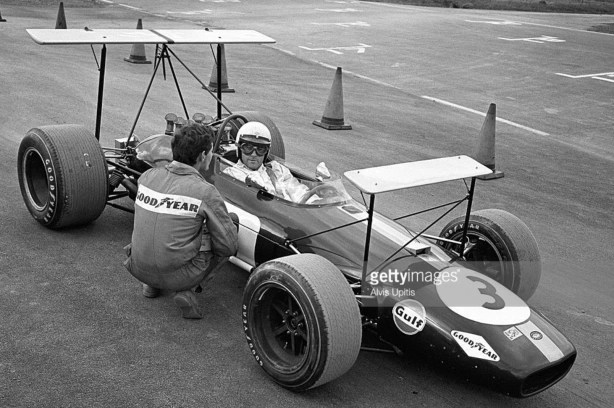
By the time of the next race in Belgium, Ferrari and Brabham had gone one better, installing rear wings on struts high above the car, while Matra had installed a full-length front wing. They even added a high front wing on struts but that was only used in practice as it was quite hard to control. The teams would go back and forth throughout the year producing more and more sophisticated set ups and by the end of the year, most teams had installed wings on their cars. Wings have been used as the primary producer of downforce in F1 for decades, except for the ground effect years of the 1980s and now, from 2022 onwards. Negative lift, or downforce as we now know it (but I prefer negative lift), lay the foundations for F1 to separate itself from other engine-powered series in terms of performance.
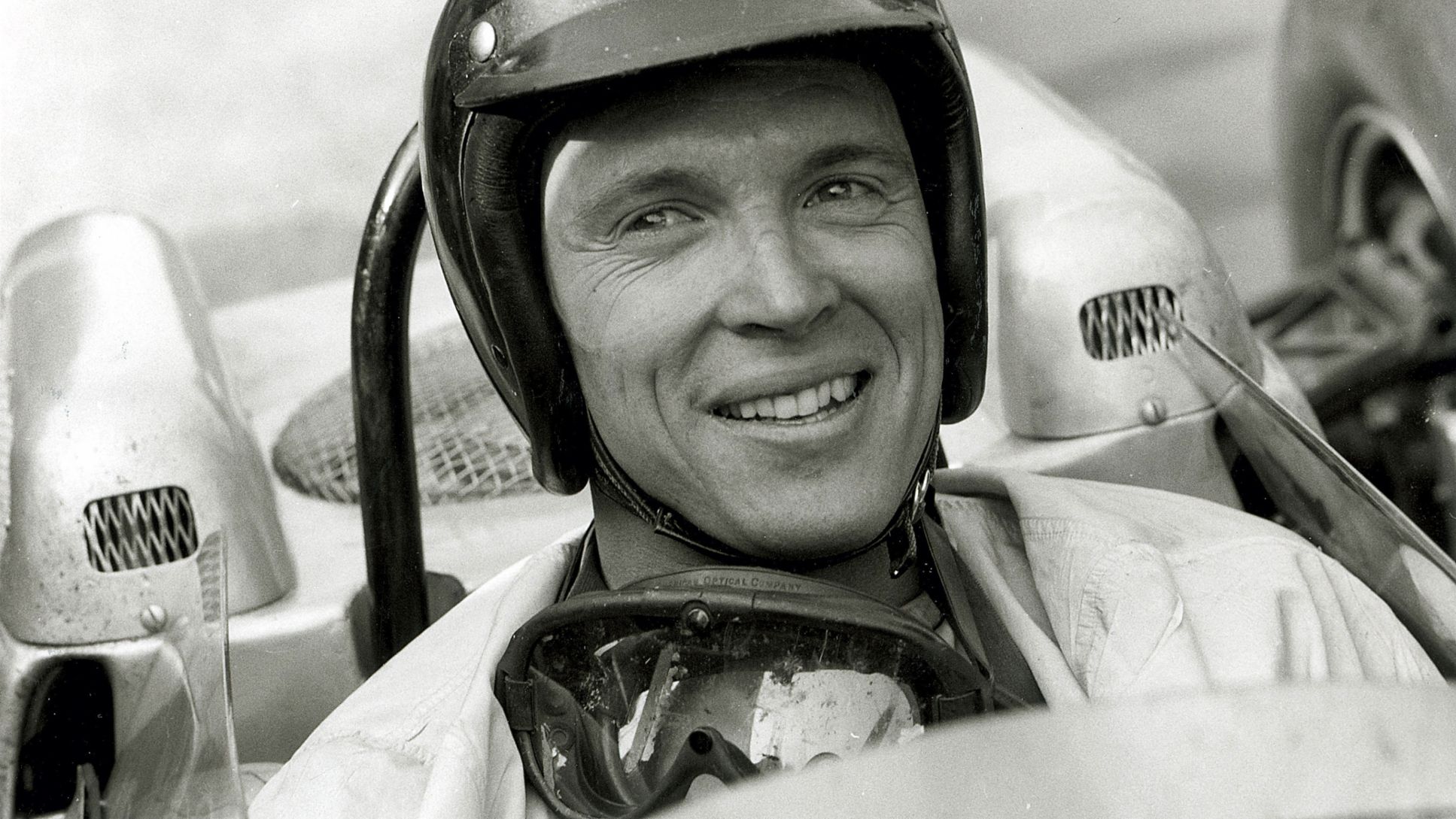
The final innovation of 1968 was the introduction of full-face helmets for drivers. While it was essentially a safety measure it did drastically change the driver’s look. Going from looking like they were about to jump into a World War 2 bomber, to slick, futuristic astronauts. It symbolised F1’s continued technological evolution.

Dan Gurney was the instigator of this particular evolution, being the first driver to wear a full-faced helmet at the German Grand Prix. He had helped to invent it with the Bell Helmet Company, who still supply half of the F1 grid. Once Gurney wore one at the Nürburgring, other drivers followed suit and they became mandatory from 1970 onwards.
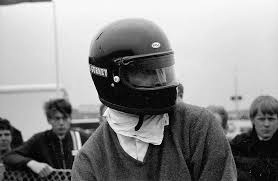
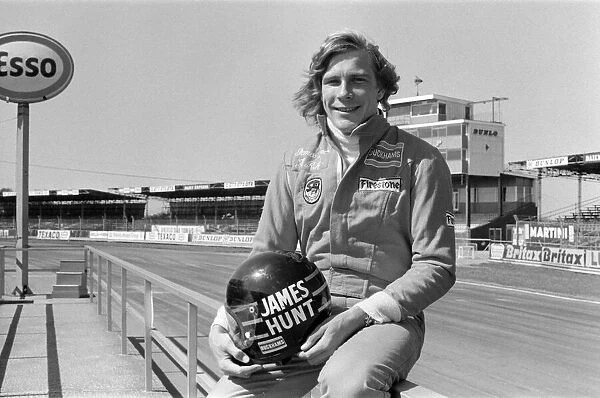
While some drivers had used their helmets to distinguish themselves while in the car before full face became the norm – Graham Hill and Jackie Stewart come to mind – this full face change gave drivers more freedom to show their individuality and they became a symbol of the driver. My favourite of this era was James Hunt’s, which had his name written in big letters on the side – just to leave no room for doubt.
Looking back at this, 1968 has an argument to be one of the most influential years in F1 history – if you think you know a year that tops this, let me know in the comments.

Until next time.
F1 Turning Points – The Le Mans Disaster

The next turning point in F1 history didn’t take place on track – not an F1 track at least.

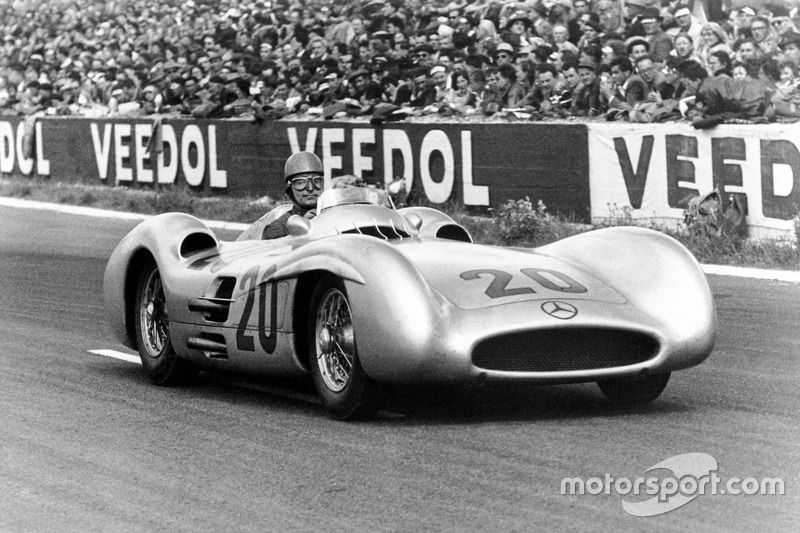
Once Alfa Romeo dominated the 1950 championship, they split the next 3 with their Italian counterparts Ferrari. However, halfway through 1954 the F1 pecking order would be ripped up with the introduction of a new Constructor – Mercedes Benz.

Mercedes entered F1 at the 1954 French Grand Prix with the iconic W196, and they would go to take a 1-2 on their debut. They even had the audacity to steal the greatest driver of the era, Juan Manuel Fangio, from Maserati mid season to lead their attack. He had already won 2 races with Maserati at the start of the season and would go on to win 4 more with Mercedes, becoming the only driver to win a World Championship with different teams in the same season. A record that will never be broken now.

But this turning point isn’t about the 1954 season, or F1 at all really, but it would change the course of the sport forever. Mercedes started the 1955 season the way they ended the ’54 season, winning 2 out of the first 4 races, with the second coming at the Belgian Grand Prix in June. However, a week later, the motorsport world would be devastated by it’s worst tragedy.

During the 1955 running of the 24 hours of Le Mans road race, Jaguar driver Mike Hawthorn pulled over to the side of the track to go into the pits, braking as he did. In doing so, he cut across Lance Macklin’s Austin-Healey who in turn swerved to avoid. Catastrophically he swerved right into the path of Pierre Levegh’s Mercedes Benz 300 SLP, who was going around 125mph. Levegh’s car launched over the back of the Austin-Healey and straight into the spectator area by the side of the track, which was only protected by a grass verge. The impact with the ground caused the car to disintegrate and explode into flames. The impact threw Levegh from the car back onto the track and killed him instantly. The debris from the exploding car would kill 83 spectators and injure 180 more.

This disaster caused Mercedes to pull out of motorsport entirely, as they were only really in it for technological testing purposes, not for the love of competition. They didn’t see the point in risking lives for the sake of progress.

Mercedes would complete the 1955 season, winning the remaining 3 races – 2 for Fangio and one for Sterling Moss (remember him?) but that would be their last season until 2010.

The Silver Arrows’ dominance of F1 ended as quickly as it started, but what a run it was. The won 10 out of the 13 races they entered to blow the competition away. Something they would continue to do when they returned to F1 – winning 8 straight Constructors Championships from 2014-2021, but more on that in a later post.

How different would the history of F1 look if they had stayed? Would they be the most successful team over Ferrari if the Le Mans Disaster never happened? All these questions we will never have answers to but I think this quote from an article in Motorsport Magazine from December 1955 gives a hint of the feeling at the time.

“The complete withdrawal by Daimler-Benz is an unhappy thing for many of us, especially those interested in technical development, but, on the other hand, they had monopolised racing to such an extent that their withdrawal will at last allow someone else to win”

F1 Turning Points – A Sunny Day in Northampton

I thought I would start a series on the turning point in the history of F1, so here it is.

The first turning point in F1 history, is of course, where it started.

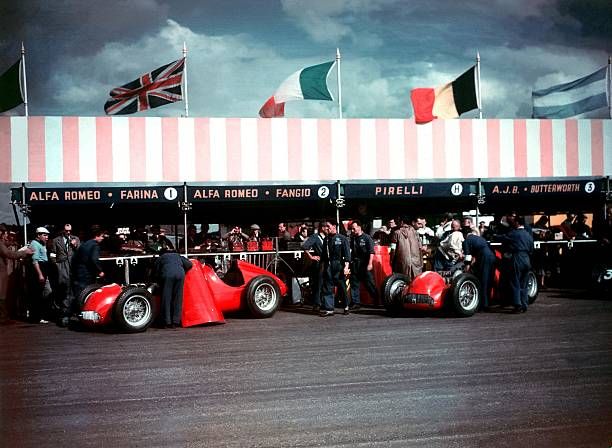
The Formula 1 World Championship was born on a sunny day in May 1950. The regulations had been decided 2 years earlier and a series of Formula 1 races had taken place since, but this event was the first time the drivers were competing for the title of F1 World Champion.

The World Championship was unleashed at Silverstone for the British Grand Prix, in front of 200,000 people including King George IV and his family. This former airfield had hosted a couple of British Grand Prix’s previously and already had the reputation as being one of the best tracks in the world. Confusingly, this race actually had two names, simultaneously being the European Grand Prix as well. Incredibly, the Silverstone layout hasn’t changed much since 1950 with many of the famous corners still being tackled by F1 drivers today, albeit with a few additions.

On the day, the first row was taken up by a famous Italian manufacturer, but not the one you are thinking of. Ferrari didn’t turn up to the first championship race so Alfa Romeo would take over and shine in the Northampton sun, with their supercharged 158. They would dominate qualifying and make up the first four places on the grid, with Giuseppe Farina and Luigi Fagioli making it an Italian 1-2 followed by Juan Manual Fangio and Reg Parnell.

The F1 cars of 1950 were quite different to todays, as you would imagine. For one thing, they had their engines at the front and very little aerodynamics. The heavy engine at the front and thin tyres meant they suffered from a lot of understeer – the front of the car not wanting to turn – so the fastest way around was by drifting the car around the corners. The cars were rear-wheel drive so the driver would have to floor the throttle to get the back end to step out and then would just guide the car around the corner, trying not to spin. A completely different skill set from today but no less impressive. If anything, it was more impressive because if the driver got this tricky technique wrong, they were heading towards a ditch in a highly flammable rocket.

The 24 gladiators called drivers would represent 9 nations, have an average age of 39 and even include Royalty. Prince Bira of Thailand would line up 5th in his Maserati but wouldn’t see the chequered flag, running out of fuel on Lap 49.

Once the race got going, Alfa Romeo wouldn’t let their dominance from qualifying slip. Despite Fangio retiring from the lead after 62 of the 70 laps, they would take all three steps of the podium and finish 2 laps ahead of their nearest challenger. Farina would take the chequered flag with a race time of 2 hours 13 minutes and an average speed of 143 km/h.

Reg Parnell would give the home crowd something to cheer for as he became the first Brit to win F1 World Championship points, finishing in third.

As for the rest of the field, only 11 would finish and 5 took home Championship points.

The 1950 British Grand Prix was also significant for who won the 500cc support race, a young Brit called Sterling Moss who would make his own indelible mark in the history of F1.

The Alfa Romeo’s dominance would last the whole championship, despite Ferrari getting involved at the next race at Monaco. Farina would go on to become the first-ever F1 world champion.