Why F1 Testing Doesn’t Matter

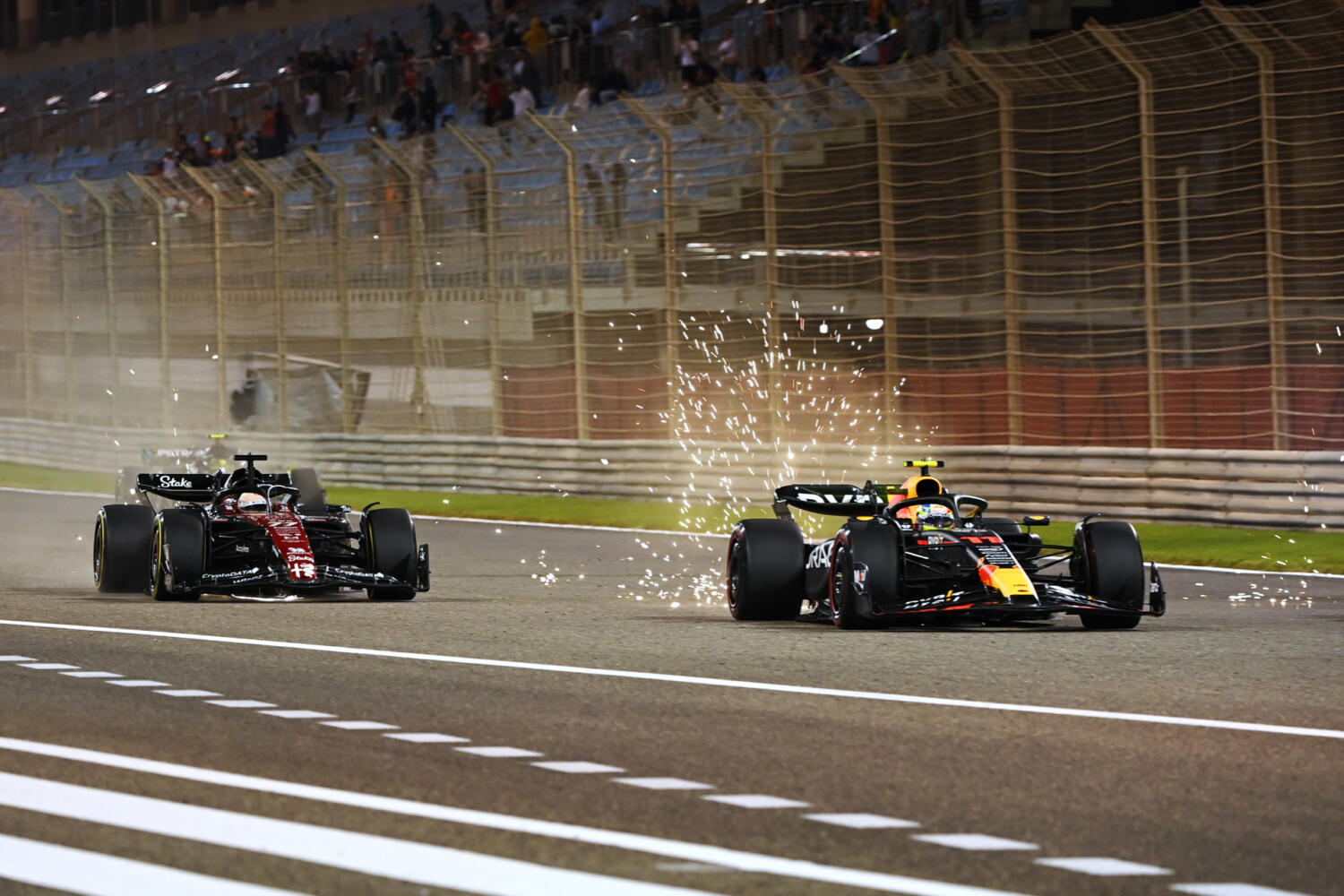
BAHRAIN INTERNATIONAL CIRCUIT, BAHRAIN - FEBRUARY 25: Sergio Perez, Red Bull Racing RB19, leads Valtteri Bottas, Alfa Romeo C43 during the Bahrain February Testing at Bahrain International Circuit on Saturday February 25, 2023 in Sakhir, Bahrain. (Photo by Mark Sutton / Sutton Images)

F1 is back and so am I.

F1 returned to Bahrain for a single 3 day pre-season test before the opening race at the same track next weekend. That’s not much time for the teams and drivers to get up to speed with their new machines. 

There were many storylines to follow. Would Red Bull maintain their dominance or can Ferrari and Mercedes sort out their own issues to properly join the title fight? Can any of the midfield close the gap to the Big Three and can Williams hang on at the back? 

But one thing is for sure, you can’t trust Pre-season testing times. 

We are always going to be suckers to the timing charts in any F1 session but testing is particularly useless. With each team running their own programmes, with different fuel levels, tyre wear and engine modes it is nearly impossible to compare them properly. But if you look further than just the best times you can get an indication of how well set up each team is for the season ahead.


Red Bull 

The reigning world champions seemed to have a seemless test. They ran well on all three days, completing over 400 laps and were able to extract speed from the car on all their runs. Sergio Perez set the fastest time of the whole test on day 3 but it was Verstappen who just exuded confidence. They will be hard to beat again this year, especially Max. As Toto Wolff has said, they can brake later, carry more speed through the corner and have great traction. That’s a great combination.

Ferrari

Ferrari aimed to fix their reliability issues that plagued them so much during last season. The speed was always present in the car but the drivers were rarely able to use it without issues. They had high tyre wear and had to turn their engine down mid season to protect the turbos. It will only come apparent if they have fixed their engine issues as the season gets going and its turned up to full capacity. It was obvious they were trying to understand their tyre wear issues during the pre-season as they used a low downforce rear wing, which is the opposite of suitable around the Bahrain track, and did lots of soft tyre runs. If they have fixed these two big issues, they should be able to challenge Red Bull. Leclerc has complained that this car is more suited to Sainz’s driving style so could Sainz be the favourite to challenge Red Bull? 

Mercedes

Mercedes have definitely fixed their porpoising issues but the car still has balance issues that made them inconsistent last year. The car doesn’t seem quite on the level of the two teams above and even might have some challenge from another team for 3rd place, but more on that later. Both drivers have had good sessions during testing but also not so good sessions. Merc were also one of the teams to have a session ending mechanical issue – hydraulics in their case. I would expect them to be in contention for podiums again but not wins at the moment. They are really giving this no-sidepod design a good go but if they don’t start to see results soon, they have indicated they will switch to Plan-B.

Alpine

Alpine had one of the quietest pre-seasons but rumblings in the paddock are that they are one to watch. They didn’t use any of the ‘soft’ C4 or C5 tyres so they won’t be high up the timing charts. But remember – Pre-season times don’t matter. It’s the long run times and reliability that are the main references. Alpine ran well and the car looked consistent but nothing special. They admitted they did a lot of experimenting to find the limits of the car and have an upgrade coming for the first race so it’s even harder to place them. The car will look different when things ramp up. I expect them to be in the fight for 4th but the gap is too big to close to the front three over one winter, especially while everyone figures out how to best work the budget cap. 

McLaren

Another preseason struggle for the McLaren team. Last year it was brake issues and this year it was wheel barrows. No, not the gardening tool but the aerodynamic devices that arch over the front wheels. The structure holding them in place wasn’t strong enough so it really limited their running which is a killer in this era of F1 where testing for the year has already been completed. The Woking team completed the fewest laps over the 3 days and didn’t show much pace when they were on track. Let’s hope this wheel issue is a simple fix and they have pace in the car they weren’t able to show. 

Alfa Romeo

Alfa had a mixed test, they topped Day 2 after a late glory run by Zhou but did stop on track twice. I noticed that they have switched to a Mercedes style steering wheel, obviously Bottas’ influence is being felt more on this car than its predecessor. I would expect to find Alfa Romeo right in the midfield battle but not at the front of it. Loved Bottas’ test helmet, he should keep it. 

Aston Martin

Aston Martin were THE talking point of the Bahrain test. There were grumblings coming out of Silverstone that the wind tunnel data looked good and the on-track action backed that up. No matter what, it is a big upgrade on last year’s car, which was probably the 2nd worst until they found pace in the 2nd half of the season. Alonso coming over to the team will give everyone a boost and make sure that the maximum will be extracted from it at all times. There will be no confusion about where they sit in the pecking order with him behind the wheel. They didn’t do any performance runs late in the day but were constantly around the top five in the long runs and didn’t have any reliability issues that we saw. Ted Kravitz pointed out that on Day 3, the long run pace was Red Bulls first and then Aston Martin. They could be the biggest jumpers in the pecking order this year and get involved with Mercedes for 3rd. BUT, we have seen teams do really well in testing before and not show that pace when it matters. Luckily, we only have less than a week before we find out. 

Haas

Nico Hulkenberg comes in to partner ex-rival Kevin Magnussen at Haas for 2023. In these two, they have solidly quick and experienced drivers to keep the team moving forward. Unfortunately for Mick Schumacher he crashed a bit too much so that will be Hulkenberg’s first requirement – keep it out of the barriers. Haas had a good pre-season as well. They ran consistently – racking up 414 laps which was fourth best and only had a minor throttle issue on Day 1 that caused a delay. This car looks like a great base for the team and now they have a title sponsor, they can actually spend their whole budget, which they have never been able to do. They shouldn’t be left behind in the development race this year. 

Alpha Tauri

Alpha Tauri logged the most laps during pre-season with 456 which gave rookie Nick de Vries plenty of running to get up to speed. While not headline grabbing, I think this was a good three days for them. The car looks reliable and getting de Vries up to speed ASAP will be key for them in the Constructor’s fight. They have an intriguing driver line-up, I have high hopes for de Vries and he should push Tsunoda to prove his speed now he is the more experienced driver. No hiding places for either of them. 

Williams

Williams logged the second most laps in preseason with 439 and the car is definitely an improvement on last years, but that’s not too hard. I thought Rookie Logan Sargent looked comfortable in the car and both drivers showed pace over the three days. I think that is all Williams were looking for in this test, that the car can give them a good base to join the midfield and develop from there. They are probably still at the back but will be much closer to the rest of the field this year. 


So moving into the first race of the year, here’s what I think the pecking order is, not that it matters: 

Red Bull

Ferrari 

Mercedes

Aston Martin

Alpine

Haas

Alpha Romeo

McLaren

Alpha Tauri

Williams 
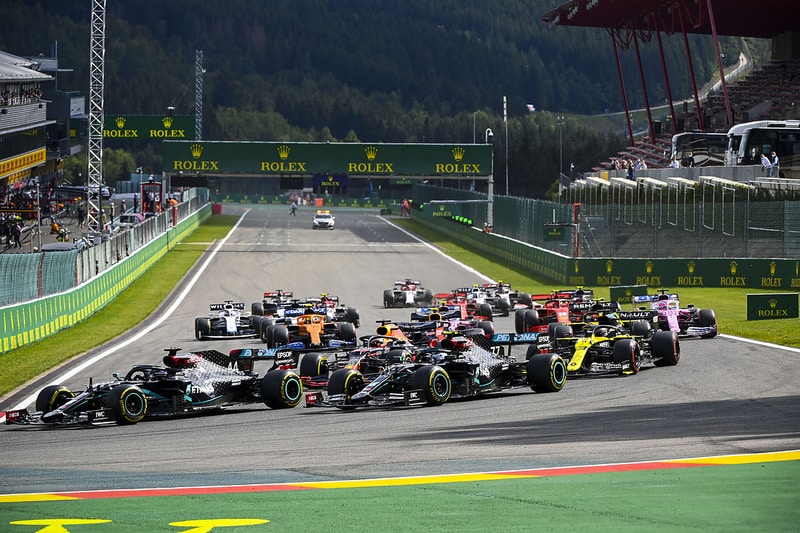
Why We Can’t Lose Spa

I have heard more and more noise about Spa losing its spot on the calendar and this troubles me deeply. After we have lost historical tracks like Nürburgring and Hockenheim in Germany because of finances, it is looking like we could have another victim. The situation with Spa is slightly different as it is not just about the money but also the space on the calendar with Spa’s contract running out at the wrong time. Stephano Domenicali said to the F1 bosses over the Montreal Grand Prix weekend that the calendar could grow to 24 races next year. F1’s expansion priorities to new markets mean that 16 of the 24 races are allocated to races outside of Europe, which I have no problem with, but that does feel a little high. Of those 8 slots, Silverstone, Budapest, Spain, Imola, Zandvoort and Monza all have contracts in 2023. Meanwhile, Monaco is still negotiating, and Austria is very likely to survive as it is owned by Red Bull (nepotism much?) This means that there is no room for Spa, even if it had all the money in the world. Out of all of those races, only Silverstone and Monza are at Spa’s level of thrill, action, weather variability and overtake probability. Budapest is a fantastic circuit, but it does not suit Formula One cars, I have watched too many races there that are processions as the drivers can’t get anywhere near each other because Budapest’s layout is too tight and twisty, and the one straight isn’t long enough. Also, don’t get me started on Monaco, a once crucial circuit for the popularity of the sport but F1 has outgrown it, the cars are too big, but to be honest, F1 cars haven’t been able to pass there for decades and that was only because drivers sometimes missed gears in their manual gearboxes back in the day.

While I understand F1 is a business, it is not like it is short of money since Netflix’s Drive To Survive has made it the fastest growing sport in the world. It has endless high end sponsors and reaches places only Football can reach in scope. It has been reported that to host an F1 race for 10 years, it would cost 1 billion dollars. I just don’t think it needs to be prioritising areas and money over its competitive spectacle. In recent years the sport has added Saudi Arabia, Vietnam (even though they never made it), Miami and Las Vegas – all willing to pay big money for street circuits. I can safely say that none of these tracks even come close to Spa in terms of challenge, spectacle and most importantly, competitiveness. Yes, street circuits create a different challenge for the drivers but apart from when chaos ensues during the race, the racing is usually boring and processional because the tracks are created to fit around the existing structures, they are too tight for the cars and usually not suited to overtaking. While having the races in different cities gives the locals are closer look at the cars and creates an exciting atmosphere in said city, I just experienced that in Montreal, the racing is the core of the sport and if F1 continues down this road, I think they are sacrificing the level of racing for commercial gain which just feels wrong. Franz Tost’s recent comments really scared me when he said

“No money, no game. If they have the money, we go there. If we don’t have the money, we don’t go there”

What is this? Is this the pinnacle of motorsport, where the best drivers and the best teams go up against each other on the best tracks in the world? Or is this a pyramid scheme where only money and greed matter? Unfortunately, I think I know that answer now.  

Ok, now let’s talk about Spa. The 7.004km track winds itself through the trees high in the Ardennes Forest which creates varied and highly localised weather. It is perfectly likely that the top end of the track can be covered in cloud and rain but down the hill it can be sunny and dry. This creates strategic nightmares for the teams and often chaos out on track as they scramble to sort themselves out as their drivers are driving around averaging 142mph. The track itself has 20 corners with a mix of slow, medium, and fast including some of the most iconic in the world – La Source, Eau Rouge, Raidillon, Pouhon, Blanchimont and the Bus Stop to name a few. The lack of runoff area which is populated by grass takes no prisoners. It also has 3 legitimate overtaking spots. The lap starts with the first spot, the tight hairpin of Le Source at the top of the hill that quickly dips down towards the Eau Rouge/Raidillon combo. The fast left-right-left which takes us back up the hill is one of the most feared on the calendar and ends with the blind crest at Raidillon. This leads on to the second overtaking spot on the track – the braking zone into the Les Combes chicane after the long Kemmel Straight. From here the track starts to wind back downhill through the middle sector which consists of only medium to high-speed corners, the most notable of all being Pouhon – a 150 mph multiple apex left hander that requires deadly accuracy and bravery to ace. Once the middle sector is over, the final sector is a full throttle blast through Blanchimont towards the final overtaking spot on the track – the bus stop chicane – where the cars arrive at 190mph. The widening braking zone creates opportunities for overtaking and as the short start/finish straight is the only thing between this last overtaking spot and the first of the next lap, it means that cars can try and take revenge straight away if overtaken into the Bus Stop. This contributes to keeping the cars close together and gives the racing a nice flow. It is like a rollercoaster for the drivers and a track they all want to tame (another reason to keep it).

Now, this really is my final point, and it is very much last but not least. In a 2021 fan survey, Spa was voted as one of the four ‘Critical Grand Prix’s’ alongside Silverstone, Monza and Monaco. On Page 24, the document classes it as part of the ‘Untouchables’ with the above-mentioned trio. While Monaco has its own issues and a fractious relationship with F1, they are all seen as THE F1 tracks. A core of races that are not just historically valuable to F1 but what the fans want to see and treasure. If this Liberty media regime is at all bothered by fan experience, and their PR machine indicates they do, they must keep their promises.

“We are focussed on the fans. We must give them what they want in order to keep them engaged.”

This is a quote from Stephano Domenicali’s foreword on the Global F1 Fan Survey of 2021. How is getting rid of a track you called ‘Untouchable’ at the first time of asking a focused and engaged approach aimed at THE FANS? Or is it more about money? Where is the fight?  I get you want to expand but dedicating 16 of the potentially 24 races to outside of Europe, to then suffocate tracks like Spa and Hockenheim which bring pedigree, prestige and personality. They are also tracks that are very good for racing, weirdly. Money should not be the defining factor in deciding where F1 races. Formula One is the World Championship event for the highest class of motorsport, it should be about being the best. You can’t call yourself the best if you don’t go up against the best. I know it feels like a futile battle these days to argue against money in sport, but it feels like if we lose Spa, F1 is in danger of losing its heart.

Them’s the Rules

The Formula is changing. In 2022 we will see the largest single regulation change in F1 history. As is always the case in Formula 1, the rule makers want to create better, more exciting racing and in this version of the Formula, they are stripping everything to basics and changing the aerodynamic philosophy of the sport. Formula 1 has been busy over the last four years researching, testing and simulating their way to the best solution. The numbers have been mindboggling, they have conducted over 7500 simulations, created over 21 iterations of the design for the car and have collected half a petabyte of data to work from. This is enough data to fill 10 million standard four drawer filling cabinets full of paper. After all of this, what have they decided I can hear you ask? Well, you came to the right place. In this article I will do my best to explain the upcoming regulation changes and the ways in which they will change the spectacle, hopefully for the better. The changes can be conveniently put into three areas of the car: the aero, the tyres and the fuel. By far the largest is in the aero department so let’s start there.

Venturi Effect

The aerodynamic performance of the 2021 cars was the best it has ever been. They cornered quicker than any car in history. Their large wings, winglets and other devices spread over the car helped to push it into the ground, creating grip and stability in corners that cars have no business taking so quickly. This effect is called downforce. However, with great performance does come pitfalls. This performance is gained by manipulating the air that passes over their car in a way which helps this suction effect and sticks the car to the ground. Formula 1 cars perform best when running in undisturbed air but once they pass through it, the air is heated and energised so doesn’t flow over the car behind as expected. Imagine the difference in water before and after a boat has moved through it. If you stand at the back of a boat, you will see this ‘wake’ of disturbed, almost bubbly water. This is the same effect that an F1 car has on the air around it. If you were to drive a boat through that ‘wake’ you will be bouncing all over the place and probably feel quite sick. Within 20 meters of another, a 2021 F1 car would lose 35% of its aerodynamic efficiency and thus performance. Within 10 meters, they lost 46%. This is a massive amount when they rely so heavily on it for performance. This means that it is very hard for a car behind to be able to drive quick enough in this ‘dirty air’ to get close enough to pass the car in front. It is estimated that to pass in F1 the car behind has to be, on average, a second and a half quicker and in a formula that is so close, this is hard to do.

This new era of Formula 1 aerodynamics has two main aims:

  1. To reduce the wake or amount of dirty air that the car in front produces.
  2. To make the car behind less sensitive to this disrupted or dirty air.

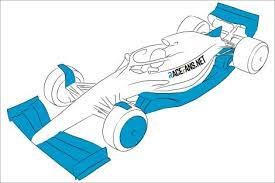
While the previous aero philosophy had been to push the majority of the air over and around the car, the new one is to direct it underneath and then up over the top of the curved rear wing. This principle of using the underside of a racing side to generate negative pressure which produces downforce is commonly known as ground effect.

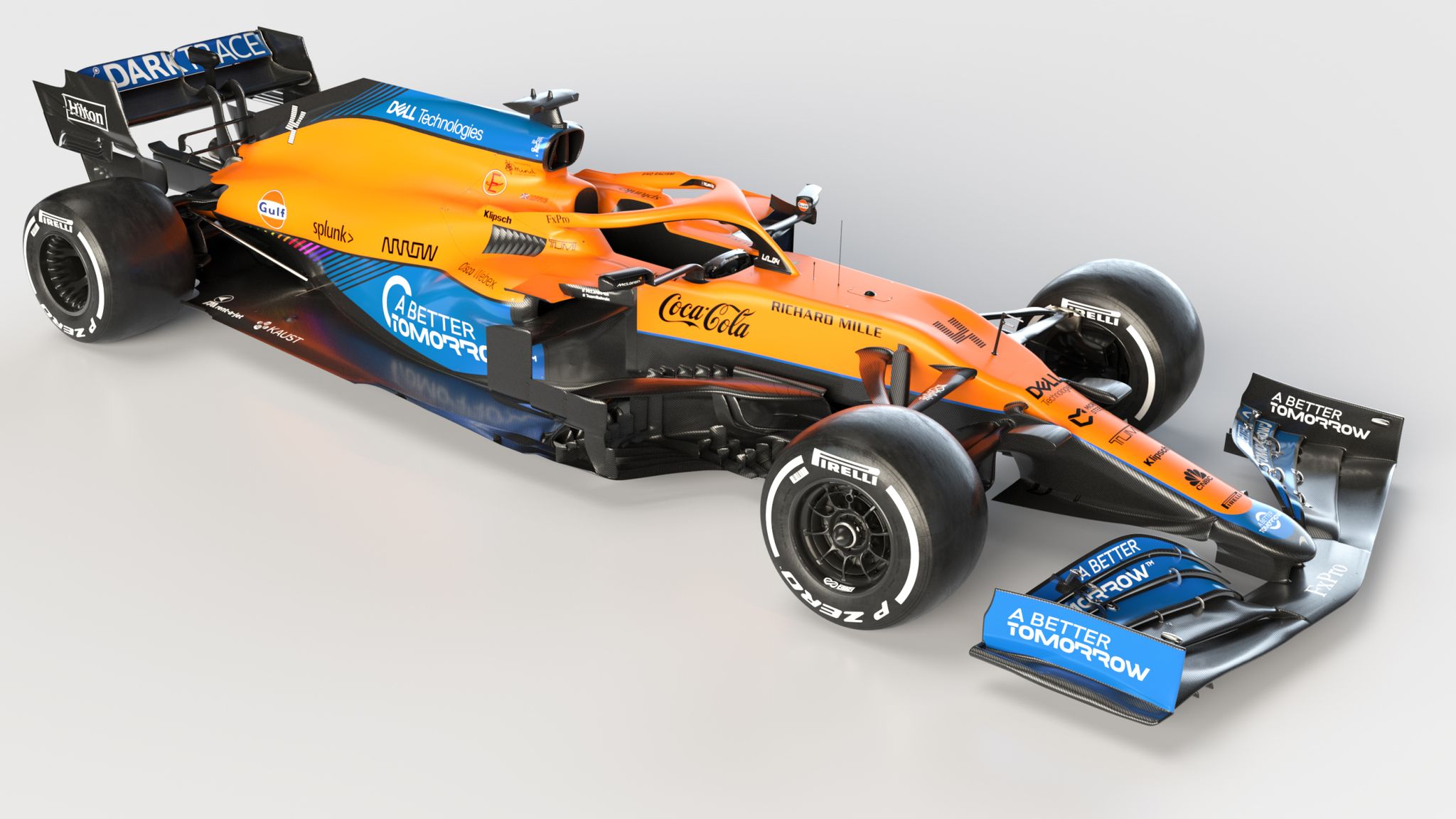
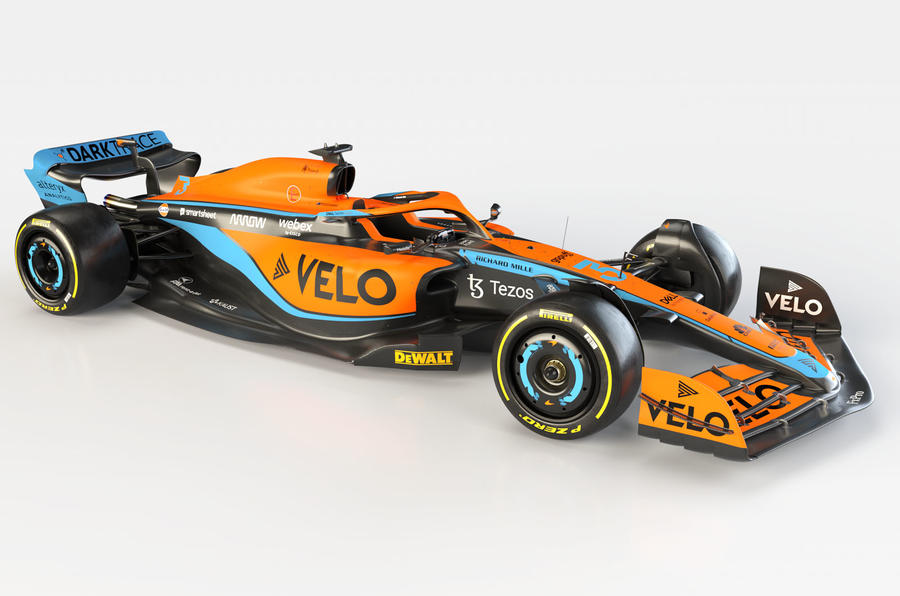
Can you spot the differences between these two cars? F1 2021 vs F1 2022 (L-R)

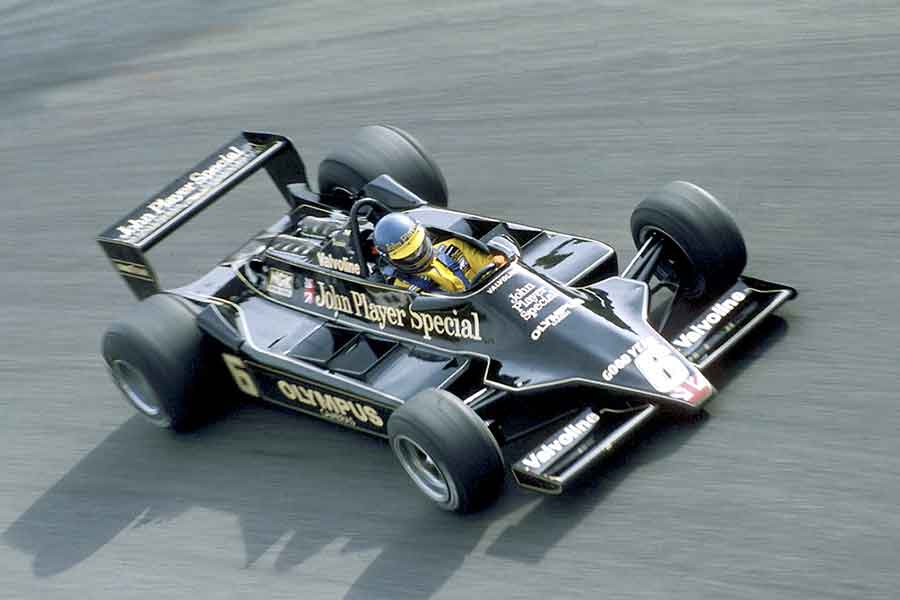
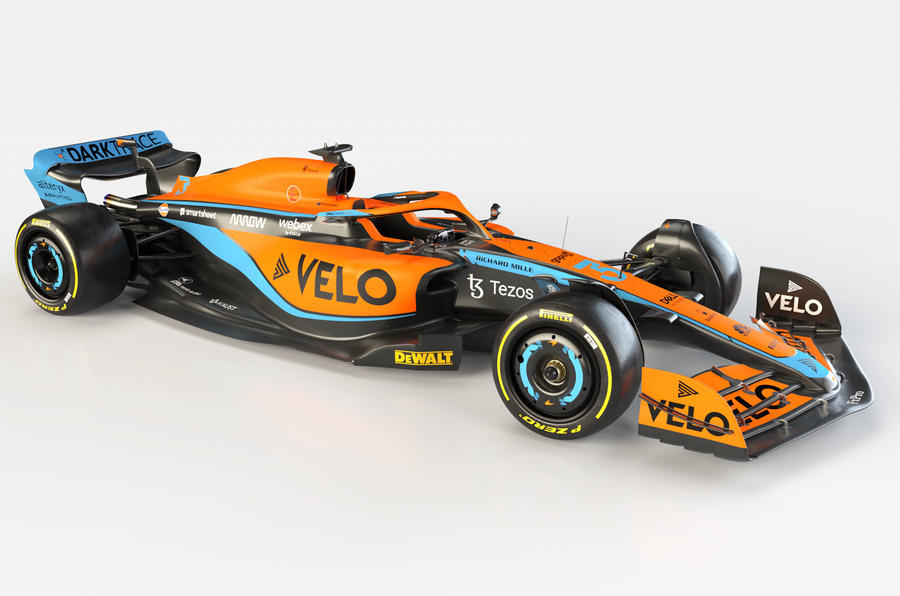
Ground effect has history in Formula 1, with the cars of the late 70s and early 80s deploying this aerodynamic phenomenon to gain performance over their rivals still relying mainly on mechanical grip and rudimentary wings. The difference between then and now is then’s use of ‘skirts’ around the edge of the car to direct and trap in the air between the underbody of the car and the road, while the new era sends it underneath as part of a more compact chassis. The Lotus 79 below demonstrates these skirts, the structure where the Olympus advertising sits while the McLaren MCL36 contrasts its with more compact bodywork and use of sidepods (look for DeWalt) behind the front tyres to direct the air to the floor.

The proportions of the two eras couldn’t be more different as they demonstrate different ways the aerodynamics can be worked!
Pictured: Ronnie Peterson in the Lotus 79 & McLaren MCL36

This new era of ground effect relies on what is known as the Venturi Effect. The theory is that you create an area of lower pressure by isolating and squeezing air into a narrowing tunnel, which speeds it up. This area of lower pressure on the floor creates a downwards suction and pushes the car into the ground. The bodywork traps the air in that ‘Venturi tunnel’ and because downforce is generated elsewhere, it doesn’t require as many exterior aero devices. As a result, the car is smoother so doesn’t energise the air travelling over the car behind as much. This should mean the car behind can follow much closer, for longer without losing as much performance. From the simulations that Formula 1 have run with cars at the 2022 specifications, it is estimated that the loss of downforce at 20 meters will be reduced to 4% and 18% at 10 meters. This is way down from the 35% and 46% of the current crop. This should hopefully make the cars easier to race and provide the drivers with conditions in which they can be aggressive and fight without everything overheating and losing performance.

18-inch Wheels

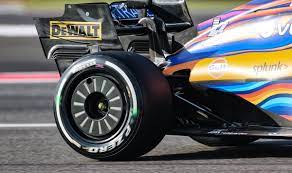
The aerodynamics aren’t the only area of the cars that is getting an uplift in 2022. The tyres are going from 13-inch to 18-inch rims and are losing some of their profile. Losing their profile means the amount of rubber on the tyre’s rim is being reduced. Despite the obvious visual difference, these changes have a big effect on the tyre’s performance. The new low profile tyres won’t deform or move as much under lateral forces, meaning they won’t overheat as easily. This should mean that the drivers can push for longer and run close together without burning them out. The tyre revamp is not just to help their performance but has also been incorporated into the aerodynamic philosophy. The tyres will now have covers. This is to help control the amount of heat ejected from the tyre rims which will reduce the wake created by them. The front tyres will also include winglets on the inside plane of the tyre to help direct air into the Venturi tunnels on the floor of the car, rather than it being pushed outside. The pictures below will probably do a much better job of describing the looks than me.

Wheel Cover on the Left and Winglet on the Right

E10 Fuel

The final area of change on the new breed of F1 cars is in the fuel. In an effort to move towards running completely sustainable fuel by 2025, the new fuel compound will include 10% sustainably produced ethanol alongside 90% petroleum product. While helping sustainability, it also theoretically takes away 20 horsepower but the whispers from the engine manufacturers seem to indicate that they have already found that performance back, highlighting their adaptability and problem solving power.

What to expect

While the regulation change is aimed at making the racing closer, this reset of the rules also gives the teams a fresh start and an opportunity for the pecking order to change. A team lower down the grid could find a better solution to the new regulations and move up the grid as the others try to replicate their idea. This has happened at the previous two big changes: Brawn and Red Bull in 2009 and Mercedes in 2014. Ironically, this is the same team that the new regulations have been partly created to reel in. With the new wind tunnel restrictions, the teams at the bottom of the championship get more time using theirs, so this should give them even more of a chance to move up. Ferrari in particular will benefit from their terrible 2020 as that sixth place finish has granted them a lot more time in their wind tunnel than the frontrunners over the last year, as per the regulations. Expect them to be quick. While the regulations can cause a shake-up, don’t be surprised to see Mercedes and Red Bull right up there when points are on offer in Bahrain, as is the sheer quality of those two teams. One thing I am hoping for this season is for a variety of winners as the teams and drivers get used to and learn more about these new breed of machine across the different tracks. I am sure performance levels will vary great between the circuits in the first quarter of the season.

After the F1 shakedown in Barcelona, the cars looked amazing and the drivers, particularly the Ferrari drivers had complementary things to say about the desired effects F1 has been seeking (see above). This all bodes well for, hopefully, another highly competitive and unforgettable chapter in the high speed journey that is Formula 1.

A tribute to the Iceman

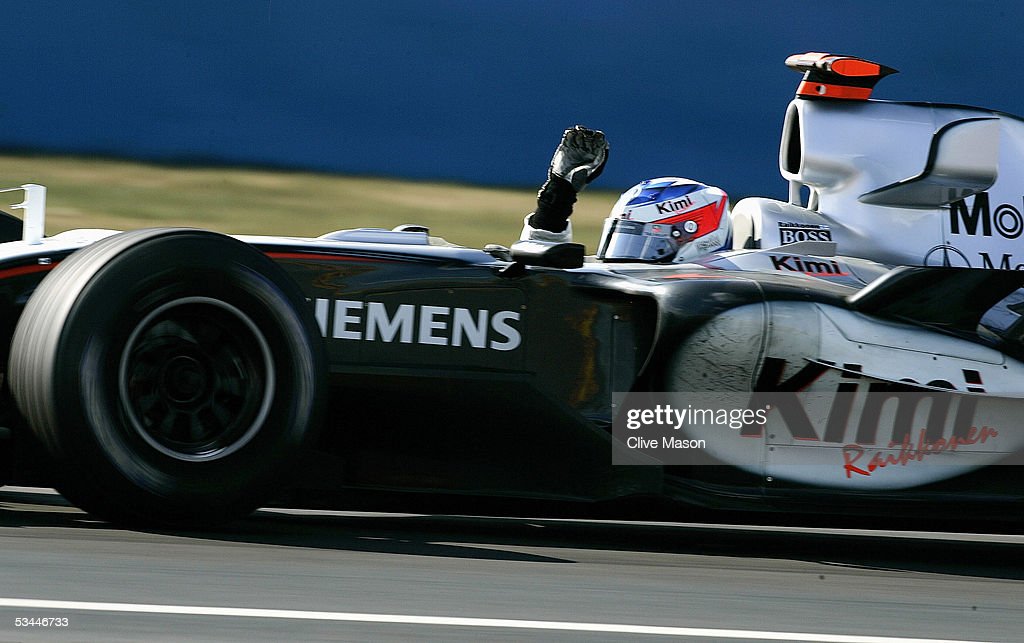
ISTANBUL, TURKEY - AUGUST 21: Kimi Raikkonen of Finland and McLaren celebrates after victory in the Turkish Formula One Grand Prix at Istanbul Park on August 21, 2005 in Istanbul, Turkey. (Photo by Clive Mason/Getty Images)

This year we said goodbye to one of the best. While he was seemingly looking forward to it, the majority of F1 fans, if not all, were sad to see him go. Lets introduce this F1 legend with the cold hard facts: He raced for five teams in his F1 career which included some of biggest names in the sport’s history. These teams were: Sauber (2001), McLaren (2002-2006), Ferrari (2007-2009 & 2014-2018), Lotus (2012-2013) and Alfa Romeo (2019-2021). He entered 353 races over 20 years, starting 349 (a record), winning 21, started on pole for 18, and finished on the podium after 103. His lone championship came in 2007, while he finished runner up twice and third 3 times with 3 of his teams. Statistically, it is one of the most note worthy careers in Formula 1 history. Culturally, Kimi Raikkonen’s is THE F1 career of modern times.

To me, he was the second in a Finnish-McLaren dynasty that started with the ‘Flying Finn’ Mika Hakkinen and ended by cementing my obsession with F1. The quiet, no nonsense and scarily quick Finns were the perfect counterpart to the organised grey machine that was Ron Dennis’ McLaren of the 1990/2000s.

Before this, Kimi burst onto the scene as a 21 year old who had only entered 23 single seater races in his junior career when Peter Sauber plugged him into his namesake team. He was instantly quick, scoring a point on his debut in Australia when points were only handed out to the top 6 places. Reports came out post-race that the young Finn could be found having a nap 30 minutes before the biggest race of his career so far and the legend of the ‘Iceman’ was born. Kimi and his teammate Nick Heidfeld lead the team to it’s best placing in the Constructors championship with 4th, both showing pace and flashes of brilliance, be it a quick qualifying lap or a brave overtake. This got them both swirled within the rumour mill for a move to McLaren with Mika Hakkinen retiring. The Mercedes backed Heidfeld was the bookie’s favourite for the drive. However, the Finnish connection paid dividends as Mika Hakkinen’s repeated recommendations convinced Ron Dennis to sign The Iceman for 2002.

I was having a shit

When asked why he missed Pele’s presentation to Michael Schumacher in Brazil, 2006.

The McLaren years of Kimi’s career are my fondest memories of him but they are also tainted with a hint of disappointment. He was instantly quick when strapped into a McLaren, scoring a podium on his first outing, but wins were hard to come by early on with Ferrari and Schumacher dominating. He came very close in France 2002 but was victim of an oil spill at the hairpin at Magny-Cours with a handful of laps to go and finished second to Schumi. His first win did come at the second race of 2003, at the Malaysian Grand Prix, in great style from 7th on the grid. He could have won the first race of the season if not for an electrical system failure which caused him to speed in the pitlane and get a drive through penalty, dropping him to 3rd. This would become a theme and it is the root of my previously mentioned disappointment. Kimi’s McLaren career was plagued by unreliability, so plagued it cost him a World Championship and basically wrote off the 2004 season. In his first three years at McLaren, Kimi didn’t have a car truly quick enough to realistically challenge for a title. This changed in 2005 when a regulations shake-up ended Ferrari’s grip on the sport so McLaren and Renault took up the fight. The McLaren in the hands of Kimi was the fastest package on the grid but too many times, while leading the race, his car let him down. He was comfortably driving away in Imola and Hockenheim when driveshaft and hydraulic failures stopped him in his tracks – I still have flashbacks to ITV coming back from an advert break to find Kimi going slowly at the top of the hill at the San Marino circuit. His other retirement from a leading position that year was suspension failure on the last lap brought on by vibrations after Kimi locked up heavily lapping Jacque Villeneuve. While you were not allowed to pit for fresh tyres during the race in 2005, they were allowed if a ‘punctured or damaged tyre’ happened for ‘clear and genuine safety reasons’. As the last lap crash which nearly took out Jenson Button’s BAR proves, this could be deemed one of those times – something later the FIA would confirm. A pitstop would have had him finish a comfortable 3rd. I am getting to my point I swear – each time Kimi retired from the lead, who was it that won the race? It was his title rival Fernando Alonso. While Kimi lost 26 point from winning positions, his title rival directly gained 6 points because of them. The final standing show that Alonso scored 133 points to Kimi’s 112. If we add 26 to Kimi’s and take 6 away from Fernando’s totals, the final standings are reversed in Kimi’s favour – 138 to 127. Job done, case closed.

Leave me alone, I know what to do!

When in the lead at Abu Dhabi 2012 and his race engineer reminds him to warm all four tyres.

2005 would be the best chance for Kimi to win a title at McLaren as in 2006 the car was quick but the old foe unreliability (and a dose of bad luck) meant the team did not record a victory in a season for the first time in at least 10 years. At the Italian Grand Prix of that year, my young self’s worst nightmares came true – my hero, Kimi Raikkonen, announced he had signed for the Empire, the Arch Nemesis, The Red Team: Scuderia Ferrari. However, it would turn out to be a career defining decision.

Kimi won his first race outing and the championship at the first time of asking with Ferrari in 2007, snatching it away from Lewis Hamilton after coming back from 17 points down with 2 races and 20 points left for the taking. This came with a sense of retribution for Kimi fans but also with a large dollop of irony as it was McLaren unreliability in Brazil that made it possible. Despite winning a title, his first Ferrari career never hit it’s potential as an inconsistent Kimi in 2008, who was beaten by his lesser teammate Felipe Massa, and a slow car in 2009 skuppering any chance of a championship run. Kimi flashed his blistering speed at times but was becoming disillusioned with the world of F1 and everything that came with the racing so decided to step away at the end of the 2009, despite having a contract with Ferrari through 2010. This was the unique quality about Kimi Raikkonen, he wanted absolutely nothing to do with the circus of F1, and he didn’t seem to have to dedicate his whole life to stay in the sport. For Kimi, F1 was the hobby that paid the bills. Although, it did help that Ferrari paid his multi-million pound wage to not drive for them in 2010, being replaced by Fernando Alonso. During his hiatus, Kimi spent his time away from the sport taking part in the Word Rally Championship and racing snowmobiles under the pseudonym James Hunt, which shows his appreciation for the history of F1 and his affinity for drivers that did it their own way.

Why not?

When asked why he was returning to Alfa Romeo Sauber for 2019.

While I am sure Kimi enjoyed his time away from the sport, the allure of F1 was too much to bare and the offer of Lotus F1 to return for 2012 convinced him to come back. One defining feature of his return was a points bonus built into his contract which essentially bankrupted the team after Kimi and the car wildly exceeded expectations over his two year stretch with the team. Lotus agreed to pay Kimi €50,000 per point he scored and he called their bluff with 390 scored over the two years. This totaled €19.5 million on top of his multi-million salary.

He took a couple of races to get going but once he did, he was consistently amongst the title fight despite Vettel dominating the second half of the season. Kimi won Lotus’ first race since Ayrton Senna took the chequered flag at the 1987 Detroit Grand Prix, at the 2012 Abu Dhabi Grand Prix which is where the infamous “Leave me alone, I know what to do” quote comes from. To be fair to Kimi, his race engineer was talking a lot. He followed that up by winning the opening race of 2013 using his car’s better tyre management to great effect and won comfortably. His consistant pace meant he was again in the title fight but only really as a distant 2nd to Sebastian Vettel. His relationship with Lotus would end unceremoniously after Lotus didn’t pay his salary for the whole season, I wonder why…? He didn’t drive the last two races of 2013, electing to have back surgery to fix an issue sustained in Singapore. This opened the door for a sensational return to Ferrari for 2014 to partner Fernando Alonso in an all-World Champion line-up.

Like his first Ferrari career, his second one did not get going as he essentially became an experienced wingman to Fernando Alonso and then Sebastian Vettel. There were a couple highlights but mainly it was a frustrating time for the team as they were outclassed by the Mercedes juggernaut. Only one pole and one win came in that time, both during 2018, in Italy and USA respectively. Towards the end of 2018, it was announced that Charles Leclerc would move from Alfa Romeo to Ferrari, which meant that Kimi had to make way for him. He would switch seats with the Monegasque driver and partner Antonio Giovinazzi for the remainder of his career. That career would come to a quiet end at Alfa Romeo as the car was not up to standards. In classic Kimi style, he quietly predicted to himself that 2021 would be his last in 2020 using F1’s YouTube channel and left without a fuss with his family in Abu Dhabi.

What made Kimi Raikkonen special was his all-time natural speed, there was no time for thought, his style was just pure instinct and reaction. He admitted himself that he didn’t have brake markers, he just braked when he felt the moment was right. What made him a fan favourite was that he was unapologetically Kimi and his rejection of the media baggage that came with the sport. Mika Hakkinen told him early on that if you don’t engage with the media they will eventually leave you alone, and Kimi happily obliged. However, this only seemed to create a cult following, keeping the media at his door. His nickname ‘The Iceman’ fitted him perfectly: a seemingly unflappable personality off track with terminator-like ruthlessness on track. At his peak, he was the quickest driver in the world but unfortunately he didn’t have a car quick or reliable enough to prove it, however when he did, he usually won.

Kimi will be sorely missed in F1 and will go down as an all-time great. So for the final time: Kimi for President!

Why Is Monaco So Special?

Don’t be fooled, the title isn’t an early indication of a glorifying 1000 words about the greatness of the Monaco Grand Prix around the streets of Monte Carlo. It is a genuine question. I just don’t know how I feel about it and that is the purpose of this post – to try to figure it out – and also to give myself a bit of a time based test of my own. This is probably going to end up being an argument with myself but lets see how it goes.

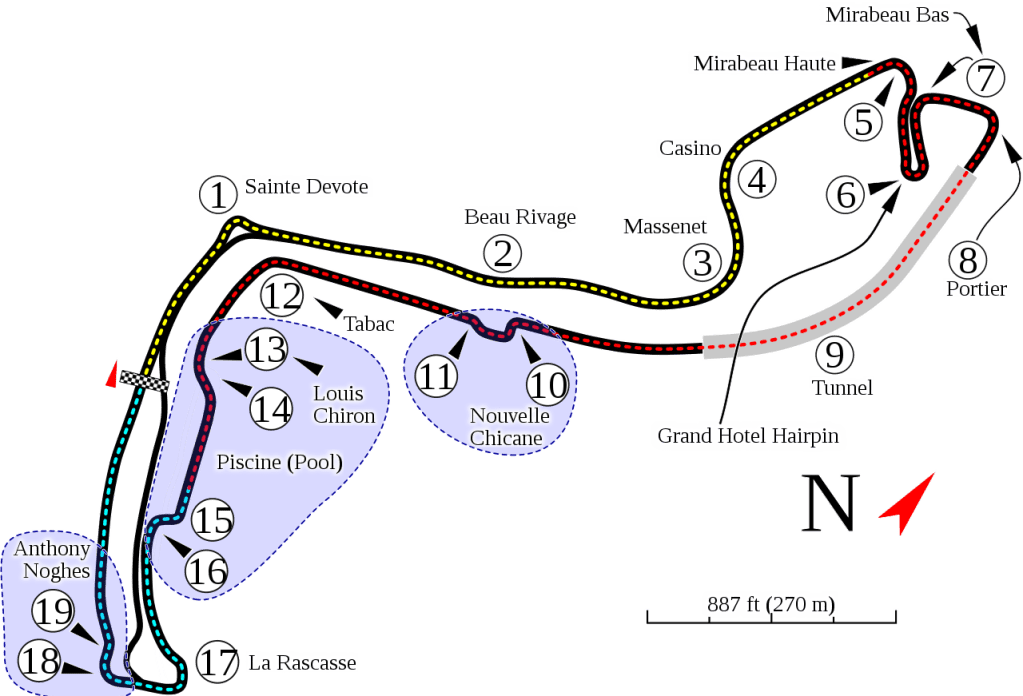
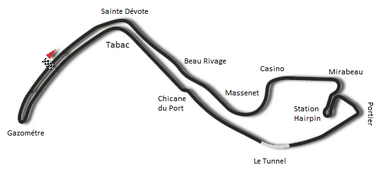
Monaco in its current configuration

If I’m being perfectly honest I have never cared for the Monaco Grand Prix. The phrase brings up feelings of boredom and frustration from deep within as the race would never live up to expectations as the ‘Jewel in the Crown’ of the F1 calendar and one third of the famous Triple Crown. It would be built up to a crescendo on Sunday with a packed grid full of celebrities and glamorous people bringing the worlds attention to the principality. However, the crescendo would fizzle out as no-one would be able to overtake around the tight and twisty streets. It would also be the race which, if any, people around me would attempt to watch. This would lead to the inevitable remarks that it’s just “cars driving around in circles” and “nothing happens” which is maybe where all my annoyance with this event comes from. I think that is where I am going with this though, I don’t think it is a good ambassador for the sport to the wider world, which I imagine is only looking for an almighty shunt at the start before quickly switching over. I wish tracks like Spa, Suzuka, Montreal or Hockenheim had the global reach or appeal of Monaco. Then they would see the real Formula 1.

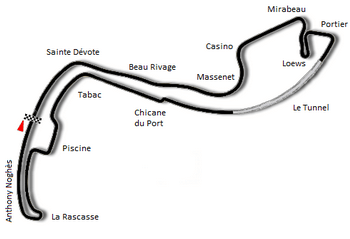
Monaco configuration 1929-1972

Before writing this I also thought Ferrari dominance would factor into my dislike of Monaco but in my viewing years they have only won three times, two of those with Schumacher at the turn of the 21st century. Peculiarly, McLaren have been quite successful at Monaco in my F1 life, winning five times since 2000, which is joint best with Mercedes (and Red Bull now after Max’s win). So you would assume I would feel more warmly towards it. The problem I have is that the result feels predictable once the grid has been set on Saturday. Since 2000, 12 of the 19 races have been won from pole and no one has won it from outside the top 3. Unfortunately for me in these arguments with my friends, this does back up their view that it’s “just cars driving around in circles”. Monaco ranks last in average overtakes for tracks that have hosted at least 10 races over the last 20 years – with 12 (I took a look at the data). To put it into context, Shanghai is the leader with a massive 52 and the next track on the list above Monaco, which is still on the calendar, is Barcelona at 20. While I do love a strategic battle of the minds, overtaking and close racing is what I want to watch and Monaco just does not provide that, especially now the cars are wider than ever and the streets of Monaco are as narrow as they were in the 1920s.

In short, I don’t like that it is the most hyped race weekend on the calendar but rarely lives up to its billing. A bit like Champions League finals between Italian teams at Old Trafford – a lot of old nothing.

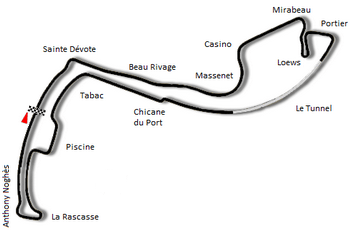
Monaco configuration 1973 – 1975

Now to the other side of the argument; the reasons I am so torn in my feelings. What it has on its side is a combination of history and prestige. It is the original street circuit and one that all the drivers want to win above all else. This is because, without doubt, Monaco is the ultimate test, both of driver and machine. The claustrophobic barriers lining the track mean a mistake will most likely end your race, and at the very least derail it massively without much chance to recover due to the difficulty to overtake. For the drivers it is as much a mental challenge as it is a physical one, their brains having to process so much information for 90 minutes just to finish the race. There is no room for a slip in concentration, even the straights at Monaco aren’t straight. The corners relentlessly keep coming.

Monaco configuration 1976 – 1985

The legacy of the Monaco Grand Prix is it’s biggest attraction. The race pre-dates Formula 1 itself, with its first iteration being in 1929 and was organised by driver Anthony Noghes, who the last corner is named after, under the guidance of Prince Louis II. It has been a permanent fixture in motorsport and the F1 calendar ever since, with only World War II & COVID-19 halting festivities. As you will see by the pictures of the track dispersed throughout this article, the layout has hardly changed in its history, with only a few chicanes put in, like at the Swimming Pool, and some corners have been extended, like at Rascasse. This means that while the cars have changed, the challenge hasn’t. It links the eras of Formula 1 unlike any other track. The experiences of F1 and Monaco greats like Graham Hill and Ayrton Senna can be replicated by today’s drivers. That is where the prestige of Monaco comes from, once a driver wins the race they go into a very small fraternity of greats who have conquered this unique challenge. It seems like it is a right of passage for any future World Champion to win at Monaco as every multiple World Champion in history has done it at least once. This is why I would never want it to leave the F1 calendar, despite my objections. It separates legends from pretenders.

The events of Qualifying for the 2021 Grand Prix have, amusingly, challenged my feelings about one of my own arguments above. It started off as a negative thought – “the most important day at Monaco is Saturday” meaning that because overtaking is almost impossible, the place you start is going to be the place you finish. (See paragraph 3) However, this thought evolved to a positive “it creates a different dynamic to the weekend and gives more importance to a session that rarely disappoints – Qualifying”. As like 16 years ago, a Ferrari crashed on the final run in qualifying while on provisional pole to thwart cars on better laps behind. When Michael Schumacher did it, it was obviously deliberate and he was punished accordingly. This Leclerc crash seemed different, but the rumour mill starts milling anyway. A paddock abuzz with excitement like the melodrama that Formula 1 is and it happening at Monaco is a big reason why some people think he did it deliberately. It’s what Monaco does to drivers. The pursuit of the ultimate prize. However, in typical Monaco style, the race was a procession and I had forgotten about the excitement of Saturday by Lap 2.

I could keep going on and on about the pros and cons of Monaco, trapping myself in a large web of emotions but I think it best to end my indecisive ramblings here. I haven’t succeeded. I laid both sides out there but I am no closer to deciding how I Trulli feel about the Monaco Grand Prix (see what I did there!?). It has me loving it one day, loathing it the next. Maybe that is it’s charm – damn I’m confused. Anyway, it doesn’t matter, this exercise was just something ‘to do’. Also, for those of you who were wondering, I did not stick to my time limit.

JL

P.S. I can’t end this article without giving the racing around Monaco some love, because there have been some great moments and races. Here are a few of my favourites:

Senna vs Mansell 1992

An example of exciting racing where no overtakes were made. Nigel Mansell had been dominating the 1992 Monaco Grand Prix in the revolutionary active suspension Williams but was forced to make a late stop but came out behind Ayrton Senna on much older tyres. Mansell would close very quickly and swarm around the McLaren but was unable to pass. They finished 0.2 seconds apart and the body language of the cars represented their drivers characters; Mansell’s Williams like a British Bulldog badgering and hounding Senna’s cool, calm and collected style. It seemed like Senna never looked back to see where the Englishman was but placed his car perfectly to win the race.

1996 Chaos

A race which started in the wet and ended in the dry was one that no one seemed destined to win. Damon Hill was running away with it after Schumacher crashed on Lap 1 but an engine failure through the tunnel ended his run to victory. Jean Alesi retired from the lead when his Bennetton broke down as well leaving Frenchman Olivier Panis in the Ligier to come home victorious. It wasn’t plain sailing behind either as only 4 drivers were classified at the end. This is a prime example of the unpredictably that Monaco can cause, especially in tricky conditions. Classic case of to finish first, first you have to finish.

Hamilton emulates Senna – 2008

This race has a special place in my heart as it was the first of two fantastic wet weather drives that lead Hamilton to his first world title in 2008. He started third but beat Raikkonen off the line to follow leader Felipe Massa into Sainte Devote. He would make an error on Lap 7 and touch the barriers, causing a puncture. McLaren made a brilliant tactical decision to fill his car with fuel and hope to get to the dry conditions without pitting again. Hamilton would hold up his side of the bargain with a faultlessly fast and consistent drive from there on in to take victory while more chaos ensued behind.