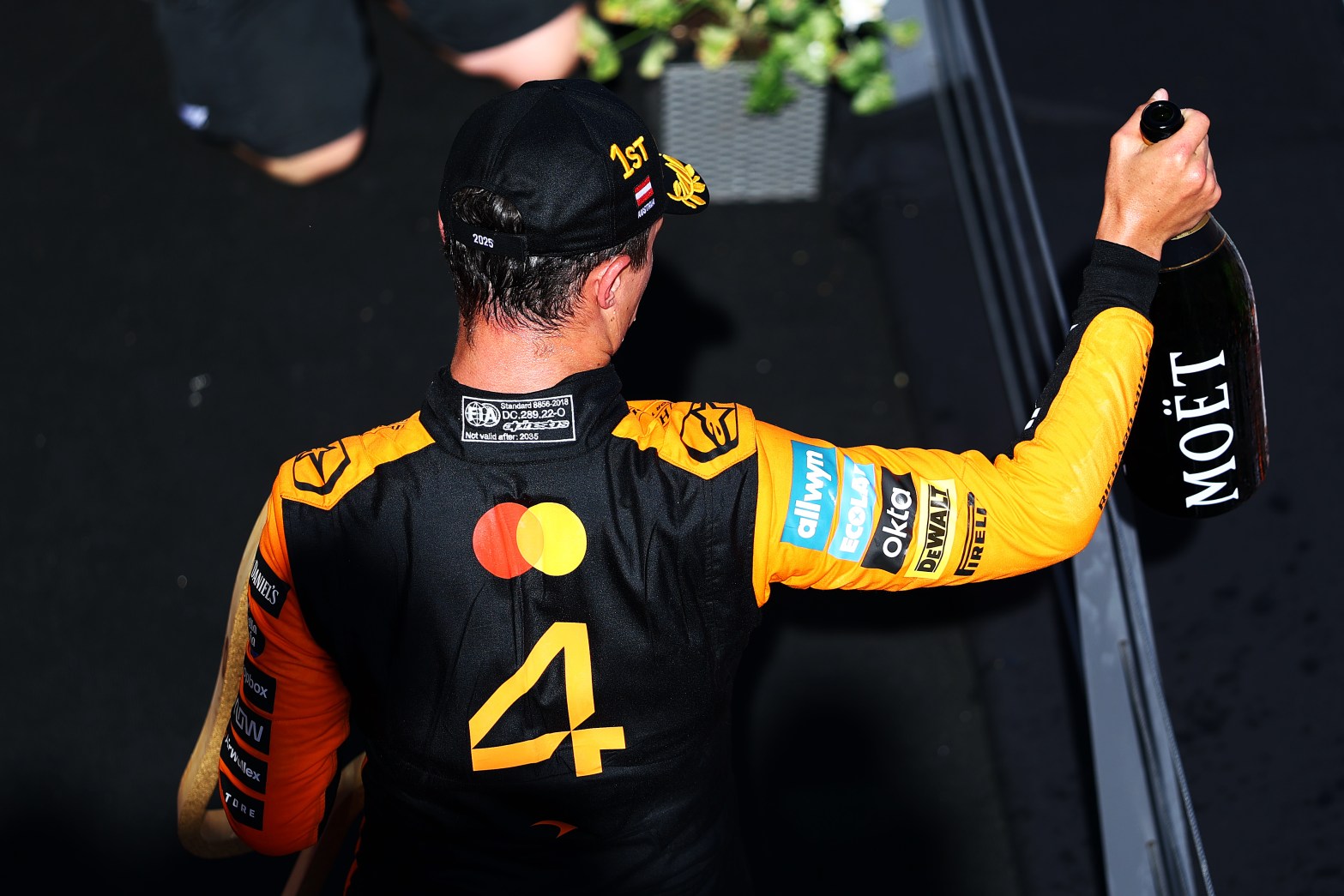
Piastri Wins as Norris suffered Title blow

Oscar Piastri won an action-packed Dutch Grand Prix as Lando Norris suffered a big title blow as an oil leak ended his race prematurely. In a race that saw three safety cars periods following three retirements, and a couple of virtual safety cars to clear up debris from clashes immediately after said safety cars, we got a mixed up finishing order.

It was a nightmare day for Ferrari, the first double DNF since the 2024 Canadian Grand Prix. Hamilton and Leclerc crashed at the same corner, but with differing levels of responsibility for their exits.

Verstappen and Hadjar completed the podium in what was a fantastic performance by the young Frenchman to further his case for rookie of the season.

Behind them, the Aston Martins both got into the points for the first time since Singapore 2022, which is a crazy stat!

Other notable finishes are Ollie Bearman, who finished 6th after starting at the back. We will get into why in a moment but great result for Bearman who breaks his 11th place streak nicely.

In all, an absorbing race with plenty of action. A great way to restart the season. Let’s get into the ratings:

1. Oscar Piastri – 8.5

Oscar drove an assured race from pole. He held the lead into Turn 1 and pulled a gap to Verstappen in the early laps before Norris got past. This buffer would disappear with the safety cars, but he wasn’t threatened by his teammate at the restarts. It looked like he had it all under control from the get-go and got his first career grand slam in the process.

2. Max Verstappen – 8.2

Max maximised in Holland. His car clearly was no match for the McLarens, but he maintained his podium finish until Lando retired and promoted him to 2nd. He wins save of the day for his lap 1 hold when going around the outside of Lando into the banked corner. Check it out if you haven’t seen it. There was a small chance at victory at the final restart with Max on softs and Piastri on hards but he couldn’t get close enough. Solid result.

3. Isack Hadjar – 9.5

Driver of the day! Phenomenal performance from Hadjar, fully deserved podium. He qualified 4th, got off the line well and held his own in 4th for much of the race. He was never too far from Verstappen and survived the restarts. Fully, fully deserved.

4. George Russell – 8.1

Mr reliable Russell! Another maximiser. Was running in 6th, for most of the first half until he was promoted to 5th after the safety period caught Ferrari and Leclerc out. Promoted to 4th after Norris retired, solid points. Job done.

5. Alex Albon – 8.9

Stunner from Albon, aided massively by a great lap 1, gaining 5 places from his 15th starting position. Took advantage of others in front of him making errors or retiring to move up to 5th. As he said in his post-race interview, “I was in 10th, finished and finished 5th” – perfectly summed up.

6. Oliver Bearman – 8.9

Great strategic race from Haas. Starting last, Ollie was stuck on the hards to go uber long, take track position in case of safety cars and pit late on to take advantage of late safety. Tick, tick and tick. Exactly how they drew it up!

7. Lance Stroll – 8.5

Lovely result for Stroll. Pitted first on lap 8, was able to gain track position at the first safety car as he stayed out, pitted again during the final safety car but also just took advantage of chaos ahead to finish 7th.

8. Fernando Alonso – 8.4

Was frustrated to have pitted a couple laps before Hamilton crashed, losing out to those around him who were able to get a cheap pitstop. But fortune turned around at the end when he did the same back. Was running 10th, inherited 9th from Norris and then got 8th after Antonelli’s penalties.

9. Yuki Tsunoda – 7.5

An ok points finish for Yuki after being knocked out of Q2 once again. Not much was seen of him really, and he was promoted due to other crashing out. Story of the race really.

10. Esteban Ocon –

Another go-long merchant! Started on hards, pitted for mediums on Lap 53 and just moved up quite efficiently to complete the points.

11. Franco Colapinto – 7.5

So close to his first points of the season for Franco – 0.5 seconds! A better performance from the Argentine, his best result of the season but hard not to look at the number of retirements as helping this cause. Briatore did come out and say it was his best performance of the year – which is positive for Franco’s long term future, he needs to get into the boss’ good books.

12. Liam Lawson – 7.3

Lawson was running in the points until coming together with Sainz at the first safety car restart. Both got a puncture and dropped a lap down. They were put back on the lead lap at the final safety car, but couldn’t get back into the points.

13. Carlos Sainz – 7.3

The other half of the Lawson / Sainz accident, and apparently the one to blame, as he got a 10-second time penalty. I think this was harsh. Carlos was far enough alongside at the point of Lawson’s oversteer moment for this to be a racing incident. It ruined both their races but it was a better showing from Carlos in Zandvoort and probably would have finished ahead of his teammate.

14. Nico Hulkenberg – 6.0

An inconspicuous weekend for Sauber in Holland. I don’t think we ever really saw them in the race. Qualified 17th and finished 15th. Couldn’t use the safety cars either.

15. Gabriel Bortoleto – 5.7

Gabby fell back in the race, which is unusual for the recent past. Again, an inconspicuous weekend for the Brazilian.

16. Kimi Antonelli – 5.2

The summer break didn’t have the intended effect on the young Italian as his rough weekends continued. A spin early in FP1 ended his session, but he recovered somewhat to qualify 11th. He moved up in the race, taking advantage of the chaos in front as well as a good overtake on Alex Albon. But then it fell apart. An extremely optimistic overtake attempt on Leclerc at the banked Turn 3 ended with a broken Ferrari and Antonelli with a 10-second penalty. This penalty pushed him out of the points at the flag.

17. Pierre Gasly – 6.5

A tricky weekend for Pierre and a rare one where he is beaten by a teammate. Finishing last on the road didn’t paint the whole picture as he was running in and around the points until the final safety car dropped him to the back.

18. Lando Norris – 7.5

Devastating result for Lando as he was hunting down his teammate for a late go at the lead and closing the gap in the championship. An oil leak caused by a chassis failure cut off his engine with 7 laps to go. He was looking the quickest McLaren during practice, but couldn’t translate that to pole in Quali. This was probably his downfall from winning the race, but the DNF could be championship-defining.

19. Charles Leclerc – 7.7

Charles was battling for a podium when he was taken out by Antonelli, ending his race. He lost out at the first safety car, caused by his teammate, but made up some spots, including a ballsy overtake over Russell, and was battling his way back up until he tangled with the Mercedes rookie. A real shame for the Ferrari driver.

20. Lewis Hamilton – 6.0

An uncharacteristic mistake from the 7-time World Champion as he ran wide at Turn 3, slid on the advertising, snapped oversteer and found himself at the scene of the accident. He was running nicely in the top DRS train behind Hadjar before the incident. A double whammy as well for Lewis is the 5-place penalty in Monza for ignoring yellow flags on his reconnaissance lap.

Lando Norris Triumphs at Hungarian Grand Prix

BUDAPEST, HUNGARY - AUGUST 03: Race winner Lando Norris of Great Britain driving the (4) McLaren MCL39 Mercedes crosses the finish line to cheers from his team on the pit wall during the F1 Grand Prix of Hungary at Hungaroring on August 03, 2025 in Budapest, Hungary. (Photo by Getty Images/Getty Images)

Lando Norris won a tense and engrossing race at the Hungarian Grand Prix, setting up the perfect 10-race championship run-in between the McLaren teammates once the season starts again after the summer break.

The McLarens looked to have the dominant package throughout practice and all but two runs of qualifying, but a change of wind conditions put the pack on their back. Charles Leclerc took a sensational pole ahead of the McLarens, with the top 5 separated by 0.1 seconds and 3 teams. The closest in years. This set up a finely poised race with the favoured McLarens unable to run and hide.

At the front, Leclerc maintained the lead from Piastri, but Norris lost 2 spots to Russell and Alonso, as he got pinched on the inside into turn 1. He took a lap or two to get past Alonso but found himself stuck behind Russell. McLaren decided to switch Norris’ strategy to a one-stop, which would be race-defining. With everyone around him opting for the theoretically quicker two-stop, this would give him track position to defend late on, which he would expertly hold on to from his teammate to take the victory. Piastri gave it a good go to overtake, nearly taking them both out on the penultimate lap, but luckily for him, narrowly avoided contact at Turn 1.

Leclerc would fall away dramatically in the 2nd half of the race and lose out on a podium to Russell. Behind the leading pack, Verstappen finished 9th in a difficult weekend for Red Bull. He was beaten by both Aston Martins, former teammate Lawson and Bortoleto in a great weekend for the midfield battle.

Right, let’s get into the driver ratings!

Lando Norris – 8.8

A disastrous start for Lando turned out to be a blessing in disguise for his race. Being stuck behind the slower Russell made McLaren rethink his strategy, swapping him to a one-stop. This would give Lando track position over the two-stoppers, but he would have to walk a fine line between tyre management and speed to give himself a chance to win. He did this expertly, pushing at the right times, conserving his tyres through the middle sector and ensuring his rivals used theirs. While his teammate was catching him quickly towards the end as Lando got through traffic, he didn’t make any mistakes and took an essential victory going into the summer break.

Oscar Piastri – 7.9

Oscar probably feels hard done by the racing gods; he didn’t do anything wrong, yet he was beaten by his teammate due to a better strategy. He stalked Leclerc for most of the race, trying the undercut and overcut to no avail, but eventually got past on lap 51 as Leclerc struggled with chassis issues. He quickly set off after his one-stopping teammate but really just ran out of laps, catching properly with 2 laps to go. One crazy divebomb that nearly took out both of them later, he settled for 2nd. He was a lucky boy, he was perilously close to ending both their races. Lando actually avoided the incident, making a small adjustment at the apex to give Oscar more room. Lucky, lucky Aussie.

George Russell – 8.3

Give the man a bloody contract already! How many times does George have to show team-leading maturity and consistency to convince Mercedes he is the future? Another podium for the Brit in what is his best season in F1. Qualified 4th, kept in touch with the leaders and then picked up the spoils of Ferrari’s woes when the opportunity arose. More points, and he deserves more money.

Charles Leclerc – 8.5

A frustrating afternoon in Budapest for Charles. He led from an incredible pole into the first corner and built a nice buffer to Piastri through the first two stints, up to around 4 seconds. However, a chassis issue from Lap 40 would derail his victory bid, losing buckets of time, eventually finishing 4th and 40 seconds back. That would be tough to take. Hard to judge as well, didn’t put a foot wrong and outperformed the car. Without the issues, I think he would have caught Norris and challenged for the win. Passing is another matter.

Fernando Alonso – 8.3

A veteran’s drive from Alonso. Temporarily up to 4th in the opening stages before Norris got past, he eked out his tyres to perform the one stop, maintaining track position and coming home a comfortable 5th. The Aston Martin was a much better car in Hungary compared to Spa, where the team brought upgrades, without the team really understanding why. Whatever the reason, give Fernando a good car and he will deliver.

Gabriel Bortoleto – 8.5

A fantastic result for Bortoleto! A fantastic weekend all around really. He started 7th, got ahead of Stroll for 6th and brought the car home in front of the Canadian. Another good utilisation of the one-stop. While Hulkenberg has had the flashy result for Sauber in 2025, this is as impressive to me. Consistent and fast, exactly what you need to have a long career in F1. Really impressive from Bortoleto.

Lance Stroll – 8.2

Lance shadowed his teammate all weekend, starting on the 3rd row with him and finishing less than 10 seconds behind at the flag. Lance, incredibly, was only 0.15 seconds off pole as well! It does show that Lance can do it; I don’t think anyone actually doubts that; it’s just so few and far between for our liking.

Liam Lawson – 8.1

The last 5 races couldn’t have gone better for Lawson to cement his place on the grid for 2026. Another top 10 qualifying and points finish for the Kiwi in Hungary. He has been the best Racing Bull coming into the summer break which has been quite the turnaround.

Max Verstappen – 6.5

It was a struggle from the off for Max as he couldn’t get on top of balance issues in pretty much every session. It looked a 50/50 chance he would make it into Q3 but was able to qualify 9th and didn’t progress from there in the race, despite a few nice overtakes into the chicane. He finished 70 seconds behind the victor, unheard of in this ground effect era. His cheeky move over Lewis Hamilton into the high-speed Turn 4 was brave so he gets a couple extra points to his score.

Kimi Antonelli – 7.5

Kimi returned to the points in Hungary with a 10th-place finish with a good recovery drive after qualifying 15th. He was one of the earliest one-stoppers to pit, took advantage of the tyres to get track position and held onto it.

Isack Hadjar – 7.1

Hadjar was hampered as he had to wait an extra lap for his pit stop when others dived in and got track position over him in the one-stop race, dropping him out of the top-10. He hunted down Antonelli for that last point in the closing stages, but couldn’t find a way around, and just missed out on points.

Lewis Hamilton – 6.1

Yet another disappointing weekend that started with promise for Lewis. He looked quick during the practise sessions but when it came to quali, the pace fell away and it was another Q2 knockout. He went with the alternate strategy for the race, starting on the hards but couldn’t make it work. Started 12th, finished 12th.

Nico Hulkenberg – 6.9

Nico was thoroughly outperformed by his teammate in Hungary. He was knocked out in Q1, starting 18th but was one of the few drivers to make the two-stop work. He pitted very early on Lap 5 and then again on Lap 40, to make his way up to 13th.

Carlos Sainz – 6.5

Struggles all round for Williams, the car didn’t look quick all weekend. Like Barcelona, the Hungaroring’s long, medium-speed corners didn’t suit the Williams. Carlos did outqualify and out-race his teammate, which is always a plus. Williams tried the two-stop and Carlos was making progress on the mediums at the end but ran out of laps to do anything significant.

Alex Albon – 6.5

A Q1 knockout for Alex, and while he did make progress up the field on Sunday, that was really the only way he could go. Another two-stopper but went medium-hard-hard compared to his teammate, which proved the difference between their finishing order, with Carlos getting past in the closing stages.

Esteban Ocon – 6.1

A very ambitious one-stop strategy from Haas for Ocon, pitting on Lap 14 and going on the Hards from there. Unfortunately for Ocon, it wasn’t able to elevate him as he was caught and passed by the two-stoppers in the final 15 laps, finishing 16th.

Yuki Tsunoda – 5.5

Getting tired of starting these with ‘another tricky weekend for Yuki but it WAS another tricky weekend for Yuki. The only silver lining for him is that now Max is really struggling, it takes an ounce of pressure off him, as he is clearly not the problem. He isn’t really helping, though. He qualified 19th, started from the pit lane after setup changes, but they didn’t seem to help and he trundled around at the back, only beating the two Alpines.

Franco Colapinto – 6.2

A rare weekend where Franco beat his teammate in both competitive sessions. He started 14th but fell back in the race as both Alpines struggled to keep up with the pack. They did have a nice battle between themselves on split strategies, with the two-stopping Franco coming out on top. Unfortunately, for both of them, this Alpine is the slowest car on the grid.

Pierre Gasly – 5.8

A poor showing from Pierre this weekend. He finished last on the road after starting 16th. He couldn’t keep up with the cars around him and was beaten by his teammate. He has been really solid this half of the season but couldn’t make up for the car’s lack of pace this time around.

Ollie Bearman – 7.2

Bearman was having a solid weekend until reliability issues scuppered his chances in the race. He was running in the top 10 until he started falling back with floor damage which would retire his car on Lap 48.

British Grand Prix Driver Ratings

Silverstone does it again. You can always trust the British Grand Prix to throw up some drama, some rain and some unexpected results. Heavy rain earlier in the day threatened to disrupt the race, but the track was perilously close to drying up by the start. All the cars began the formation lap on intermediate tyres, but a few drivers opted to change to slicks before the start—a decision that would prove costly. From there, we were treated to 52 laps of high-speed drama, slipping, sliding and spinning. At the flag, McLaren emerged in their usual spot for 2025, securing a one-two finish, while other big names like Ferrari and Mercedes struggled with strategy.

It was Lando Norris who came out on top to win his first British Grand Prix after Piastri was harshly penalised for a safety car infringement when leading. The Aussie would have to settle for 2nd, but it was behind the two McLarens, where we will find the driver of the day: Nico Hulkenberg! The Sauber driver came from 19th on the grid to take his first podium, at the 239th time of asking. This has to take the lead as the most popular moment in recent F1 history; the whole paddock was basking in Nico’s success, which was lovely to see.

Now, let’s get into the driver ratings:

Lando Norris

Lando Norris claimed his first British Grand Prix victory, marking his eighth career win. Starting third on the grid, he did well to resist Hamilton’s advances on Lap 1. Soon Norris was on the back of Verstappen, and he overtook on lap 11 only to lose second place immediately during the pit stops. However, he regained the position after Verstappen’s mistake at the safety car restart. Norris ultimately inherited the lead after Piastri was penalised for a safety car infringement, but looked like he would have been able to take the fight to his teammate if not for the penalty. We will never know, though, and history will only remember a Norris victory.
Driver Rating: 8.5

Oscar Piastri

When Piastri took the lead from Verstappen on Lap 8 and stretched his lead to 12 seconds, he could be forgiven for thinking a win was his. The safety cars scuppered him, though; first, nullifying his lead, followed by a controversial penalty for erratic driving that cost him the victory. Despite this, he drove a strong race and was unlucky to miss out on the top step of the podium.
Driver Rating: 8.2

Nico Hulkenberg

Nico Hulkenberg delivered the drive of the day, and likely drive of the year, starting 19th and finishing 3rd. His strategy was flawless, pitting for fresh intermediates just as the rain intensified and switching to mediums at the perfect time. Hulkenberg was one of the few drivers to make no discernible mistakes and capitalised on others’ errors to secure his first podium in 239 races. Once he got into his podium position, he drove expertly to pull away from the pack and secure Sauber’s first podium in 13 years.
Driver Rating: 9.7

Lewis Hamilton

Lewis Hamilton showed promise early in the weekend, topping practice sessions and narrowly missing out on pole position. However, the Ferrari really struggled in the wet conditions, and Hamilton battled balance issues throughout the race. He lost time in the final pit stops and couldn’t catch Hulkenberg, finishing fourth. Despite the challenges, it was one of Hamilton’s better results this season.
Driver Rating: 8.1

Max Verstappen

Max Verstappen took pole position with a flawless lap but struggled in the race due to Red Bull’s gamble on a low-downforce setup, which was ill-suited to the wet conditions. Verstappen grappled with a tail-happy car and graining tyres, uncharacteristically spinning at the safety car restart and dropping to tenth. He recovered to fifth, but it was a day of damage limitation for the reigning champion.
Driver Rating: 7.7

Pierre Gasly

Pierre Gasly had a really solid race, making the right strategic decisions and gaining positions during pit stops. He fought with Hamilton and Russell for much of the second half of the race, but couldn’t match their pace ultimately. He dispatched Stroll to take 6th late one, an important result for Alpine, who languish at the bottom of the Constructors’ Championship
Driver Rating: 8.5

Lance Stroll

Lance Stroll ran as high as third during the race despite a sub-optimal strategy. He wasn’t able to hold on as he struggled with severe tyre degradation as the track dried, eventually finishing seventh. Despite the drop, it was a commendable performance from the Canadian, who often faces criticism, not least from me.
Driver Rating: 8.1

Alex Albon

Alex Albon scored points for Williams after a tricky couple of races. He stayed out of trouble and delivered a consistent performance to finish eighth.
Driver Rating: 7.9

Fernando Alonso

Fernando Alonso started seventh but could only manage ninth at the finish. He expressed frustration with the team’s strategy but still secured valuable points for Aston Martin.
Driver Rating: 7.8

George Russell

George Russell’s race was marred by poor strategy decisions from Mercedes, even before the race had started. He was one of the car to pit on the formation lap, and Mercedes chased strategy calls from there. It was a strange decision to go with new hards, twice, on a drying track when tyre temperature is crucial. They went early with their decision to go with dries towards the end, and got the decision wrong for the 2nd time, causing Russell to lose bundles of time. He would have to settle for a point when, at times, a podium looked like a possibility…miraculously.
Driver Rating: 7.5

Ollie Bearman

Ollie Bearman was the only rookie to finish the race, coming home in 11th. He had a few clumsy moments, which included hitting his teammate, and pulling off a beautifully choreographed double spin and Brooklands. Despite this, he did manage to finish ahead of Ocon.
Driver Rating: 7.1

Carlos Sainz

Carlos Sainz had an up-and-down race. His performance was hindered by strategic missteps and a late coming together with Leclerc when the Ferrari driver lost control at Stowe, pushing them both out of the points.
Driver Rating: 7.3

Esteban Ocon

Esteban Ocon was caught in several incidents, including a collision with his teammate. He finished 13th after a challenging race.
Driver Rating: 7.2

Charles Leclerc

Charles Leclerc had a nightmare race, pitting too early for slicks on the formation lap and struggling with pace throughout. It was one of his worst performances as a Ferrari driver with multiple mistakes and excursions across the grass and gravel traps.
Driver Rating: 5.2

Yuki Tsunoda

Yuki Tsunoda finished last on the road for the second consecutive race. He struggled for pace and was the only driver to be lapped. Just when the curse of the 2nd Red Bull seat looks like it hits rock bottom, the bottom falls out again. Where/when will this end?
Driver Rating: 4.5

Did Not Finishers

Kimi Antonelli

Kimi Antonelli was taken out early in the race after being hit by Isack Hadjar. He was unable to continue with most of his diffuser missing.
Driver Rating: 5.0

Isack Hadjar

Isack Hadjar caused the collision with Antonelli, which led to him losing control and crashing heavily at Copse. It was a slow weekend all round for the Racing Bulls team, a learning opportunity for their young drivers.
Driver Rating: 3.5

Gabriel Bortoleto

Gabriel Bortoleto was a victim of risky strategy after Sauber put him on mediums on the formation lap. Struggling with tyre warm up on a track that wasn’t ready, Bortoleto lost control while feathering the throttle at Turn 1, crashing into the barriers and destroying his rear wing. Race over on Lap 2.
Driver Rating: 4.0

Liam Lawson

Liam Lawson’s race ended on the first lap as three cars attempted to take the Loop side by side, when there was only room for two. Lawson was the unlucky victim, as a thump from Ocon, the meat in the sandwich, broke his rear suspension.
Driver Rating: 4.0

Franco Colapinto

Franco Colapinto did not start the race due to transmission issues on the reconnaissance lap.
Driver Rating: N/A

Austrian Grand Prix – Driver Ratings

SPIELBERG, AUSTRIA - JUNE 29: Race winner Lando Norris of Great Britain and McLaren on the podium during the F1 Grand Prix of Austria at Red Bull Ring on June 29, 2025 in Spielberg, Austria. (Photo by Zak Mauger/LAT Images)

Lando Norris led home a comfortable McLaren 1-2 in the Styrian mountains following a pretty mundane Austrian Grand Prix. There was drama on the first lap, as Kimi Antonelli missed his braking point into Turn 3 and had to take evasive action, but in the process, he locked his rears and ran into the side of Max Verstappen, ending both their races, much to the agony of the large Dutch contingent that made the trip.

Once the two cars had been removed, the race fell into a rhythm with gaps appearing between the front runners and the chasing pack. The McLarens were in a class of their own, pulling a minimum of 0.3 seconds per lap to the rest of the field, and had a nice battle on Lap 11, swapping positions a few times before the first stops, with Norris coming out on top. From there, the gap stayed around 6 seconds, only narrowing through traffic but Norris wasn’t troubled to the flag.

Behind the McLarens, the Ferraris drove quietly to 3rd and 4th. Russell was 5th, also in a race of one, but behind was when the fun really began. A fantastic 6th place for Liam Lawson, and 7th for Fernando Alonso, who both expertly ran the one-stop, against all data recommendations. A double points finish for the Saubers in 8th and 9th, with Bortoleto grabbing his first F1 points in front of his teammate and Esteban Ocon rounded off the top 10, in front of his teammate.

It was far from a classic in Austria this year but the 3 DRS zones do guarantee us some action, and I am happy to see the track will be on the calendar until 2041. Its a classic which creates good racing, something that needs to be protected. Lets get into the driver ratings before the best weekend of the year next week: The British Grand Prix.

Lando Norris – 9.1

Lando bounced back beautifully from his clumsy move at the Canadian Grand Prix. He led every session he took part in, taking pole by over half a second and holding off pressure from his teammate to take a commanding victory in Austria. His race craft was on show, performing a lovely switchback on Piastri through Turn 3 as the McLarens did battle. The only mistake we saw was running wide at Turn 10, which allowed Piastri the chance to overtake. Once the pit stops gave him a 6-second lead, he kept Piastri at arm’s length to take a momentum-building victory before his home Grand Prix.

Oscar Piastri – 7.9

Oscar was caught out by Gasly’s yellow flag in Q3, which left him lining up 3rd on the grid. He immediately jumped Leclerc at Turn 1 to set up the McLaren battle. Taking advantage of DRS, he kept in Norris’ shadow for the first stint, momentarily taking the lead on Lap 11 before losing it again. He made one last, slightly desperate lunge on Lap 20 into Turn 4, which was nearly disastrous as he narrowly avoided Norris’ diffuser. It was uncharacteristic of the usually unflappable Aussie, and he got a virtual slap on the wrist from the pit wall for it. From there, he didn’t get close to Norris and had to settle for 2nd.

Charles Leclerc – 8.5

It was a quiet afternoon for Charles, but he maximised the performance of the Ferrari in Austria. Once he lost 2nd place to Piastri, he was left in the distance by the McLarens but stretched away from Hamilton in 4th. Leclerc took his 5th podium in Austria, the most of any track for the Monegasque.

Lewis Hamilton – 8.2

A much more positive weekend for Lewis and it was nice to see him smiling post race, despite finishing 30 seconds off the lead. Another quiet race in a Ferrari, starting 4th and finishing 4th. He lost ground in the first stint to Leclerc, up to 10 seconds and he did close in slightly over the next two, but never getting within 5 seconds. A podium would have been lovely but lets save that for next weekend.

George Russell – 8.1

Mercedes knew Austria wasn’t going to be a strong weekend for their car. The hot temperatures causing high tyre degradation and as a result, Russell ended over a minute behind the McLarens. This was damage limitation for Russell and probably the best he was hoping for. The predicted high temps for the British Grand Prix could scupper any podium aspirations Russell has for his home event.

Liam Lawson – 9.2

A brilliant performance from Lawson and a thoroughly well-deserved 6th place in Austria. I’m sure he had a smile on his face to out-qualify former teammate Verstappen on Saturday. It could have been a very different race as he came extremely close to being caught up in the first lap collision and lost 3 positions, but once clear, he performed the one-stop beautifully to well and truly finish best of the rest, getting back up to his starting position.

Fernando Alonso – 9.1

Another points finish for the leading Aston Martin and another successful one-stop strategy to take 7th place. Alonso just missed out on Q3 but was able to leapfrog into the points and held off his client, Bortoleto, to hold onto 7th in the final laps. All Aston Martin needs is a second Fernando Alonso for their other car…

Gabriel Bortoleto – 9.2

Bortoleto got the result his driving has deserved this year. He has shown moments of quality and great qualifying performances previously, but it all came together in Austria. His first Q3 appearance was followed by taking his first points of his F1 career on Sunday. He showed consistent pace throughout the race and made good overtakes when he needed to, but couldn’t quite get past his manager, Fernando Alonso, in the final laps.

Nico Hulkenberg – 9.1

This is going to be a hard one to rate below his teammate. Nico started right at the back of the grid and came home 9th. Both Saubers showed great speed in the race, and the car is showing real signs of improvement. Nico undercut at the first stops and overcut at the second and finished 7 seconds off his teammate. It’s double 9s for the Saubers!

Esteban Ocon – 8.6

Another quality performance from the back of the grid! Ocon started 17th and bided his time early on, making up a few places early on but then hanging onto his tyres to create a nice offset. He used this to his advantage, overtaking his teammate for 11th before lap 30 and then overtaking Hadjar late on to take 10th and the final point.

Ollie Bearman – 8.3

Bearman just missed out on points in Austria with another good drive from lower down the field, taking advantage of the incidents ahead. He was the first person to pit on Lap 11, starting on the softs and used the double hards strategy well from there, keeping out of trouble but couldn’t quite take home any of the spoils.

Isack Hadjar – 7.5

An unusual weekend for Hadjar in his rookie season, he was comprehensively outperformed by his teammate. He qualified 13th and finished 12th, continuing this small mid-season slump for the Frenchman. He had to take avoiding action at Turn 3, Lap 1, which dropped him down the order and he wasn’t able to threaten the points from there.

Pierre Gasly – 7.6

A frustrating race for Pierre as he made it into Q3 on Saturday, but tyre issues hampered him in the race. He was one of the few at the top to start on the softs, which degraded quickly, and he found no grip when he switched to the hards. Unfortunately for Gasly, we only really saw him getting overtaken on Sunday.

Lance Stroll – 5.3

Lance continued his streak of getting knocked out in Q1 in Austria and didn’t really trouble the TV screens during the race. He was rudely bundled off the track by Tsunoda at Turn 3, but that’s about it really. Another inconspicuous event for the Canadian.

Franco Colapinto – 4.5

A bumpy race for Colapinto. Every time he was shown on TV, he was in a scrap with Tsunoda. Both would end up with penalties, Franco’s for driving Championship leader Piastri off the road on the exit of Turn 3, not realising he was there. He would be spun around by Tsunoda later on to leave him last on the road, but he got that position back when Tsunoda had to take his penalty.

Yuki Tsunoda – 3.1

A terrible race from Tsunoda. Say what you like about the 2nd Red Bull and its issues, but this performance wasn’t all car issues. Yuki was knocked out in Q1 again, but kept making silly mistakes in the race. His dive bomb on Lance Stroll was clumsy at best and stupid at worst. He came from way too far back but didn’t fully commit, pushing Lance off at the exit and getting a slam dunk penalty. He repeated the move on Colapinto, this time at Turn 4. Diving late to the inside, but not fully committed, he has Colapinto to thank for not crashing at the apex, but then Tsunoda understeered wide, clipping and spinning Colapinto on the exit. He got a 10-second penalty for that indiscretion which put him dead last.

Alex Albon – 6.9

Really unlucky finish for Alex, he made up 6 spots at the start, was running in 6th place and looking likely to end his pointless streak before a technical issue forced him to retire on Lap 14.

Max Verstappen – 5.0

Max’s 31-race points scoring streak ended on Lap 1 on Sunday, through no fault of his own. He was minding his own business on the outside of Turn 3 before an out-of-control Antonelli came flying in, taking them both out. Unfortunate for Max and the Orange Army at Red Bull’s home race.

Kimi Antonelli – 2.5

A rookie error from Kimi, which is going to happen…as he is one. He got caught out by the cars in front braking earlier than expected, locked the rears and couldn’t slow down before colliding into Verstappen. He gets 2 penalty points on his license and a 3 place grid penalty for the British Grand Prix for his troubles. He will learn from this.

Carlos Sainz – N/A

A rare Did Not Start for Sainz. He was unable to pull away for the formation lap, causing an aborted start. Once he did get going, he brought it back to the pits, only for his brakes to catch alight, ending his race before it could start. Really tricky period for the Williams team. Hopefully they can pick things back up at their home Grand Prix.

Alright, decent Austrian Grand Prix, but can’t wait for the best weekend of the year, the British Grand Prix. Get us to Silverstone, where I fully expect the McLarens to continue their championship battle. Mixed weather is forecasted as well, could be spicy. See you next time.

1968 – Ford, Clarke and The Flying Scotsmen

1968 was a transition year for Formula 1 in many senses, and not always for good reason.

The Ford DFV

The year started with the wider implementation of arguably the greatest racing engine of all time – the Ford Double-Four Valve V8 – this iconic engine was conceived by Colin Chapman and Lotus F1, who had convinced Ford to develop it when 3-litre engines were introduced for 1966. It won on the first attempt at Zandvoort 1967 as Graham Hill stuck his Lotus 49 on pole, but when he retired with clutch issues, his teammate Jim Clarke came through the field to take the chequered flag in his stead.

Chapman had worked hard to get exclusivity of this engine for his Lotus team but Ford was worried their brand could be tarnished as the competition around them wasn’t strong enough; Ferrari’s engine was underpowered, the BRM was too complex, the Maserati unreliable and the Honda overweight. They wanted to instead supply to anyone who wanted one and dominate the whole of F1 rather than just one team.

They wanted to create a cheap engine – £7,500 in 1967 – competitive, light, compact and easy to run so that any team, big or small could screw it in and go racing.

So, they did. And Chapman wasn’t happy.

But Ford had made their decision and the Double-Four Valve V8 would go on to win 155 of the next 262 races from 1967 – 1985. The Ferrari was the only other engine that even made a dent. The Ford DFV would win every single race in 1969 and 1973. It became THE engine of F1 and gave Formula 1 teams the financial freedom to innovate and push the sport into the global player it is today. Without the DFV, F1 would look very different, despite Colin Chapman’s anger.

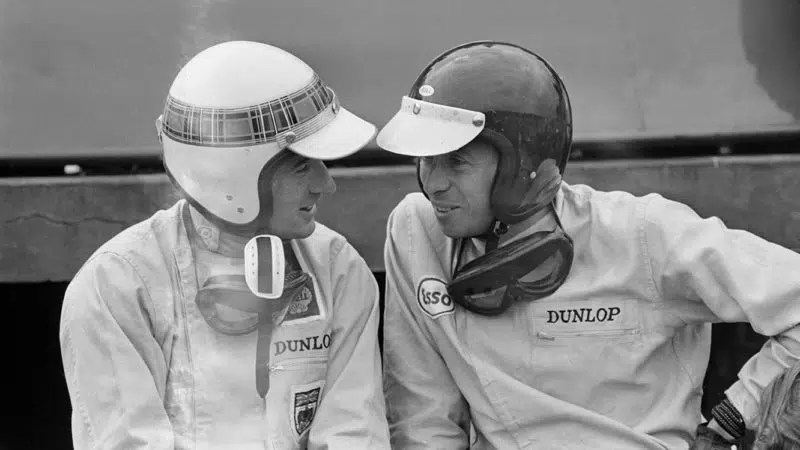
Jim Clark

While one F1 icon was just getting started, tragically the sport would lose another in 1968. Jim Clark was arguably the driver of the 1960s. Starting in 1960, he spent his whole F1 career with Lotus and won championships in ’63 & ’65 but it could have been so much more if his cars had been more reliable. Oil leaks in crucial races in 1962 & 1964 robbed Clark of two more titles but they weren’t isolated instances. There was a feeling in F1 at the time that if Clarke finished a race, he was winning it.

Clarke produced performances that even for F1, were extraordinary. In 1963, he won a rainy and foggy Belgian Grand Prix at Spa by over 5 minutes and lapped the whole field apart from Bruce McLaren in 2nd. Clarke holds the record for most grand slams in F1 history – taking pole, fastest lap, victory and leading every lap – doing it 8 times.

He would led 71.47% of the laps raced in 1963, which is another record. At the Italian Grand Prix of 1967, he started from pole and led the way until a puncture derailed his progress. He lost a lap while the wheel was changed and re-joined the race in 16th place. However, he would go on to drive back through the field, breaking the lap record on multiple occasions and even equalled his qualifying lap of 1.28.5. He regained the lap AND THE LEAD. Heading into the lap last he was narrowly leading John Surtees and Jack Brabham when his car started fluttering. It hadn’t been filled up with enough fuel. He would coast over the line in 3rd but that performance speaks for itself. He was the class of the field, even against F1 legends.

Clarke didn’t just race in F1 during his career either. He was the first non-American Indianapolis winner in 50 years when he conquered the brickyard in 1965 as the first mid-engined victor, becoming the only driver to win the F1 title and the 500 in the same year. He also raced in British saloon cars, Le Mans, American open-wheel, the Australasian Tasman series (winning it in 1965, 1967 and 1968) and F2, which would be his tragic downfall.

On 7th April 1968, Jim Clarke took part in an F2 event at Hockenheim, Germany during the 4-month gap between the first and second F1 races of the season. On the fifth lap of the race, Clarke’s Lotus veered off the track and smashed into the trees that lined the track. He suffered horrific injuries and died before he reached hospital. The exact reason for the crash has never been determined but it’s thought that it was caused by a punctured rear tyre.

His fellow drivers refused to believe that the crash was caused by driver error because they didn’t believe Clarke was capable of making a mistake like that. Clarke’s driving style was so smooth that he took care of the cars he drove – Jackie Stewart remembers “He was so smooth, he was so clean, he drove with such finesse. He never bullied a racing car, he caressed it into doing things he wanted it to do” Clarke’s tyres would last 4 races and his brake pads would last 3 times longer than other drivers. This made it even harder for people to accept that his cars didn’t take care of him.

In the wake of Jim Clarke’s death, the F1 community was devastated – it had lost its talisman, its best driver and more importantly, a friend. Colin Chapman said he lost his best friend that day – many F1 drivers were in his close circle, including his compatriot Jackie Stewart. In a tragic turn of fate on that afternoon in Germany, F1 lost its talisman, but his successor was waiting in the wings.

The Flying Scotsman

Stewart had been following in Clarke’s footsteps throughout his junior career and reached F1 in 1964 as Clarke was taking over. He had some success during his early years, winning 2 races in his first 2 years in F1. However, things changed in 1968. Stewart had been driving for Ken Tyrell’s racing outfit in the lower formula but switched to Owen Racing to gain an F1 seat. He would reunite with Tyrell, joining the Ken Tyrell-run Matra team. This partnership would turn out to be one of the most successful in F1 history. He would win his first title in 1969 for Matra International and made the switch to the full Tyrell team in 1970 for its inaugural season. He would win two championships in the French Racing Blue of The Elf Tyrell team in 1971 and 1973. He retired immediately before taking part in his 100th F1 race after the death of his teammate and friend Francois Cevert in practise at Watkins Glen. This was the last straw in a career where he lost too many friends to sub-standard safety in the sport. These losses, including his great friend Jim, would motivate Stewart to campaign for improved safety during and after his career, changing the way the sport is run forever. He retired with the record for most wins at 27.

“I would have been a much more popular World Champion if I had always said what people wanted to hear. I might have been dead, but definitely more popular”

Sir Jackie Stewart

F1 Turning Points – The Le Mans Disaster

The next turning point in F1 history didn’t take place on track – not an F1 track at least.

Once Alfa Romeo dominated the 1950 championship, they split the next 3 with their Italian counterparts Ferrari. However, halfway through 1954 the F1 pecking order would be ripped up with the introduction of a new Constructor – Mercedes Benz.

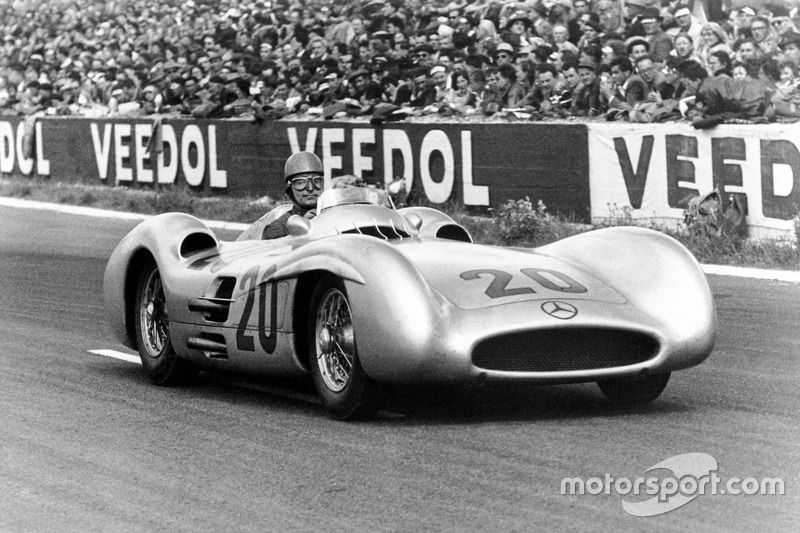
Mercedes entered F1 at the 1954 French Grand Prix with the iconic W196, and they would go to take a 1-2 on their debut. They even had the audacity to steal the greatest driver of the era, Juan Manuel Fangio, from Maserati mid season to lead their attack. He had already won 2 races with Maserati at the start of the season and would go on to win 4 more with Mercedes, becoming the only driver to win a World Championship with different teams in the same season. A record that will never be broken now.

But this turning point isn’t about the 1954 season, or F1 at all really, but it would change the course of the sport forever. Mercedes started the 1955 season the way they ended the ’54 season, winning 2 out of the first 4 races, with the second coming at the Belgian Grand Prix in June. However, a week later, the motorsport world would be devastated by it’s worst tragedy.

During the 1955 running of the 24 hours of Le Mans road race, Jaguar driver Mike Hawthorn pulled over to the side of the track to go into the pits, braking as he did. In doing so, he cut across Lance Macklin’s Austin-Healey who in turn swerved to avoid. Catastrophically he swerved right into the path of Pierre Levegh’s Mercedes Benz 300 SLP, who was going around 125mph. Levegh’s car launched over the back of the Austin-Healey and straight into the spectator area by the side of the track, which was only protected by a grass verge. The impact with the ground caused the car to disintegrate and explode into flames. The impact threw Levegh from the car back onto the track and killed him instantly. The debris from the exploding car would kill 83 spectators and injure 180 more.

This disaster caused Mercedes to pull out of motorsport entirely, as they were only really in it for technological testing purposes, not for the love of competition. They didn’t see the point in risking lives for the sake of progress.

Mercedes would complete the 1955 season, winning the remaining 3 races – 2 for Fangio and one for Sterling Moss (remember him?) but that would be their last season until 2010.

The Silver Arrows’ dominance of F1 ended as quickly as it started, but what a run it was. The won 10 out of the 13 races they entered to blow the competition away. Something they would continue to do when they returned to F1 – winning 8 straight Constructors Championships from 2014-2021, but more on that in a later post.

How different would the history of F1 look if they had stayed? Would they be the most successful team over Ferrari if the Le Mans Disaster never happened? All these questions we will never have answers to but I think this quote from an article in Motorsport Magazine from December 1955 gives a hint of the feeling at the time.

“The complete withdrawal by Daimler-Benz is an unhappy thing for many of us, especially those interested in technical development, but, on the other hand, they had monopolised racing to such an extent that their withdrawal will at last allow someone else to win”

Them’s the Rules

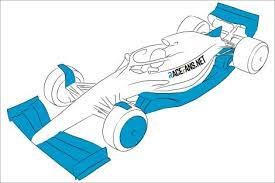
The Formula is changing. In 2022 we will see the largest single regulation change in F1 history. As is always the case in Formula 1, the rule makers want to create better, more exciting racing and in this version of the Formula, they are stripping everything to basics and changing the aerodynamic philosophy of the sport. Formula 1 has been busy over the last four years researching, testing and simulating their way to the best solution. The numbers have been mindboggling, they have conducted over 7500 simulations, created over 21 iterations of the design for the car and have collected half a petabyte of data to work from. This is enough data to fill 10 million standard four drawer filling cabinets full of paper. After all of this, what have they decided I can hear you ask? Well, you came to the right place. In this article I will do my best to explain the upcoming regulation changes and the ways in which they will change the spectacle, hopefully for the better. The changes can be conveniently put into three areas of the car: the aero, the tyres and the fuel. By far the largest is in the aero department so let’s start there.

Venturi Effect

The aerodynamic performance of the 2021 cars was the best it has ever been. They cornered quicker than any car in history. Their large wings, winglets and other devices spread over the car helped to push it into the ground, creating grip and stability in corners that cars have no business taking so quickly. This effect is called downforce. However, with great performance does come pitfalls. This performance is gained by manipulating the air that passes over their car in a way which helps this suction effect and sticks the car to the ground. Formula 1 cars perform best when running in undisturbed air but once they pass through it, the air is heated and energised so doesn’t flow over the car behind as expected. Imagine the difference in water before and after a boat has moved through it. If you stand at the back of a boat, you will see this ‘wake’ of disturbed, almost bubbly water. This is the same effect that an F1 car has on the air around it. If you were to drive a boat through that ‘wake’ you will be bouncing all over the place and probably feel quite sick. Within 20 meters of another, a 2021 F1 car would lose 35% of its aerodynamic efficiency and thus performance. Within 10 meters, they lost 46%. This is a massive amount when they rely so heavily on it for performance. This means that it is very hard for a car behind to be able to drive quick enough in this ‘dirty air’ to get close enough to pass the car in front. It is estimated that to pass in F1 the car behind has to be, on average, a second and a half quicker and in a formula that is so close, this is hard to do.

This new era of Formula 1 aerodynamics has two main aims:

  1. To reduce the wake or amount of dirty air that the car in front produces.
  2. To make the car behind less sensitive to this disrupted or dirty air.

While the previous aero philosophy had been to push the majority of the air over and around the car, the new one is to direct it underneath and then up over the top of the curved rear wing. This principle of using the underside of a racing side to generate negative pressure which produces downforce is commonly known as ground effect.

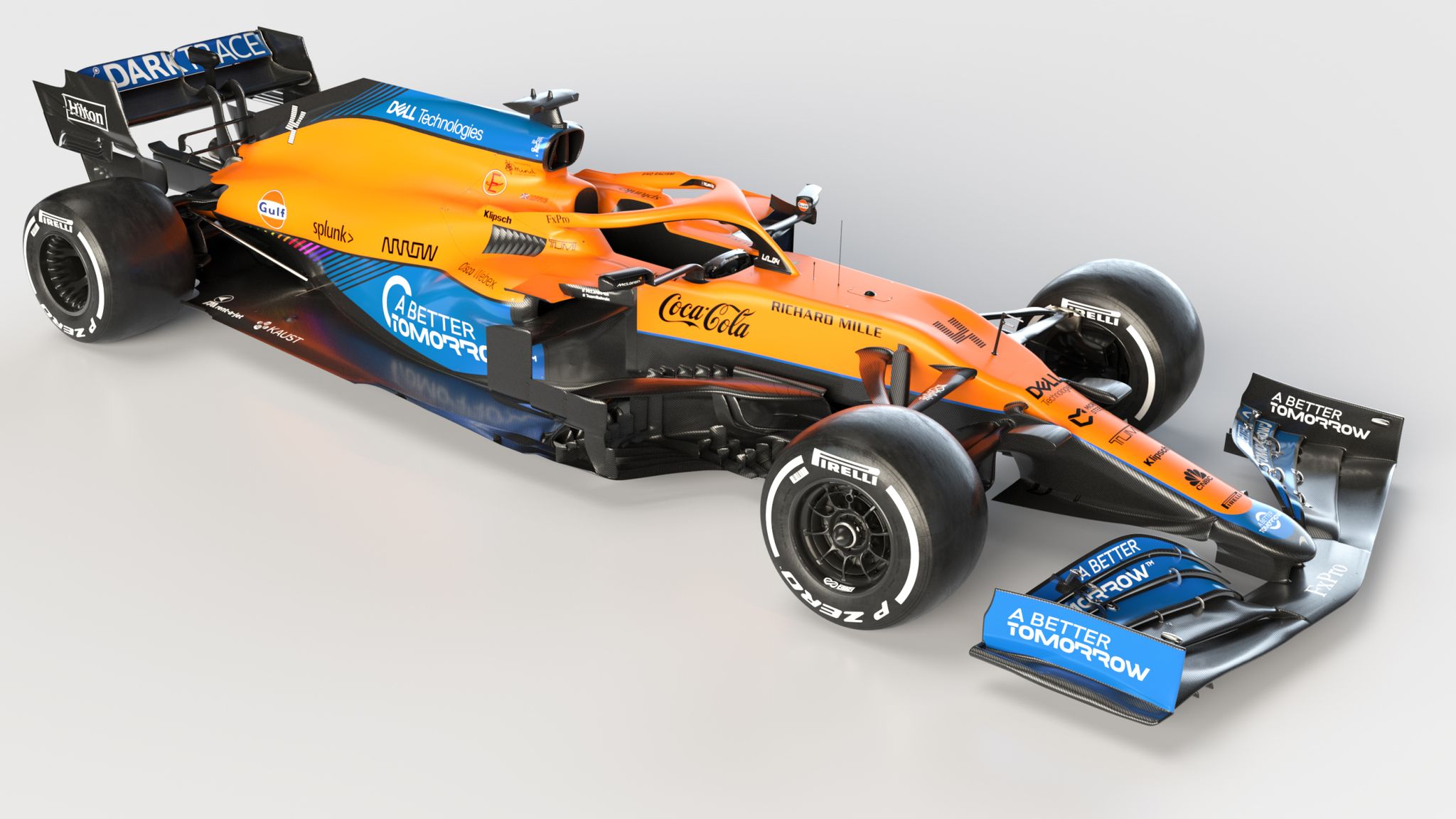
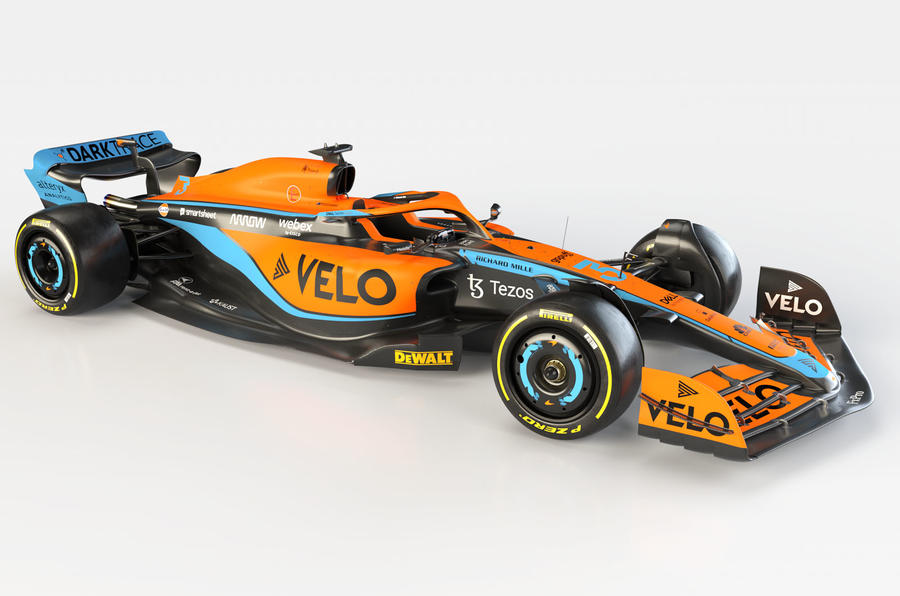
Can you spot the differences between these two cars? F1 2021 vs F1 2022 (L-R)

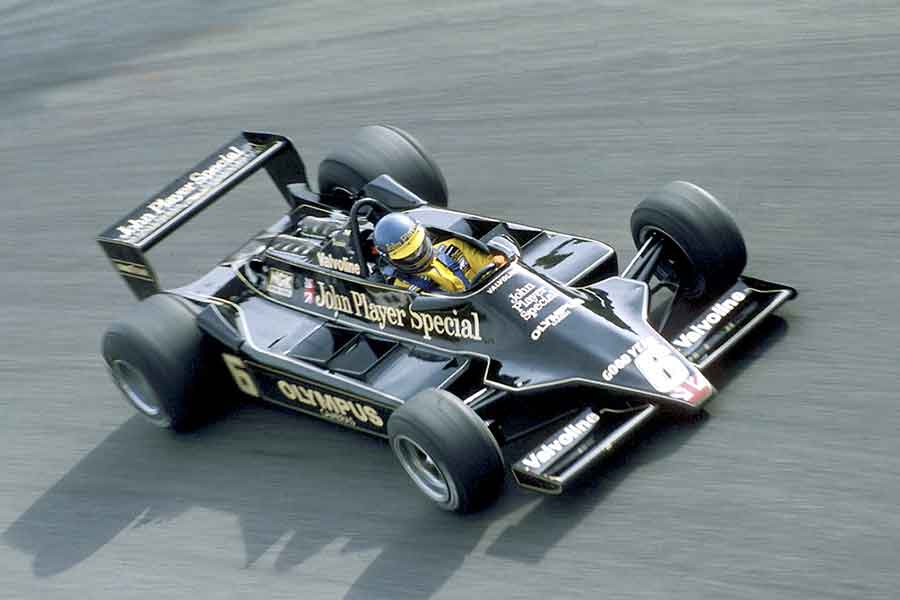
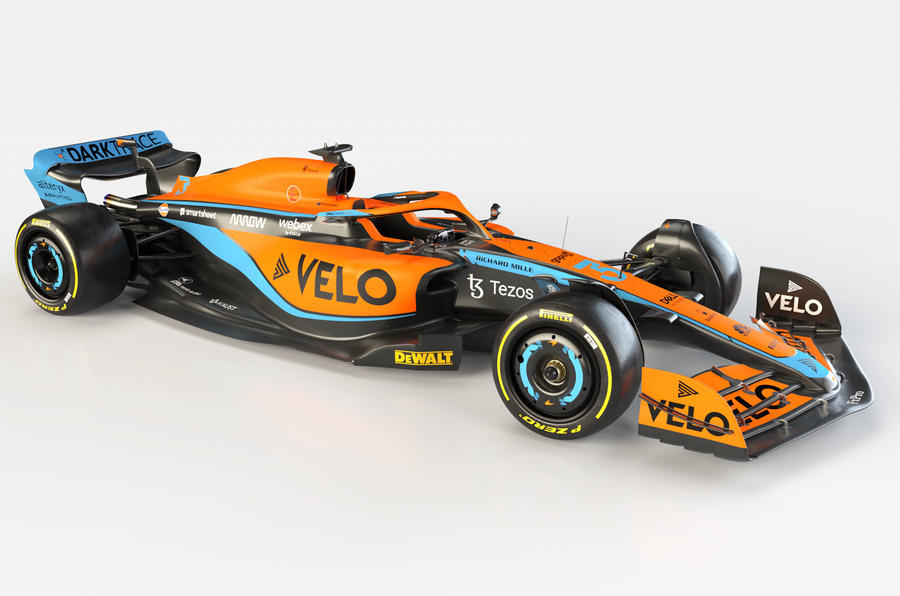
Ground effect has history in Formula 1, with the cars of the late 70s and early 80s deploying this aerodynamic phenomenon to gain performance over their rivals still relying mainly on mechanical grip and rudimentary wings. The difference between then and now is then’s use of ‘skirts’ around the edge of the car to direct and trap in the air between the underbody of the car and the road, while the new era sends it underneath as part of a more compact chassis. The Lotus 79 below demonstrates these skirts, the structure where the Olympus advertising sits while the McLaren MCL36 contrasts its with more compact bodywork and use of sidepods (look for DeWalt) behind the front tyres to direct the air to the floor.

The proportions of the two eras couldn’t be more different as they demonstrate different ways the aerodynamics can be worked!
Pictured: Ronnie Peterson in the Lotus 79 & McLaren MCL36

This new era of ground effect relies on what is known as the Venturi Effect. The theory is that you create an area of lower pressure by isolating and squeezing air into a narrowing tunnel, which speeds it up. This area of lower pressure on the floor creates a downwards suction and pushes the car into the ground. The bodywork traps the air in that ‘Venturi tunnel’ and because downforce is generated elsewhere, it doesn’t require as many exterior aero devices. As a result, the car is smoother so doesn’t energise the air travelling over the car behind as much. This should mean the car behind can follow much closer, for longer without losing as much performance. From the simulations that Formula 1 have run with cars at the 2022 specifications, it is estimated that the loss of downforce at 20 meters will be reduced to 4% and 18% at 10 meters. This is way down from the 35% and 46% of the current crop. This should hopefully make the cars easier to race and provide the drivers with conditions in which they can be aggressive and fight without everything overheating and losing performance.

18-inch Wheels

The aerodynamics aren’t the only area of the cars that is getting an uplift in 2022. The tyres are going from 13-inch to 18-inch rims and are losing some of their profile. Losing their profile means the amount of rubber on the tyre’s rim is being reduced. Despite the obvious visual difference, these changes have a big effect on the tyre’s performance. The new low profile tyres won’t deform or move as much under lateral forces, meaning they won’t overheat as easily. This should mean that the drivers can push for longer and run close together without burning them out. The tyre revamp is not just to help their performance but has also been incorporated into the aerodynamic philosophy. The tyres will now have covers. This is to help control the amount of heat ejected from the tyre rims which will reduce the wake created by them. The front tyres will also include winglets on the inside plane of the tyre to help direct air into the Venturi tunnels on the floor of the car, rather than it being pushed outside. The pictures below will probably do a much better job of describing the looks than me.

Wheel Cover on the Left and Winglet on the Right

E10 Fuel

The final area of change on the new breed of F1 cars is in the fuel. In an effort to move towards running completely sustainable fuel by 2025, the new fuel compound will include 10% sustainably produced ethanol alongside 90% petroleum product. While helping sustainability, it also theoretically takes away 20 horsepower but the whispers from the engine manufacturers seem to indicate that they have already found that performance back, highlighting their adaptability and problem solving power.

What to expect

While the regulation change is aimed at making the racing closer, this reset of the rules also gives the teams a fresh start and an opportunity for the pecking order to change. A team lower down the grid could find a better solution to the new regulations and move up the grid as the others try to replicate their idea. This has happened at the previous two big changes: Brawn and Red Bull in 2009 and Mercedes in 2014. Ironically, this is the same team that the new regulations have been partly created to reel in. With the new wind tunnel restrictions, the teams at the bottom of the championship get more time using theirs, so this should give them even more of a chance to move up. Ferrari in particular will benefit from their terrible 2020 as that sixth place finish has granted them a lot more time in their wind tunnel than the frontrunners over the last year, as per the regulations. Expect them to be quick. While the regulations can cause a shake-up, don’t be surprised to see Mercedes and Red Bull right up there when points are on offer in Bahrain, as is the sheer quality of those two teams. One thing I am hoping for this season is for a variety of winners as the teams and drivers get used to and learn more about these new breed of machine across the different tracks. I am sure performance levels will vary great between the circuits in the first quarter of the season.

After the F1 shakedown in Barcelona, the cars looked amazing and the drivers, particularly the Ferrari drivers had complementary things to say about the desired effects F1 has been seeking (see above). This all bodes well for, hopefully, another highly competitive and unforgettable chapter in the high speed journey that is Formula 1.

F1 Driver POWER Rankings – Abu Dhabi Edition

Welcome to the twenty second and final edition of my F1 driver POWER rankings list. I hope you enjoyed my previous edition after the Saudi Arabian Grand Prix but if you didn’t get around to reading it and don’t want any spoilers, you can find it here.

Sorry if this feels like too late to post about this now but I needed time to fully digest, reflect and settle on my feelings towards the final race of 2021. What a season its been and writing about it has given me a different way to experience and understand Formula 1. Thank you for being on the journey with me during my first season of writing things down, whoever or wherever you are and I hope it has, at the very least, given you something to pass the time.

It was never going to end smoothly, this season’s story wasn’t going to go out with a whimper. As you expect, I have my own opinion on the events in Abu Dhabi but I will get to that. Firstly, congratulations to Max Verstappen on winning his first World Championship. He does deserve to win the title this year, make no mistake about that. He has been mighty; consistant, brave, precise, decisive, resilient but most importantly really, really quick. He has shown that he can handle anything a title fight can throw at him. This was not a Mercedes vs Red Bull battle, the teams were evenly matched and evenly powerful, both having their advantages. This was a Hamilton vs Verstappen battle. Both drivers elevated themselves and pushed each other to a level I don’t think I have seen in my life. They dominated this championship completely and Max came out on top in the end.

The final 10 minutes of the Abu Dhabi Grand Prix 2021 will live in the annuls of Formula 1 history forever. However, to understand my feelings towards the outcome, you need to look at the whole race. This was a championship decider on a level F1 has only seen one other time. No matter what had happened previously, the championship would be decided by who crossed the finish line at the end of the 58th lap first: Max Verstappen or Lewis Hamilton. As with this season’s form, the two title rivals locked out the front row, but it was not on equal ground. The Red Bulls would both be starting the race on the soft tyre compared to the medium on the Mercedes. This was caused by Max Verstappen locking up in Q2 and flat spotting his medium set. The start reminded me of Abu Dhabi 2014 when Hamilton nailed the launch from 2nd to take the lead against Rosberg. This took away Red Bull’s tactical advantage of using the soft tyres to build a gap. You knew Max was going to try something straight away if he was overtaken at the start and he dutifully obliged at Turn 6 with a big lunge down the inside but one that I think Lewis left the space open to attack. Lewis turned in, was blocked by the Red Bull’s presence on the inside and drove over the run off area to get back on track. This is the first point of controversy. Hamilton keeps the position by going off track but he was forced there by a late lunge from Verstappen. This is also the first case of inconsistency from race control. In the final four races there have been two incidents of Verstappen perceivingly forcing both or one of the drivers off of the road, when defending the position but he received two different decisions – a penalty and a pass. This is why I think the decision there really could have gone either way depending on how the stewards felt at that time and in this race they were more relaxed because they felt that when Hamilton rejoined the track he established the previous gap between himself and Verstappen. Hamilton then worked to build an 8 second gap before shadowing Red Bull’s pitstop onto the hards on Lap 14 and 15 respectively. The gap was now stretching out towards 10 seconds before Sergio Perez did some great defensive driving to hold up Hamilton and close the gap to Verstappen to only 1.3 seconds. His driving was borderline slow but fine, he just made his car nice and wide. Once they dispatched the Mexican, Hamilton once again built a lead of around 8 seconds to Verstappen on the hards until Antonio Giovinazzi’s Alfa Romeo packed up and brought out the Virtual Safety Car. Mercedes decided to stay out and keep track position but Red Bull pitted Max for a new set of hards. This put Max 18 seconds back with just over 20 laps left to go. He needed 0.8 seconds a lap to catch back up. At the time, I thought Mercedes should have pitted Hamilton to give him the tyre advantage on a day where he was the quickest package out there, but after the initial chase of Verstappen the pace advantage the Dutchman had started to diminish as Hamilton kept his old hard tyres in condition while maintaining the lap time. The laps started to count down quicker than the gap until Hamilton held a 12 second lead with 5 laps to go. This is where the root of all my feelings lie – without Nicolas Latifi crashing at Turn 14, bringing out the Safety Car, Lewis Hamilton would have deservedly won the title decider, and therefore the title. Everything that transpired after that contradicts what I know deep down in my soul to be true – Hamilton deserved to win the race and, because of that fact, he deserved to win the F1 World Championship as well. I am not taking anything away from Max Verstappen, he deserved to the win title as well, but he did not deserve to win the Abu Dhabi Grand Prix. That is the wonderful contradiction of our sport; every single race matters in a championship but, sometimes, the last one means that little bit more.

Once the Safety Car came out it swung things back into Red Bull’s hands if the race were to restart. They pitted Verstappen in clear air for soft tyres while Mercedes couldn’t risk pitting and losing track position that late on with the possibility of the race not restarting. This pitted Lewis’s worn hards against Max’s new softs, not a completely done deal but a very large advantage. Now, to the second instance of race control inconsistency with a bit of confusion chucked in. As Latifi’s car was on the racing line and required marshals and a recovery vehicle, a Safety Car was warranted, no problem there. While I was marching around the house, muttering to myself like a madman, the safety car did it’s thing of slowing down the leaders and collecting the rest of the pack but the real sticking point would lie with the 4 lapped drivers in between Hamilton and Verstappen. Initially, they were told that they would not be allowed to overtake the safety car to unlap themselves which felt unusual but there is confusion over if that was just while the Latifi car was being removed. Following this, there must have been a couple minutes of frantic brokering from the Red Bull and Mercedes pitwalls to Race Control about if the race should restart and lapped cars etc etc. (I agree with Ross Brawn that this communication should not happen anymore) Race Control then instructed the lapped teams on the back straight, on Lap 57 of 58, that the 4 cars could now unlap themselves but also that the safety car was ending that lap. I have suffered through enough seemingly unnecessary extra final laps under the Safety Car in my life to know that this is a part of the Sporting Regulations and Michael Masi even confirmed that at last year’s Eiffel Grand Prix. This felt like Race Control wanting to get the action underway because it was the title decider. In any other race when the ‘cars unlapping’ rule has been in force, the cars have gone round one more time once the lapped cars have passed. Don’t get me started that not all the lapped cars were allowed to overtake. Is the championship points battle the only one that matters? Once again, if the cars had gone that extra lap and finished under the Safety Car, Hamilton would be Champion. I know, I realise that this conveniently gives me the result I support, but its the sudden change from normality that is hard to accept. But accept it we must. I would not want the decision to be changed in court and Michael Masi didn’t do anything directly against the rules so there is no real argument, its just the way it went down stings deep for the Hamilton camp. For Max Verstappen fans, this Safety Car and the subsequent overtake for the title were levelling of the score for bad luck on the Dutchman’s side earlier in the year and that it’s just the way she goes. Whatever side you sit on, at least we all agree that this season has been a privilege to watch and we are lucky to have witnessed it. It truly was the season the hybrid era needed before we go into another regulation change where it could all change once again, which I can’t wait for. That will be explained further in another post.

In non championship affairs, Carlos Sainz finished his strong first season at Ferrari with a podium and took fifth place in the Driver’s Championship above Norris and Leclerc. Yuki Tsunoda saved his best result to last and Kimi finished his career with a DNF. I’ll elaborate in the rankings so lets get into it.

After Abu Dhabi Grand Prix (22 of 22)

1. Max Verstappen (+1)

Max Verstappen is World Champion and I am sure it won’t be his last. He has driven brilliantly all year, despite some moments I disagree with him on, and didn’t back down to the challenge of battling Hamilton. The weekend was building nicely after being on the backfoot in practice and he took a surprise pole by over a quarter of a second. Once the race got going though, it seemed he didn’t have an answer to the pace of Hamilton and needed the intervention of others to help. He got this and then took his opportunity when it came, that’s what champions do.

2. Lewis Hamilton (-1)

What a heartbreaking way to lose a championship. Lewis Hamilton has had to suffer through a few of those in his career but this will probably feel the worst. He will be back next year, despite all the rumour, he is too much of a competitor to leave this fight with that outcome. He did everything in his control to win the championship in Abu Dhabi which should be a silver lining when the emotions die down, he still has the speed to go and try to win it again.

Carlos Sainz (+3)

This isn’t just last race bias, Carlos’ season has been bubbling away, showing consistant pace compared to his highly rated teammate throughout, whilst transitioning into one of the hottest seats in F1 better than other drivers changing teams with year. Abu Dhabi was the icing on the cake after a series of weekends that showed promise at times but didn’t come together. He qualified as the lead Ferrari in fifth which was quickly converted to fourth at the start as he flew back Norris into Turn 6. He was there to capitalise on the unreliability of Perez’s Red Bull to claim his third podium of the season and fifth in the Driver’s Championship, which is essentially best of the rest after the two championship teams. This gives him great momentum into the winter with a new set of regulations coming that Ferrari are banking on getting them back in the mix. Binotto is already talking about contract extensions which I think has been deserved and more.

4. Charles Leclerc (-1)

Charles was unfortunately another example of a Ferrari driver taking an early pitstop in an Abu Dhabi title decider and coming to regret it, frustrated in traffic. This time, the consequences were less severe but a tenth place did lose Leclerc his inter and intra team championship battles to drop from fifth to seventh. He just didn’t have the pace to get past the traffic to be in no mans land by the late safety car. He used that to collect one point but it wasn’t enough in the end.

5. Lando Norris (-1)

Lando can not catch a break at the moment. He was looking good for fifth before he had to pit late because of another slow puncture. This took away fifth in the championship for the young brit who really stamped his place in the F1 world this year. His consistent pace rewarded him with 20 points scoring finishes including four podiums and a whole lot of respect from fans worldwide. His final qualifying lap for third on the grid was a thing of beauty after being more towards the bottom end of the top 10 throughout the session. Its just another instance of Norris’ talent shining through the crowd.

6. Pierre Gasly (-1)

Pierre deserves to be in this group of elite youngsters making their way to the front of the F1 grid. He has been outstanding this season in the Alpha Tauri. He missed out on Q3 while his teammate made it and used the late safety car to move up to fifth for what must be the team’s best result of the season. Can Alpha Tauri give him the platform he needs to challenge for titles? I’m not so sure unless these regulations really do mix it up.

7. Sergio Perez (+2)

Sergio was the more effective teammate when it came down to it as he was able to get in the way and hold up Hamilton which would be crucial for giving Verstappen a chance to overtake later. Without losing the 8 seconds behind Perez, Hamilton would be have been able to pit after Latifi crashed and not lose position to Max. He hasn’t been able to get near Max at times but that is not what Red Bull really want from Perez, they want exactly what they got in Abu Dhabi, good teamwork to help Max win. Unfortunately, I don’t think he has the pace to beat Verstappen in a straight fight so that is what Red Bull is going to get.

8. Fernando Alonso (-1)

I think we can class Fernando’s return to F1 as a success. Another double points scoring finish in Abu Dhabi for Alpine with Alonso in front. His highlight being his first podium since 2014 in Qatar. I think if the car is half decent next year, Alonso could be dangerous, he is still one of the fastest out there.

9. Esteban Ocon (-1)

Despite a victory in Hungary, Esteban was beaten by his teammate in his first year back. However, as mentioned with the victory, it was a year of progress for Ocon and Alpine. He really looked strong the last couple of races but doesn’t quite get into that group of elite young drivers.

10. George Russell (-+)

Finally George can move over to Mercedes after a great three year stint at Williams, where he made that team relevant again. His Williams career unfortunately fizzled out with a retirement in Abu Dhabi but George’s career is about to rocket to another level in 2022.

11. Daniel Ricciardo (-+)

An overall disappointing year for Daniel as he got used to the 2021 McLaren but he did get back on the top step of the podium in Italy for the only 1-2 of the season. He never broke into the top 10 because he was just not consistant enough, he disappeared for large chunks of the year.

12. Valtteri Bottas (-+)

The final example of why Valtteri Bottas is no longer a Mercedes driver played out in Abu Dhabi. When Mercedes needed him, like Red Bull needed Perez, he failed to deliver, qualifying sixth and then was miles back in the race, leaving his teammate to be outnumbered without help. It feels like Mercedes tried not to hurt Valtteri’s feelings with their tactics in Abu Dhabi and it may have cost them. When it is all said and done, Bottas just wasn’t quite good enough in most areas, apart from in Austria and Russia.

13. Yuki Tsunoda (+2)

Yuki saved his best until last with a great fourth place finish and leading his teammate all weekend. This drive could well be a turning point for Tsunoda, both in his confidence and reputation within the paddock. His overtake on Bottas on the final alp was brilliant, he was so late on the brakes but there was no lockup or drama and he made the apex beautifully. It’s a shame the season ended for him, as he probably would have liked another race around Abu Dhabi. He just needs to do that every weekend to get on terms with his teammate. No mean feat.

14. Sebastian Vettel (-1)

Vettel and Aston Martin finished in Abu Dhabi where they have in the championship, it felt about right for them this year, in eleventh and thirteenth respectively. Vettel showed glimpses of past glory with some nice performances but this was mainly getting used to a new team so we will see what next year brings.

15. Lance Stroll (-2)

Similar to his teammate, it wasn’t a vintage year for Stroll and Aston Martin. He put in some good performances but the usual mistakes do haunt Stroll – as in Hungary – that stunt his growth up the grid with his team.

16. Mick Schumacher (+1)

A year where Mick Schumacher somehow increased his reputation within the paddock despite driving the slowest car on the grid by some margin and having a semi-amateur teammate. He will be Ferrari’s reserve driver in 2022 which I’m sure will only help his chances of a future seat. It does only feel like a matter of time before he is in a red seat if Mick keeps the performances up. My highlight for Mick was his Quali performance in Turkey where he outqualified his teammate by 2.5 seconds. Even in a crap car, that is mightily impressive.

17. Nicolas Latifi (-1)

Unfortunately, Latifi will forever be known for his role in the final laps of the season and the hate and abuse he has got online is completely unacceptable. Yes, you can be angry with what happened, but that gives you no right to send some of the abuse that Nicolas has received since. Did he do it on purpose? Obviously not. Will the abuse change the result? Obviously not, so lets just be kind to people. Something needs to be done about social media. Overall, a more promising year for Latifi where he scored points on multiple occasions and did push Russell at some events, even breaking the Brit’s long run of beating Williams’ teammates in Quali.

18. Kimi Raikkonen (-+)

We say goodbye to the Iceman and I am sure he is happy about that. It was a shame he didn’t have the car to impress late on in his career but he will leave a mark on the sport no other driver has so far. He was loved by everyone for being 100% himself throughout and being one of the most naturally gifted drivers of all time. Ice Man Out.

19. Antonio Giovinazzi (-+)

Kimi’s teammate’s F1 career also fizzled out as he also retired in Abu Dhabi. He just wasn’t consistent enough and blew most of his big points scoring chances with mistakes or team strategy error. While Binotto has suggested Ferrari will try and find him a seat for 2023, I think this is the last we will see of Gio in an F1 race seat.

20. Nikita Mazipin (-+)

Mazipin also raced this year but most of his action came with the issuing of blue flags, he saw 256 of them in 2021, 60 more than his teammate.

F1 Driver POWER Rankings- Saudi Arabia Edition

Welcome to the twenty first edition of my F1 driver POWER rankings list. I hope you enjoyed my previous edition after the Qatar Grand Prix but if you didn’t get around to reading it and don’t want any spoilers, you can find it here.

We have what we deserve! The two title rivals going into the final race of the season level on points. This is the first time it has happened in F1 since 1974 when Fittipaldi and Regazzoni were vying for the crown. Like the pundits and drivers alike, I don’t really know where to start with the events of one of the craziest races we have witnessed, and not always for good reasons. Let me start with the host country. I wasn’t happy when it was announced that Saudi Arabia would host a Grand Prix, I think sport holds ethical values of sportsmanship, fairness, and meritocracy but what does it say about this sport’s values if they are happy to promote countries with less than suspect human rights records and inequalities present in exchange for a large cheque? I don’t think there is any country in the world that is innocent, in particular my home country of England, but the way Saudi Arabian and Qatari authorities use immigrant workers with essentially no rights or pay to build their sporting infrastructure with cost to human life and then promote themselves on the world stage in a certain way is something I wholly disagree with. Unfortunately, money talks in the world of the 21st century and sport can be used as a distraction to the real picture. Ok, I have said my bit, on to the racing.

This Jeddah track was advertised as the fastest street circuit ever and I think they got that right. While the track has 27 corners, most of them are high speed, if not full throttle. The first sector is the most technical with a couple chicanes and twisty bits but then it’s mainly long straights and a nice, banked corner. One thing that was noticeable immediately was that this track is narrow and the walls very close. This would be key to the weekend with virtual safety, safety cars, yellow flags and even red flags appearing. Over the weekend we had multiple heavy crashes, in particular one that ended the F2 race early and put two drivers in hospital. This chaos would translate into the F1 race with one safety car, two red flags and three virtual safety cars.

I think the only way to truly understand this crazy, chaotic race is putting the events in context so I will be highlighting the flash points and events that changed the face of it as it progressed and hopefully piece together a timeline to get us to the end. Hold on to your hats, this could get messy.

Lap 1 – The Mercedes duo get away cleanly to lead 1-2 from Verstappen. All cars make it through the first corners safe.

Lap 10 – Schumacher crashes heavily into the barriers at Turn 22, bringing out the Safety Car. Both Mercedes pit for hard tyres, Verstappen doesn’t pit and inherits the lead but is still required to pit. Seemingly advantage Mercedes. Most of the top 10 also pit for fresh tyres.

Lap 13 – The red flag comes out due to barrier damage. Everyone is now able to put on fresh tyres, Max gains those places gained during the Safety Car and takes the outright lead because of it. Mercedes, Perez, Norris and Alonso are the main losers.

Lap 15 – The race is restarted after the red flag with a standing start. Hamilton gets the better start from second to lead into the first corner, however, Max tries sticking it out around the outside but runs out of space and cuts the second corner to retake the lead. As a result, Ocon gets ahead of Hamilton as he has to avoid the Red Bull coming back on track. Perez is tagged and spun by Leclerc as three cars try to go into a space for two and retires. Mazipin hits Russell heavily from behind as everyone slows to avoid Perez. Both Mazipin and Russell retire on the spot. This brings out the second red flag immediately.

During the red flag break, Michel Masi (Race Director) and Red Bull negotiate that if Max doesn’t start behind Lewis at the restart, he will get a penalty, so they move behind the Mercedes. Ocon starts on pole as a result.

Lap 17 – Third standing start of the race. Ocon, Hamilton, Verstappen are the top three. Hamilton gets alongside Ocon off the line, but Max makes even better start and dives down the inside to pass them both into Turn 1. Absolutely nothing wrong with that, it was brave, executed well and most importantly he made the corner under control. Hamilton is sandwiched and makes contact with Ocon on the outside but sustains no damage. Max leads from Ocon, Hamilton, Ricciardo, Bottas. Shoutout to Tsunoda, who makes great move around the outside of Leclerc at banked Turn 13.

Lap 36/37 – The two title rivals disappear up the road with Hamilton close behind Verstappen. Hamilton gets within DRS range coming onto the pit straight and looks to overtake into Turn 1 and is marginally ahead going into the braking zone. Like Brazil, Max breaks very late, gets oversteer mid corner and has to take to the runoff to get through the complex. From the overhead shot, it is clear that Hamilton would have been able to properly make the corner if Max wasn’t on the inside, trying to keep control of his car. This is the difference between this incident and the overtake on Lap 17 which was legitimate from Max. Race Director Michael Masi orders Red Bull to give Hamilton the place which they subsequently relay to Max. He decides to let Hamilton through on the back straight just before the DRS line for the pit straight. Meanwhile, Masi goes to Ron Meadows, Mercedes Sporting Director, to inform him that Red Bull will let Hamilton by. However, there isn’t enough time for the message to get to Hamilton before and confusion ensues. Max keeps backing off, Hamilton slows behind, probably confused about what is going on or doesn’t want to give Max the DRS for the main straight/lining him up for the main straight. The radio messages from driver to team would indicate Hamilton was in the dark about Max letting him through. They get closer and closer until Max slows once more, Hamilton can’t react in time, and they run into each other. Hamilton’s right front wing connects with Max’s left rear tyre. What I don’t quite get is Max driving off quickly as soon as the contact happens. It had a ‘job done’ air to it. Max would be given a 10 second time penalty post-race as it was found his “erratic” braking made him “predominantly at fault” for the contact.

Lap 42 – Max has been told again to let Hamilton through after some heated exchanges between Masi and Meadows about the sequence of events. He does this once again on the back straight before the last corner. This time he keeps more to the right and Hamilton knows what is happening so passes without incident. However, as soon as he does this, Max dives back down the inside to retake the lead before the corner arrives. Something I have seen Hamilton do in the past and got penalised for (circa Spa 2008).

Lap 43 – As they cross the line for Lap 43, it is announced that Max gets a 5 second time penalty for leaving the track and gaining an advantage from the original Lap 37 (Turn 1) incident. Later on in the lap, Max gives up the position once again before the final corner, but this time Hamilton isn’t taking any chances and crowds out Verstappen’s attempt to retake the position around the outside. Max’s race engineer comes on radio to say they didn’t need to do that. This would indicate that Max felt he had to give up the position to avoid further penalty from the previous lap’s antics.

Lap 50 – Hamilton crosses the line to take victory and the fastest lap at the inaugural Saudi Arabian Grand Prix. Championship is tied. Max is unable to pit and go for fastest lap due to Ocon within his pitstop window.

What a crazy, chaotic, confusing race that was in Jeddah. The main talking point I can take away from this race is that there needs to be consistency in the stewards’ room so the drivers know what they can and can’t get away with when in wheel-to-wheel combat. I can see why Max would be annoyed as his defensive move in Brazil was arguably worse than his one in Jeddah, yet he was penalised for the latter and not the former. These decisions set precedents but then they immediately go against that precedent the next week. It is a big job, but consistency will only be secured if there is a team of 4 stewards that follow the circus around to every race. The rules are also quite vague and open to interpretation, which is a cause of this war of words between the two title fighting teams. More practical, specific rules with a consistent stewardship wouldn’t give teams the opportunity to challenge every single decision being made and hopefully sorting out the nonsense we saw in Jeddah, where it felt that Max was under investigation for 10 laps and the audience not having the state of play being played out on track but instead in a small room away from the cameras. Don’t get me wrong, we need rules to moderate the action and keep the drivers safe, but at the moment they are too vague and enforced too inconsistently for them to do the sport justice.

There is so much to talk about in the title battle that I am sorry that I won’t get around the rest of the teams until the driver rankings. Hopefully you can appreciate the importance of this title fight and I am not neglecting the rest of the grid, there just isn’t enough time in this section.

Quick update on the Constructors however – Ferrari have virtually secured third in the championship; McLaren need to outscore them by 38.5 points to take it back so basically a 1-2 in Abu Dhabi which I don’t see happening. Alpine have also secured fifth in the constructors over Alpha Tauri with a very strong last two events. They hold a 29-point advantage over the Faenza team.

After Saudi Arabian Grand Prix (21 of 22)

1. Lewis Hamilton (-+)

Hamilton secured his third win in a row, drew level with Verstappen on points and I think took the moral high ground in his wheel-to-wheel battles with the Dutchman as some of the Red Bull’s moves felt a little desperate. He took pole due to Max’s mistake at the last corner when he clipped the wall and damaged his tyre when over 0.25 seconds up. This was looking like a crucial error in the early stages as both Mercs were ahead of him but then the red flag came out and turned the race on its head. However, Lewis kept his cool through multiple setbacks and battles with the Red Bull that resulted in contact but even without the Race Director’s intervention, Red Bull conceded they would have struggled to stay ahead of Hamilton. He now goes to a track where he has won a highly tense championship before, so I am sure he is full of confidence to take his 8th World Title.

2. Max Verstappen (-+)

Max put his all into the Saudi Arabian Grand Prix and overstepped the mark on one occasion, maybe two. He also showed his great speed, decisiveness, and car control (until he clipped the wall on his final Q3 lap, it was an all-time commitment lap). This is the two sides of Max Verstappen that remind me of Michael Schumacher and others of Ayrton Senna. This pushing of the rules to the limit and packaging it as hard racing. Martin Brundle once said of Senna that he would put his car in dangerous positions when overtaking so that the car in front had to get out of the way, or they would crash. This gave Senna a psychological advantage in direct combat. I see this in Verstappen, however, nowadays this sort of thing will get you penalties, while in Senna’s time it got you the position. He must have felt like he jumped out of the frying pan and into the fire with all the penalties and instructions to give positions back in Jeddah, but for better or worse, this is the state of play and drivers have to abide by the rules. I don’t think Verstappen would intentionally crash into anyone, but he will put his car in danger in pursuit of this title – high risk, high reward. He also knows that Lewis can’t afford not to finish the race, otherwise his fight will be over. We go into Abu Dhabi with a winner-takes-all situation, but I believe Max wants to win this fairly and outright, so I don’t see a repeat of Senna Prost in Japan 1990. Whoever wins it will completely deserve it. Bring it on.

3. Charles Leclerc (-+)

Charles split the Red Bulls in qualifying to start 4th and was running well until the second restart where he got slightly squeezed by Perez, who was in a car sandwich at Turn 3, clipped the Red Bull and had to flat spot his tyres avoiding it. Luckily, the red flag came out immediately and it didn’t ruin his race. After the third start, he dropped back a few spots until he was in a long battle with his teammate that he was lucky to stay ahead of and finished just ahead of Sainz for 7th. This did help Ferrari essentially secure 3rd in the Constructors.

4. Lando Norris (-+)

Lando did well to secure a Q3 birth and 7th on the grid. He moved up at the start and was running high in the points until the red flag came out on Lap 10 and he suffered from the rule that lets everyone change tyres during this period. Lando was one of the cars that pitted while the Safety Car was out pre-red flag so effectively dropped to 15th after that. He battled back throughout the race to get back into the points for 10th, but it was more bad luck for the Brit who desperately needs a clean race in Abu Dhabi to take some momentum into the winter. He will hope that McLaren’s focus on next year’s car will pay off handsomely.

5. Pierre Gasly (+1)

All the 6s for Gasly in Saudi Arabia as he qualified and finished 6th. This time around his qualifying pace translated into the race and he was able to stay out of trouble, as he usually does in chaotic races like this, to bring the car home and secure points for the team but it seems to come too late to overtake Alpine for 5th in the Championship.  

6. Carlos Sainz (-1)

Carlos could not get the car going in qualifying and made multiple mistakes to not get through Q2 and lined up 15th on Sunday. However, he got himself together and moved up during the race, keeping out of trouble and taking advantage of others falling by the waist side. He would have argued he was faster than his teammate and should have finished ahead of him, but Charles was able to keep it after some border line defensive moves into Turn 1. As Max got a penalty, I think Charles should have got one as well. Carlos showed his mental fortitude and battling to turn a bad Quali into another good points haul. This is exactly why Ferrari signed him.

7. Fernando Alonso (-+)

A down weekend for Fernando after his podium in Qatar, where it seemed he never got used to the new Jeddah track. He was knocked out in Q2 to start 13th and finished the race in the same position with a high-speed spin in between. He couldn’t match his teammates pace and was lapped in the end. My highlight for him was his facial expressions watching Verstappen’s final Q3 run, probably wishing he was in that car.

8. Esteban Ocon (+2)

Esteban was about 50 meters short of consecutive podium finishes for Alpine but was passed by Valtteri Bottas at the last. While he started 9th, he would find himself on pole by the Lap 17 restart. How may you ask? I am not 100% sure but he turned a Tsunoda squeeze into an overtake at Turn 1 and then used the Safety Car/Red Flag period to move up to 4th. At the first restart, he took advantage of Bottas’ lockup and the fight between the two title rivals to take 2nd. Once Max’s penalty was issued, this put Ocon on pole which he wasn’t able to hold but looked to have the pace to hold 3rd until the very last second. He should be proud of his pace and this pace was what kept him out of trouble. While he will be disappointed not to secure the podium, he should take confidence in extracting what he did from his Alpine in Saudi Arabia.

9. Sergio Perez (-1)

An unfortunate early bath for Perez on Sunday in Jeddah. He qualified 5th and was well within the danger zone going into Turn 1 on the restarts and unfortunately it was second time unlucky for him as he wasn’t able to give Leclerc enough space against the wall at the quick Turn 3, got clipped into the barrier and broke his transmission so was unable to put the car in gear. This ended his race and really put a dent in Red Bull securing the Constructors’ Championship.

10. George Russell (-1)

Another driver with an early bath in Jeddah and one that was directly linked to Perez’s exit at the second restart. While the cars in front slowed to avoid the horizontal Red Bull, Mazipin wasn’t able to react in time and drove into the back of Russell’s Williams for a heavy impact. This destroyed Mazipin’s Haas and broke Russell’s. He complained about the safety of the track and his radio message once retired was essentially ‘I told you so’ to the FIA.

11. Daniel Ricciardo (-+)

Daniel wasn’t able to get into Q3 on Saturday, narrowly missing out in 11th but made up for it in the race. He also stayed out of trouble and used the red flag rule to his advantage and came home 5th, just in front of Leclerc. The reason he doesn’t move up on this list is that he can’t be trusted to put in consecutive positive performances at the moment. I also don’t believe he would have got that high up in a straight fight, but he will take it at the moment. Seemingly important points for McLaren but it is too little too late.

12. Valtteri Bottas (+1)

Valtteri was doing the team role in Jeddah until the red flag ruined Mercedes’ advantage and put him out of position. He nearly drove into the back of Verstappen at the second start and then got stuck behind Ocon for pretty much the whole race until he finally got onto the podium on the final lap. The Hamilton, Verstappen, Bottas combination is now the most common in F1 podium history, but he will probably only get one more opportunity to extend that in Abu Dhabi before he moves to Alfa Romeo.

13. Lance Stroll (-1)

Lance was essentially last in qualifying, only starting in front of the Haas’ but, again, stayed out of trouble to nearly find himself in the points, finishing 11th. I am not sure how he got there as the camera’s followed the battle for the lead. Stroll did well to not get taken out by the Lap 15 incidents, but he got no reward for his troubles in Jeddah.

14. Sebastian Vettel (-+)

Seb was unlucky with collisions on Sunday as he could argue he was driven into twice by Raikkonen and Tsunoda. He was running in the points after starting 17th until these incidents damaged his car too much to continue and he was forced to retire. This season is fizzling out for Aston Martin who are under big pressure to get things right next year or some culling is going to take place.

15. Yuki Tsunoda (-+)

Yuki showed promising pace in Jeddah, qualifying 8th and running in the points until contact with Vettel, when he should have really given up the place and lived to fight another day. However, his front wing got stuck underneath his car and he wasn’t able to move for a long time, losing bundles of time and ending his chances of points. He needs to put a result together to go with these turns of speed to convince Red Bull he deserves a spot in F1 beyond next year. His overtake on Leclerc at the banked Turn 13 proves his race ability.

16. Nicolas Latifi (+1)

Latifi gets a bump after finishing on the lead lap and just over 20 seconds off the points, which is a decent effort in this Williams. Unfortunately, we saw very little of him, but he finished ahead of Alonso in a car nearly on the podium. Good effort indeed.

17. Mick Schumacher (-1)

Mick lost the rear of the car at Turn 22 on Lap 9 to head straight to the scene of the accident which brought out the red flag and threatened to have big ramifications on the title fight. As it were, the threat didn’t materialize, but Mick sure felt the heavy impact of the tyre barrier. One more race in this forgettable car and we hope for his and the team’s sake, next year’s Haas is competitive.

18. Kimi Raikkonen (-+)

Kimi came together with his friend Vettel in quite a clumsy collision considering the two share 5 World Championships between them. This was the most notable part of Raikkonen’s race as he laboured home 15th and last. He has one more chance to thrill F1 fans before heading to retirement but I’m not sure its going to happen, he looks like he has checked out.

19. Antonio Giovinazzi (-+)

Gio showed good pace in the Alpha to secure a Q3 appearance and held on to his 9th place by the flag to add 2 points to his F1 tally. He also pulled off a great move around the outside of Alonso which showed certain other drivers *cough cough* how to overtake at Turn 1 effectively.

20. Nikita Mazipin (-+)

Finally, an incident I can report on that involves Mazipin where I can say it wasn’t his fault. He was in the wrong place at the wrong time when he found himself at the back of the queue who were slowing to avoid Perez on Lap 15 and he ploughed into the back of Russell as he couldn’t react and slowdown in time in a zone usually meant for full acceleration. The car was absolutely wrecked but it was good to see him get out unharmed from quite a scary crash.
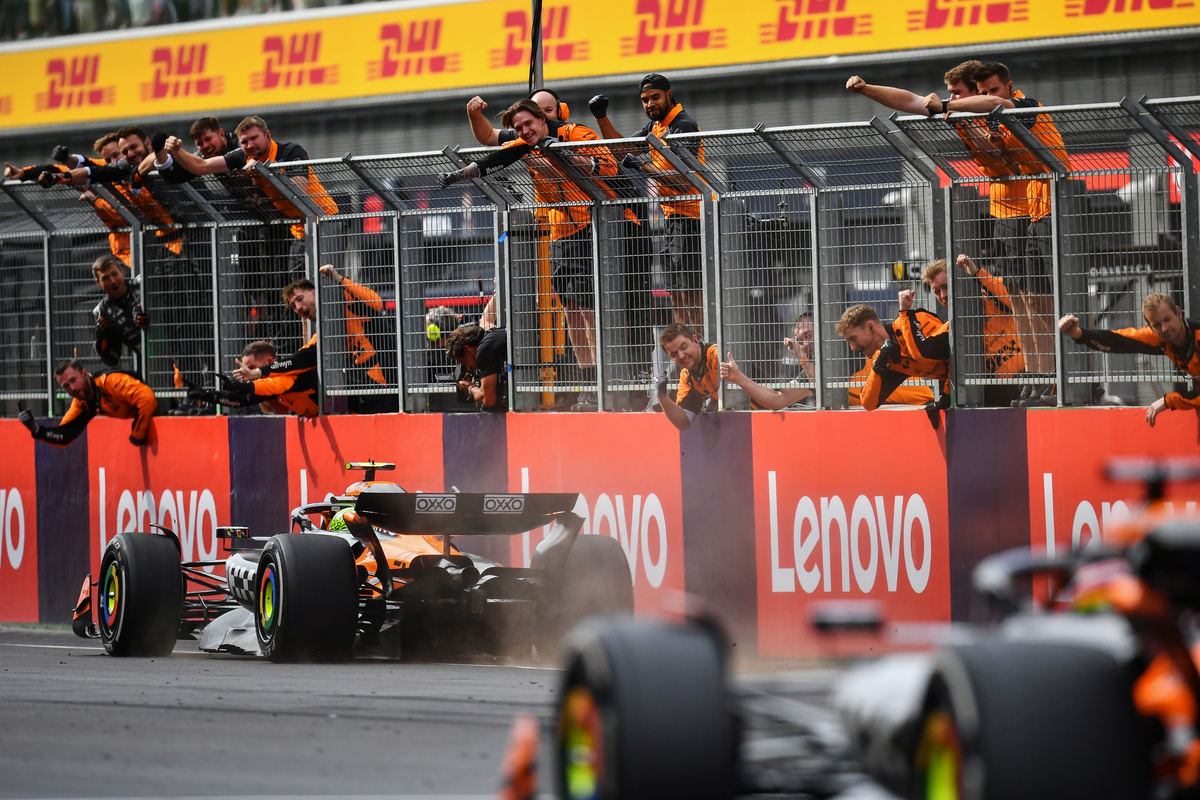
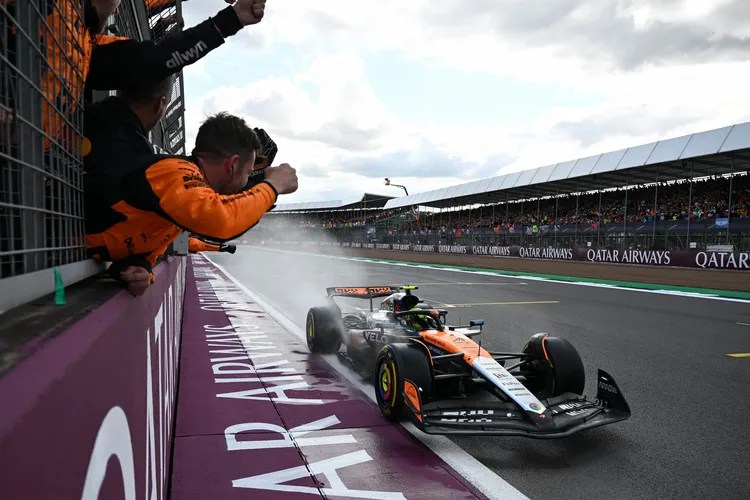
F1 Driver POWER Rankings – Qatar Edition

Welcome to the twentieth edition of my F1 driver POWER rankings list. I hope you enjoyed my previous edition after the Sao Paolo Grand Prix but if you didn’t get around to reading it and don’t want any spoilers, you can find it here.

What a difference two weeks makes in Formula 1. After the Mexican Grand Prix, Max Verstappen and Red Bull were sitting pretty with a nineteen point lead but after two Hamilton wins in a row in Brazil and Qatar, the lead is back to just over the seven point difference between a 1st and 2nd place finish. We could go into the season finale in Abu Dhabi with the two title rivals level on points, what an event that would be – the ultimate head to head.

Every weekend brings new drama and heightened tensions between the two juggernauts of Formula 1 2021. This week it was a 5-place grid penalty for Verstappen after he was judged to have ignored double waved yellow flags on his final run in Q3. While the yellows weren’t massively clear and there was confusion about where exactly the yellow zone was, it felt like a slam-dunk once replays showed him passing a yellow flag zone and not slowing down when passing Pierre Gasly’s stricken Alpha Tauri on the pit straight. Valtteri Bottas was also judged guilty but only given a 3-place penalty as it was only a single yellow when he passed through. This caused Christian Horner to say some unsavoury things about the marshals and stewards which got him a smack on the wrist from the FIA and for the phrase ‘The pot calling the kettle black’ to pop into my head. The battle to control narrative has been rampant this year but Horner overstepped the mark on this occasion. On the other side of the fight, Toto Wolff came out with strong words to say that the recent media talk about the slide of Mercedes has ‘woken the lion’, referring to the team and their seven-time World Champion driver and that they have some ‘spicy’ equipment (that engine) in the bag to help lead them to another unprecedented title.

On track, Hamilton and Mercedes had the edge as the best package on the grid and they took advantage with a pole to lights performance. Once Max had been demoted to seventh (he qualified on the front row) it felt like it was damage limitation to get back in range of Hamilton. It was thought that if he didn’t get in front at the start anyway, Hamilton had enough in the bag to win regardless. Max made a great start and while everyone went for the wide line at Turn 1, he went tight, found grip and moved up to fourth once Alonso slammed the door at Turn 2. Max did get past Alonso and Gasly for P2 after 5 laps with around an 8-second gap to Hamilton. What the two title rivals would go on to do was consistently drive 1.5 – 2 seconds faster than the rest of the grid, as Martin Brundle said in commentary – these two were not just in a different race, but a different formula. I am going to keep banging on about what sets drivers apart in a sport supposedly ruled by machines and this is an example. They take the car and beat everyone else into submission with it while making it look easy. They finished a minute ahead of the rest of the field in 57 laps.

Behind them, the standout performance was Fernando Alonso who secured his first podium since 2014, which is before Max Verstappen came into F1, to give it a bit of context. Alonso benefitted from the grid penalties but took full advantage with a great move around the outside of Gasly at Turn 2 and used the one stop to perfection to beat Perez for that final step on the podium. This also helped Alpine’s fight for fifth in the constructors. Speaking of Constructors, McLaren had another torrid weekend to lose even more ground to Ferrari after Norris suffered a late puncture while running in 4th. The secondary curbs proved a bit too much for the tyres as both Williams drivers and Valtteri Bottas got punctures which I don’t mind, the tracks should push the cars and drivers to the limit.

We move into the final two races of the season with both championships finely balanced and its just the way we like it. We go to essentially two new tracks (Abu Dhabi’s layout has been changed significantly which will make it 10 seconds quicker) which means we enter the unknown just at the right time for us, the viewers. Now, on to the rankings.

After Qatar Grand Prix (20 of 22)

1. Lewis Hamilton (+1)

Hamilton moves to the top of this list as the momentum is well and truly on his side after two wins in a row and he has closed the gap to Verstappen to 8 points. It is also expected that the Jeddah track in Saudi Arabia should suit the Mercedes with their fresher engine in Hamilton’s car. He looked the standard in Qatar and wasn’t troubled in the race to take his 5th win of the season. He will go into the last two races full of confidence and probably the slight favourite at this point.

2. Max Verstappen (-1)

Once Max got demoted on the grid, it took away any real chance of winning the race as long as Hamilton and Mercedes didn’t make any mistakes, which they didn’t. He got a great start and placed his car cleverly to get up to 4th and then quickly passed Alonso and Gasly. Once he was behind Hamilton, he wasn’t able to close and Red Bull tried the two stop strategy but Mercedes just shadowed them to bring it home. While Max is so strong mentally, this change in momentum must be worrying and something Red Bull need to get on top of if they don’t want Hamilton winning a title they probably should secure based on the statistics.

3. Charles Leclerc (-+)

Charles struggled during qualifying to the bafflement of himself and the team to line up 13th. It was discovered post qualifying that he had a crack in his chassis that would have been unsettling the car. He luckily didn’t have to change it, they could fix it under FIA regulations and he kept his 13th place grid slot. He had a relatively quiet afternoon but used the one stop to jump cars and get into the points, finishing 8th and only a second behind his teammate who started 5th. More solid points for Ferrari in their fight with McLaren and his individual battle with Norris for 4th in the Drivers.

4. Lando Norris (-+)

Lando can’t seem to catch a break at the moment. His race was ruined on Lap 1 in Sao Paolo and his race was ruined late on in Qatar when he had to make an extra stop due to a puncture to his Papaya-mobile which put him out of the points. He was able to get back into them for 9th but he was running 4th when his tyre failed. This would have been much needed points, McLaren have only scored 4 points in the last 4 races, which is the same as Alfa Romeo to put that into context. Not form to secure third place and I think that is already out of reach.

5. Carlos Sainz (-+)

Sainz once again was the leading Ferrari in qualifying and race in Qatar. He qualified 5th and finished 7th, which is maybe one space lower than he would have liked, letting Stroll get ahead of him. More consistant performing from the young Spaniard though.

6. Pierre Gasly (-+)

It was all looking peachy for Gasly after qualifying. He was promoted to the front row after Verstappen and Bottas’ penalties but that was where the fun ended for him. Ironically, it was his puncture and subsequent stoppage on the track that caused them to get the penalties in the first place. He pitted early after going backwards from second and was put into traffic where he couldn’t or wasn’t able to move through the field and by the flag he was out of the points in 11th. His fastest lap time would indicate that he just didn’t have the outright pace in the race to really trouble big points.

7. Fernando Alonso (+2)

That was a classic Alonso performance in Qatar. He dragged every ounce of performance from his car on a technical track that rewards bravery, consistency and precision – Alonso’s bread and butter. He was instantly quick on this new circuit and was rewarded with a 3rd place starting spot. His move around the outside of Gasly at Turn 2 was beautiful, he found a line that just gave him so much more grip and bravely took to the curbs to complete it. He probably caught Gasly napping as well. Once he sniffed a podium with the one stop, he never looked like losing it, even with Perez closing at the end. I think he still would have finished 3rd without the late virtual safety car. His first podium since 2014 is tragic for a driver of Alonso’s quality but it is probably his career decisions that have let him down in that regard. A Hamilton, Verstappen, Alonso podium is one that we should have seen way more than the solitary one occasion in Qatar.

8. Sergio Perez (-1)

Not getting through to Q3 in Qatar in a Red Bull was criminal from Perez and ruined his chances of a podium finish, or to help his teammate pressure Hamilton from the front. He did have a spirited fight back to 4th but wasn’t close enough to Alonso to catch up in the end. What he did do was secure more points in the Constructors fight they are desperate to win.

9. George Russell (-1)

George outperformed his teammate all weekend but was one of the victims of the curbs in Qatar. He was nowhere near the points all race so the puncture really didn’t effect things for him. Two more races and then it’s go time for Mercedes in 2022.

10. Esteban Ocon (+3)

Ocon got into Q3, albeit not quite as high as his teammate but used the one stop strategy to gain spots and do well to hold onto them. He partially repaid the favour to Fernando, after he kept Hamilton behind long enough in Hungary for Esteban to win that race, with a shorter defense of Perez but it was spirited and did effect the Mexican’s progress. He finished 5th which completed Alpine’s 2nd best result all season.

11. Daniel Ricciardo (-1)

Daniel keeps his spot mainly because I didn’t feel Ocon deserved to go up three spots. Daniel had a torrid time in Qatar. He was nowhere near getting out of Q2 on Saturday and didn’t trouble the points on Sunday, even finishing behind his teammate who got a late puncture. He is just inconsistent, his performance are so track based, it is hard to judge. You know what, he can go below Ocon, I’ve convinced myself.

12. Lance Stroll (+2)

A great race from Stroll who started 12th on the mediums and was able to gain places at the start and then had the pace to keep his tyres in range for a one stop strategy. His move around the outside of Tsunoda was lovely and he pushed on from there. He would end the race in 6th after holding off Sainz for a lot of the race and only half a second behind Ocon in 5th. He needed that performance after a run of poor drives.

13. Valtteri Bottas (-2)

Bottas was arguably unlucky to get a penalty but the rules are the rules. He didn’t help himself though with a rubbish start that dropped him from 7th to 11th and got him stuck behind slower cars. He struggled to get past initially but once he did, he showed good pace and was on course to enter the podium fight when his left front tyre let him and itself down. It would take him over a minute to get back to the pits and he would eventually retire to save the car. While he hasn’t performed as he would like, he does seem to get the misfortune at Mercedes, similar to Barrichello at Ferrari in the early 2000s.

14. Sebastian Vettel (-2)

Vettel outperformed with teammate in qualifying but that was probably his downfall in Qatar. This meant he started the race on the soft tyre, starting 10th and wasn’t able to do the one stop strategy, like his teammate. He did still come home in 10th for a point and a double points scoring event for the team.

15. Yuki Tsunoda (-+)

Yuki showed more of his one lap pace in Qatar but it was the same story on Sunday as in Sao Paolo, he didn’t have the consistant pace to keep up with the points battle. However, this time his performance was much less crashy. When we saw him during coverage it was usually being overtaken which is unfortunate. One thing in Yuki’s favour is that he did match his teammates fastest time in the race, which is probably not a common occurrence this season.

16. Mick Schumacher (+1)

Mick outqualified his teammate by 2.4 seconds and disappeared in the race which is a slam dunk in the Haas battle for supremacy. The race performance feels familiar but the qualifying difference was seismic. I know the car is bad but they are both driving it and that gap is bigger than the rest of the field combined, by 0.9 seconds, its not even close.

17. Nicolas Latifi (-1)

The weekend was going as you would expect for Nicolas Latifi until a late puncture at literally the worst place to get it – just as you pass the pitlane entry. As if like magic his tyre started to visibly inflate on the replay as he past the aforementioned pitlane entry and he had to complete more than a lap with only three functioning tyres. By the time he got back to the pits, they decided to retire the car as the front left wasn’t all pointing in the right direction.

18. Kimi Raikkonen (-+)

Kimi was knocked out in Q1 and only made up spots from his 16th place start due to retirements ahead. He slowly got away from his teammate in the race and was pressurising Russell until the Williams got a puncture in the late stages. The Alpha – Williams battle seems their level at the moment.

19. Antonio Giovinazzi (-+)

Giovinazzi mainly shadowed Raikkonen during the weekend and also only moved up the grid through retirements ahead to come home 15th, be it 200 seconds behind his teammate. With the lower teams in F1 looking towards 2022, the Alpha isn’t getting any better and both drivers are leaving so it does feel like their season is just fizzling out.

20. Nikita Mazipin (-+)

Another embarrassing comparison with his teammate in Qatar for Mazipin. 2.4 seconds is ridiculous but I have already shared my thoughts on that in his teammate’s section. In conclusion, that sums up his season.